For most of financial history, accessing TradFi markets meant opening a brokerage account, complying with trading hour restrictions, and multiple layers of intermediaries.
In 2026, that barrier has dropped significantly. Crypto exchanges are issuing USDT-settled perpetual contracts that track the prices of major TradFi assets in real time, giving anyone with a crypto wallet exposure to stocks, commodities, and currencies without ever interacting with the legacy financial system directly.
This guide explains the TradFi meaning, how it compares to DeFi and CeFi, which TradFi products are now available on crypto exchanges, and which platforms offer the strongest tools for trading them in June 2026.
What is TradFi?
TradFi stands for traditional finance. This term covers the entire legacy financial system: banks, stock exchanges, insurance companies, investment firms, payment networks, and the regulators that govern them. According to Crypto.com’s TradFi glossary, TradFi is a conventional approach to financial activities that relies on established centralized institutions. It has existed for centuries and powers the vast majority of the world’s capital markets today.
The concept is straightforward: it is the financial system most people already use. Your bank account, your pension fund, your country’s stock market, the mortgage system, and the payment networks behind every card transaction are all part of this system. It is not a new concept. What is new is the relationship between conventional finance and crypto in 2026.
In 2026, this sector is actively moving on-chain. Crypto exchanges are listing derivatives, perpetual contracts, and tokenized assets that track real-world prices, giving crypto traders exposure to traditional markets without needing a brokerage account, a bank, or a trading license.
What are common Traditional Finance products and services?
The legacy system provides services through institutions that are regulated. The common mainstream products and services you will see when you are trading crypto include

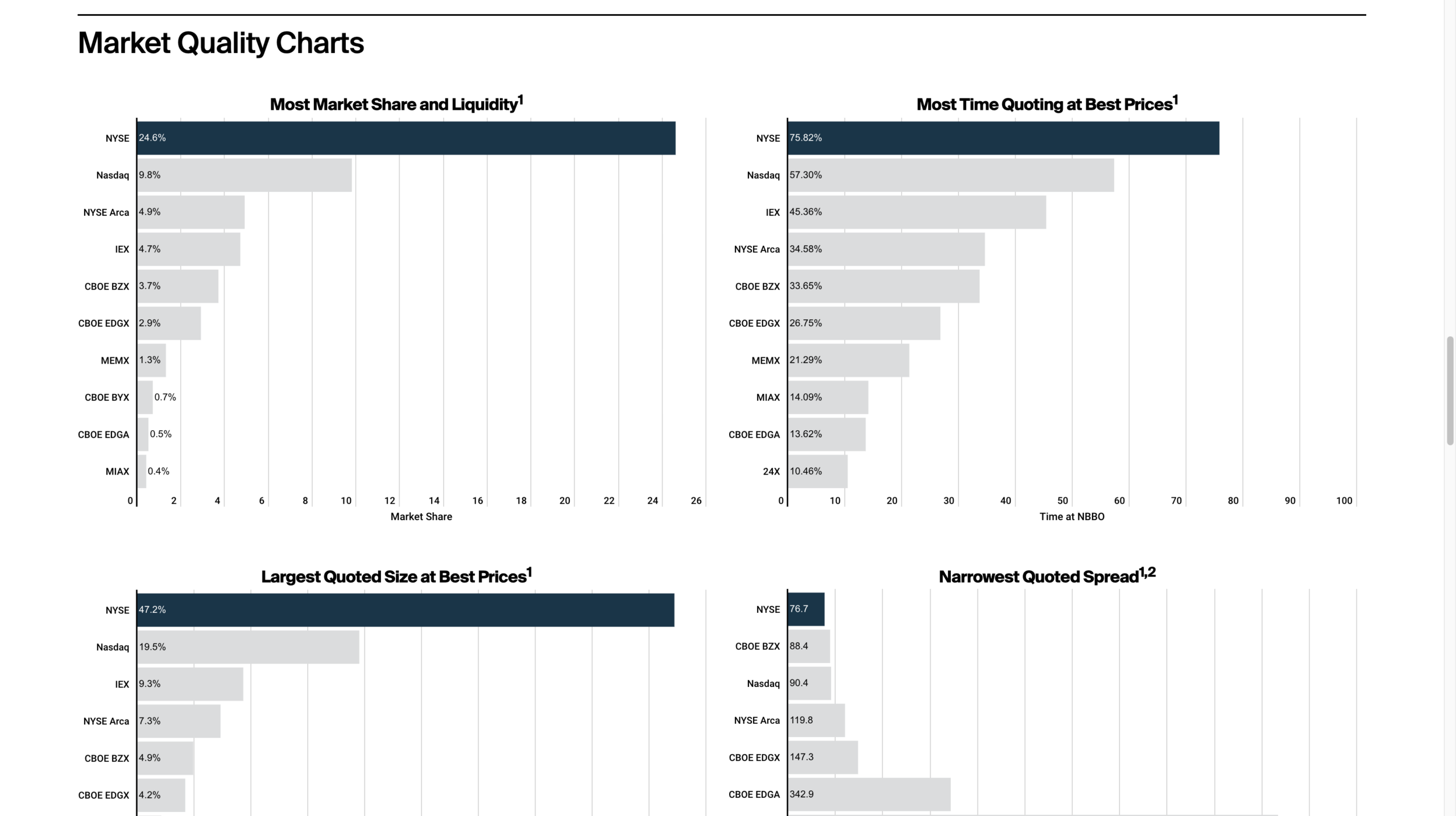
Image from NYSE
- Equities: These are shares in companies that are listed on the stock market and traded on places like the New York Stock Exchange and NASDAQ. On crypto exchanges you can find these as contracts that are settled in USDT and track the price of stocks.
- Bonds: These are investments that give a fixed income and are issued by governments and companies. Now you can find versions of US Treasuries and money market funds as assets on the blockchain.
- Commodities: These are things like gold and oil. Gold and silver are among the traded conventional pairs on crypto exchanges.
- Forex: This is where people trade currencies like the euro and the dollar. Some exchanges now have derivatives that are settled in USDT.
- Indices: These are like benchmarks that track how a group of assets are doing. You can trade indices like the S&P 500 and the NASDAQ 100 on crypto exchanges.
- Derivatives: These are contracts based on real-world assets. You can find options and futures contracts on crypto exchanges.
- Banking services: These are things like loans and savings accounts that you can get from a bank. On the blockchain you can find things like lending and stablecoin products that give you interest.
These conventional products and services are changing with the use of crypto and blockchain technology. The legacy system is still here. Now it is also available on crypto exchanges.
Understanding the Differences: Legacy Systems, DeFi, and CeFi
To understand crypto, you need to know the difference between DeFi and legacy finance. These three systems are ways to handle money. Here is how they are different.
- The conventional approach is the standard way of doing things. It is controlled by the government and big financial companies. Companies like JPMorgan, Goldman Sachs and the New York Stock Exchange are part of this ecosystem. They only work during the day. You need to prove who you are to use them. You also need to have the kind of account and use middlemen to make most transactions. This way is safe because the law protects you and your money is insured. It can be hard to use if you live in the wrong place or do not have a lot of money.
- CeFi or Centralized Finance, is like the conventional setup. But for crypto, Companies like Binance and Coinbase are CeFi. They work like the financial companies but with crypto. As Binance says, CeFi uses a place to make trades and you need to trust that place to keep your money safe. CeFi is like a bridge between the way of doing things and the new way with crypto. It looks like the way but you can use crypto.
- DeFi or Decentralized Finance is a new way to do things. It uses blockchains and smart contracts. There is no one in charge. You do not need to prove who you are. You keep your money in a special wallet. DeFi has things like Uniswap, Aave and Compound. When you make a transaction it is open for everyone to see. It happens automatically.. If something goes wrong you are, on your own. There is no one to help you.
The core difference between the two is trust versus permissionlessness. The old system is backed by legal enforcement and regulatory protection. DeFi replaces that with code that runs automatically on a blockchain. CeFi sits in between, combining crypto infrastructure with centralized oversight and user support. In 2026, the boundaries between all three are blurring as real-world assets appear on DeFi rails and crypto exchanges offer conventional products alongside digital assets.
Common Conventional Market Practices Using Crypto
As major crypto exchanges integrate legacy assets, several practical trading patterns have emerged. Common practices include:
- Stock CFDs and perpetuals: Trading price movements of stocks like Tesla, Apple, and Nvidia via USDT-settled contracts. Binance launched a Tesla USDT perpetual in January 2026, allowing traders to access Nasdaq price movements without a US stock account.
- Commodity futures: Going long or short on gold, silver, and oil through crypto derivatives with leverage options. Gold perpetuals are among the most liquid TradFi products on major exchanges.
- Forex pairs on crypto exchanges: Trading EUR/USD, GBP/JPY, and other forex pairs using crypto-native infrastructure with 24/7 access, bypassing traditional forex broker requirements.
- Index exposure: Tracking the S&P 500, NASDAQ, or Nikkei through perpetual contracts settled in stablecoins. This gives global traders access to US and Asian market movements without opening an international brokerage account.
- Tokenized RWAs: Holding on-chain versions of government bonds and money market funds that accrue real yield. BlackRock’s BUIDL fund and similar products now appear on multiple DeFi and CeFi platforms as accessible real-world instruments.
- Stablecoin yield strategies: Using USDT and USDC in DeFi protocols to earn yields that mirror money market rates, effectively bringing conventional fixed-income economics into crypto infrastructure.
Why TradFi on Crypto Is Growing in 2026?
The growth of these products on crypto exchanges is not accidental. Several structural forces are pushing both sides of the market toward convergence.
24/7 access is a genuine competitive advantage. Traditional stock markets close at 4PM Eastern Time on weekdays and are shut on weekends. Major economic events routinely happen outside those hours. These perpetuals on crypto exchanges let traders respond to earnings announcements, geopolitical events, and macro data releases the moment they happen, not when the market reopens.
Settlement speed has improved dramatically. Traditional stock trades settle in T+1 in the US as of 2024, meaning it takes one business day for a trade to fully clear. Conventional products on crypto exchanges settle in seconds via stablecoin transfers. This speed unlocks capital efficiency that traditional brokerages cannot match.
Global access without geographic restrictions. Traditional TradFi markets impose geographic barriers. Buying US stocks from most countries outside the US requires a specific brokerage account with international access, significant paperwork, and often higher minimum deposits. On a crypto exchange, the same exposure is available to anyone in a supported jurisdiction with a USDT wallet and an internet connection.
Fractional exposure with lower minimums. Some TradFi assets have high per-unit prices. A single share of Berkshire Hathaway Class A trades above $600,000. USDT-settled perpetuals allow fractional exposure to any asset at any size, making previously inaccessible TradFi assets reachable with minimal capital.
Top Exchanges for TradFi Trading With Crypto
Not every crypto exchange offers TradFi products. The platforms below have built out the strongest TradFi trading infrastructure as of June 2026. If you are opening a new account, check whether you can claim a crypto sign up bonus before depositing to offset your initial trading costs.
MEXC TradFi

Image from MEXC
MEXC is the top recommended exchange for this type of trading in 2026. According to MEXC’s product signal analysis, the platform has actively expanded its derivatives listing to cover oil, gold, major stocks, and broader macro assets. It operates with the lowest trading fees globally at 0.0% maker and 0.05% taker on spot, and offers over 2,900 spot trading pairs alongside a deep and liquid futures market.
MEXC’s TradFi perpetual contracts are USDT-settled, giving traders clear exposure to equity and commodity price movements without owning underlying assets. Its welcome gift program offers up to 10,000 USDT in bonuses for new registrations. New users can explore the full MEXC review for a comprehensive breakdown of its features, fees, security record, and supported assets before depositing. Existing users looking to reduce ongoing costs can also apply an MEXC referral code to unlock fee discounts from the point of registration.
- Fees: 0.0% maker / 0.05% taker on spot, among the lowest available globally
- Markets covered: Gold, silver, oil, stock CFDs, forex pairs, equity indices via USDT-settled perpetual contracts
- Supported assets: 2,900+ spot pairs with an extensive and liquid futures market
- Availability: Accessible in most global jurisdictions; certain restrictions apply to US users
- Bonus: Welcome gifts up to 10,000 USDT for new account registrations
Binance TradFi

Image from Binance
Binance was the first global exchange to launch regulated TradFi perpetual contracts settled in stablecoin. In January 2026, Binance announced TradFi Perpetual Contracts starting with gold and silver, offered through Nest Exchange Limited under Abu Dhabi Global Market (ADGM) regulation. According to WEEX’s TradFi evolution analysis, Binance also added a Tesla USDT perpetual contract in the same period, allowing traders to access Nasdaq price movements without a US brokerage account.
Binance’s TradFi perpetuals are backed by its position as the world’s highest-volume exchange, with 275 million users and over $217 billion in daily spot and futures volume. This depth means tighter spreads and better execution on TradFi pairs compared to smaller exchanges. For high-volume TradFi traders, Binance’s liquidity advantage is significant.
- TradFi products: Gold, silver, oil, tech stocks including Tesla, MSTR, and Coinbase, plus equity indices
- Regulation: ADGM-regulated entity for TradFi perpetuals through Nest Exchange Limited
- Fees: 0.1% standard spot; reduced with BNB holdings or VIP tiers
- Best for: High-volume traders who want the broadest TradFi product range and the deepest liquidity globally
Bybit TradFi

Image from Bybit
Bybit has built out one of the most comprehensive TradFi product suites among mid-tier exchanges. Its dedicated Bybit TradFi section offers nearly 500 traditional finance products, including stock CFDs, forex pairs, commodities, and equity indices. Bybit has also integrated AI trading tools through its TradeGPT feature, which helps traders analyse TradFi market conditions and generate trade signals in real time.
For traders who want to combine crypto and TradFi strategies in a single interface with analytical support, Bybit provides one of the most integrated environments available in 2026. The addition of AI-powered market analysis alongside 500 TradFi pairs makes it a strong second choice for active macro traders.
- TradFi products: Nearly 500 TradFi-linked trading pairs including stock CFDs, forex, commodities, and indices
- Unique feature: TradeGPT AI analysis tool for real-time TradFi and crypto market signals
- Fees: 0.1% spot; competitive futures rates across TradFi and crypto pairs
- Best for: Traders who want a broad TradFi selection combined with AI-assisted market analysis in one platform
OKX TradFi

Image from OKX
OKX offers TradFi exposure primarily through its derivatives and structured products suite. The platform supports trading of commodity futures and stock-linked contracts alongside its deep crypto offerings. OKX is known for strong regulatory compliance across multiple jurisdictions, including Dubai and Europe, and a clean interface that makes switching between crypto and TradFi products straightforward without requiring separate accounts or platforms.
For regulated-market traders who are accustomed to compliance-first brokerages and want TradFi crypto exposure without sacrificing that standard, OKX provides the most familiar regulated environment of any major exchange offering TradFi products.
- TradFi products: Commodity futures, stock-linked derivatives, forex-adjacent trading pairs
- Regulation: Licensed across multiple jurisdictions including MENA, Europe, and Asia-Pacific
- Fees: 0.08% maker / 0.1% taker at standard tier; reduced with OKB holdings
- Best for: Compliance-focused traders who need a regulated environment for both TradFi and crypto products
Tips for TradFi With Crypto
Start with liquid TradFi pairs.
Gold (XAUUSDT), silver (XAGUUSDT), and major equity indices have the deepest liquidity on crypto exchanges. Thinner TradFi pairs carry higher slippage risk and wider spreads.
Understand that you are trading price exposure, not the asset itself.
Most TradFi products on crypto exchanges are perpetual contracts settled in USDT. You do not own the underlying stock or commodity. There are no dividends, no voting rights, and no physical delivery.
Watch for gap risk during off-market hours.
Even though crypto exchanges offer 24/7 TradFi trading, the underlying assets have reference market hours. Gold and forex operate nearly continuously, but equity prices reference NYSE or NASDAQ trading hours.
Use leverage carefully on TradFi derivatives.
TradFi perpetuals on crypto exchanges typically offer leverage. The same volatility that makes leveraged crypto trading risky applies to TradFi derivatives on crypto rails.
Verify regulatory status before depositing.
Not all TradFi products are available in all jurisdictions. US residents face restrictions on most non-US equity derivatives on offshore exchanges.
Track correlations between TradFi and crypto markets.
In 2026, risk-on and risk-off dynamics increasingly move TradFi and crypto markets in the same direction.
Conclusion
Understanding the DeFi vs TradFi distinction matters because each system serves different needs: one is built on trust, regulation, and institutional enforcement, and the other is built on code, permissionlessness, and self-custody.
For traders who want access to stocks, gold, forex, and indices without a brokerage account, MEXC, Binance, Bybit, and OKX all offer credible TradFi products as of June 2026. MEXC leads for value and lowest fees. Binance leads for volume and regulatory coverage.
Bybit leads for breadth of TradFi pairs and AI analysis. OKX leads for regulated-market compliance. The right platform depends on your trading volume, preferred assets, and jurisdiction.
TradFi FAQs
What is TradFi?
TradFi stands for traditional finance. The TradFi definition covers the legacy financial system including banks, stock exchanges, brokers, insurers, and regulators. In a crypto context, TradFi usually refers to traditional financial assets like stocks, gold, and forex that are increasingly available on blockchain rails as tokenized products or USDT-settled perpetual contracts.
What does TradFi mean in crypto?
In crypto, TradFi meaning typically refers to either the traditional finance system that crypto seeks to complement or disrupt, or the TradFi-linked products such as stock CFDs, commodity perpetuals, and tokenized bonds that crypto exchanges now offer.
What is the difference between DeFi and TradFi?
The core DeFi vs TradFi difference is centralization and trust. TradFi relies on regulated institutions and legal enforcement. DeFi uses smart contracts on public blockchains with no central authority.
Which crypto exchange is best for TradFi trading?
MEXC is the top pick for TradFi trading in 2026, with the lowest fees globally and a growing derivatives suite covering stocks, gold, oil, and macro assets. Binance is the highest-volume option with ADGM-regulated TradFi perpetuals and the deepest liquidity.
Can I trade TradFi stocks on crypto exchanges?
Yes. Several major exchanges now offer USDT-settled perpetual contracts that track the price of stocks like Tesla, Apple, Nvidia, and Coinbase.
The post What is TradFi? Top Crypto Exchanges for TradFi in June 2026 appeared first on Ventureburn.