
For years, the conversation around blockchain’s role in finance has revolved around cryptocurrencies, stablecoins, and more recently, tokenized real-world assets. But according to one of the industry’s leading executives, the next major breakthrough may not come from government bonds or private credit products. Instead, it could emerge from something far more familiar to everyday investors: stocks and exchange-traded funds.
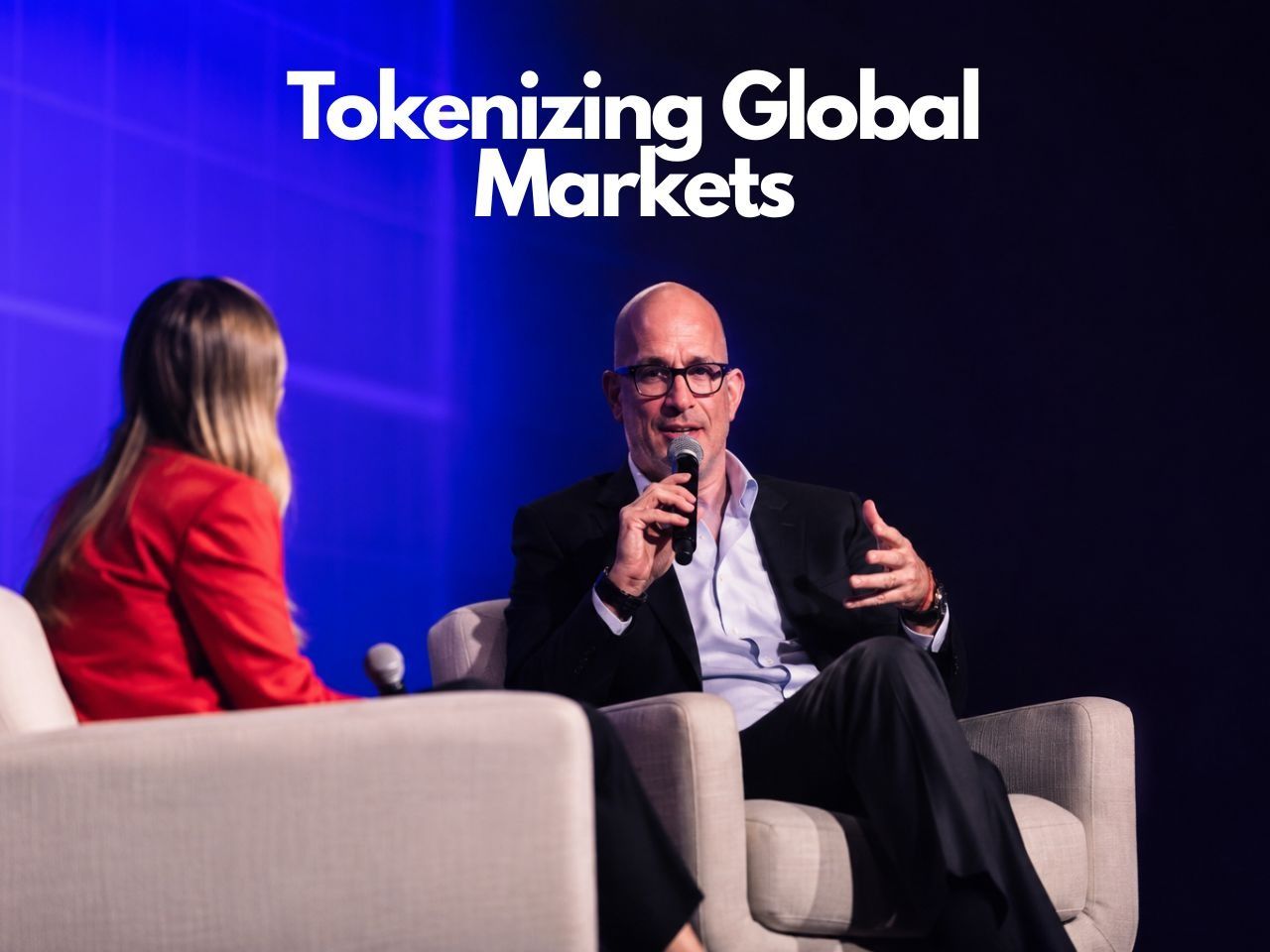
Speaking at ETHConf in New York, Securitize CEO Carlos Domingo laid out a bold vision for the future of financial markets—one where equities and ETFs move onto blockchain networks, creating what he believes could become a multi-trillion-dollar opportunity for the digital asset industry.
His argument is simple. The current tokenized asset market, often referred to as the real-world asset (RWA) sector, remains relatively small despite rapid growth. Yet the global stock market represents one of the largest pools of capital in the world. If even a fraction of that market migrates on-chain, the scale of the opportunity could dwarf anything the industry has seen so far.
From a $30 Billion Market to a Multi-Trillion-Dollar Future
The tokenization narrative has gained significant momentum over the past two years. Financial institutions, asset managers, and blockchain companies have increasingly explored ways to represent traditional financial assets as digital tokens on blockchain networks.
Today, the RWA market is estimated to be worth roughly $30 billion. Much of that growth has been driven by tokenized U.S. Treasury products, which have emerged as one of the most successful use cases for institutional blockchain adoption.
However, Domingo believes that Treasuries are only the beginning.
According to him, the real catalyst for the next phase of growth will be tokenized equities and exchange-traded funds.
“The entire equities and ETF market worldwide is probably like $150 trillion,” Domingo said during the panel discussion. “Only if a small percentage of that, like 2% or 3%, moves onchain, it gets you very close to that $5 trillion.”
The numbers help explain why industry participants are increasingly turning their attention toward equity tokenization. While tokenized bonds and money-market products have demonstrated that traditional assets can successfully exist on blockchain infrastructure, stocks represent a vastly larger addressable market.
For blockchain companies seeking mainstream adoption, that market could become the industry’s biggest opportunity yet.
Securitize’s Push Toward Public Markets
The comments come at a pivotal moment for Securitize.
The company, widely regarded as one of the leading institutional tokenization platforms globally, is preparing to go public while simultaneously expanding its presence within the rapidly evolving tokenized securities ecosystem.
Over the years, Securitize has built a reputation by working with major financial institutions, including BlackRock, helping bring traditional assets onto blockchain infrastructure.
Now, the company is positioning itself at the center of what it sees as the next major evolution of capital markets.
As part of that effort, Securitize has announced partnerships with the New York Stock Exchange and transfer agent Computershare. The collaborations are designed to support on-chain trading and settlement of equities, potentially creating infrastructure that bridges traditional financial markets with blockchain-based systems.
The move signals a broader industry trend. Rather than attempting to replace existing financial institutions, many blockchain companies are increasingly working alongside established market participants to modernize how assets are issued, transferred, and settled.
What Makes a “Real” Tokenized Stock?
One of the more striking points raised by Domingo during the discussion was his distinction between genuine tokenized equities and many of the blockchain-based stock products currently available in the market.
The concept of tokenized stocks is not entirely new. Several crypto platforms and blockchain projects have attempted to offer stock-linked products over the years. However, Domingo argued that many of these offerings do not actually represent direct ownership of the underlying shares.
“A lot of people that today say that they tokenize equities, they’re not tokenizing equity,” he said.
According to Domingo, many existing products are structured using derivatives or synthetic mechanisms that track stock prices rather than providing investors with actual ownership rights.
For tokenized equities to reach their full potential, he believes they must mirror the rights and protections associated with traditional shares. That means investors should receive the same ownership benefits they would expect from conventional stock holdings while also gaining the efficiencies enabled by blockchain technology.
Why Blockchain-Based Equities Could Be More Efficient
The long-term vision outlined by Securitize goes beyond simply digitizing shares.
Domingo sees blockchain infrastructure enabling a more efficient version of capital markets—one where assets can move instantly, settle faster, and operate around the clock.
Traditional stock markets continue to rely on systems that often involve delayed settlement processes and market-hour restrictions. Blockchain-based securities, on the other hand, can potentially offer near-instant settlement and 24/7 transferability.
In addition, tokenized assets could become deeply integrated with decentralized finance (DeFi) applications, opening new possibilities for lending, collateralization, and liquidity management.
Supporters of tokenization argue that these advantages could ultimately reduce operational costs, improve market accessibility, and create a more seamless investing experience.
For institutional investors, such efficiencies could translate into significant gains over time.
Why Ethereum Remains Central to the Strategy
Despite ongoing debates around privacy, transparency, and regulatory compliance, Domingo remains confident that public blockchain networks will continue to play a central role in institutional tokenization efforts.
In particular, he pointed to Ethereum as the preferred infrastructure for many institutional-grade tokenized assets.
One of the concerns often raised by traditional financial institutions is how regulated assets can operate on open, permissionless blockchain networks.
Securitize’s approach attempts to address this challenge through smart contracts that restrict ownership to approved investors while still allowing the assets themselves to exist and move on public blockchain infrastructure.
The model aims to balance regulatory compliance with the efficiency and openness that blockchain networks offer.
For many observers, this hybrid approach represents one of the most practical pathways toward broader institutional adoption.
A Parallel Financial System Is Emerging
While enthusiasm around blockchain finance often focuses on disruption, Domingo’s outlook is notably more measured.
Rather than predicting the end of traditional financial markets, he expects blockchain-based markets to develop alongside existing systems for years to come.
“The traditional markets are going to stay,” he said. “We’re going to see a new market emerge in parallel that will run on blockchain rails and be much more efficient.”
That vision reflects a growing consensus among institutional players entering the digital asset space. Instead of replacing established financial infrastructure overnight, blockchain is increasingly being viewed as an additional layer that can improve efficiency, transparency, and accessibility.
Whether tokenized equities ultimately become the breakthrough application Domingo anticipates remains to be seen. But the scale of the opportunity is difficult to ignore.
If even a small portion of the estimated $150 trillion global equities and ETF market migrates to blockchain networks, the impact on the broader digital asset ecosystem could be transformative.
For an industry searching for its next major growth engine beyond cryptocurrencies and tokenized Treasuries, the race to bring stocks on-chain may have already begun.