
For decades, Punjab’s entrepreneurial spirit has been visible across the world.
From family-run businesses and manufacturing enterprises to globally successful founders with Punjabi roots, the state has long been associated with ambition, resilience and enterprise. Yet, despite producing talented entrepreneurs, many startup success stories linked to Punjab have often been built elsewhere.
The Punjab government now wants to change that narrative.
In a significant push towards strengthening the state’s innovation ecosystem, Punjab Chief Minister Bhagwant Singh Mann distributed seed grants worth ₹1.07 crore to 31 startups and their founders, reaffirming the government’s commitment to building a thriving startup culture within the state itself.
The initiative, launched under the Punjab Startup & Industrial Policy 2026, comes at a time when states across India are competing to attract entrepreneurs, foster innovation and create high-value employment opportunities. Punjab’s leadership believes startups can play a central role in driving the state’s next phase of economic growth while creating opportunities for young people closer to home.
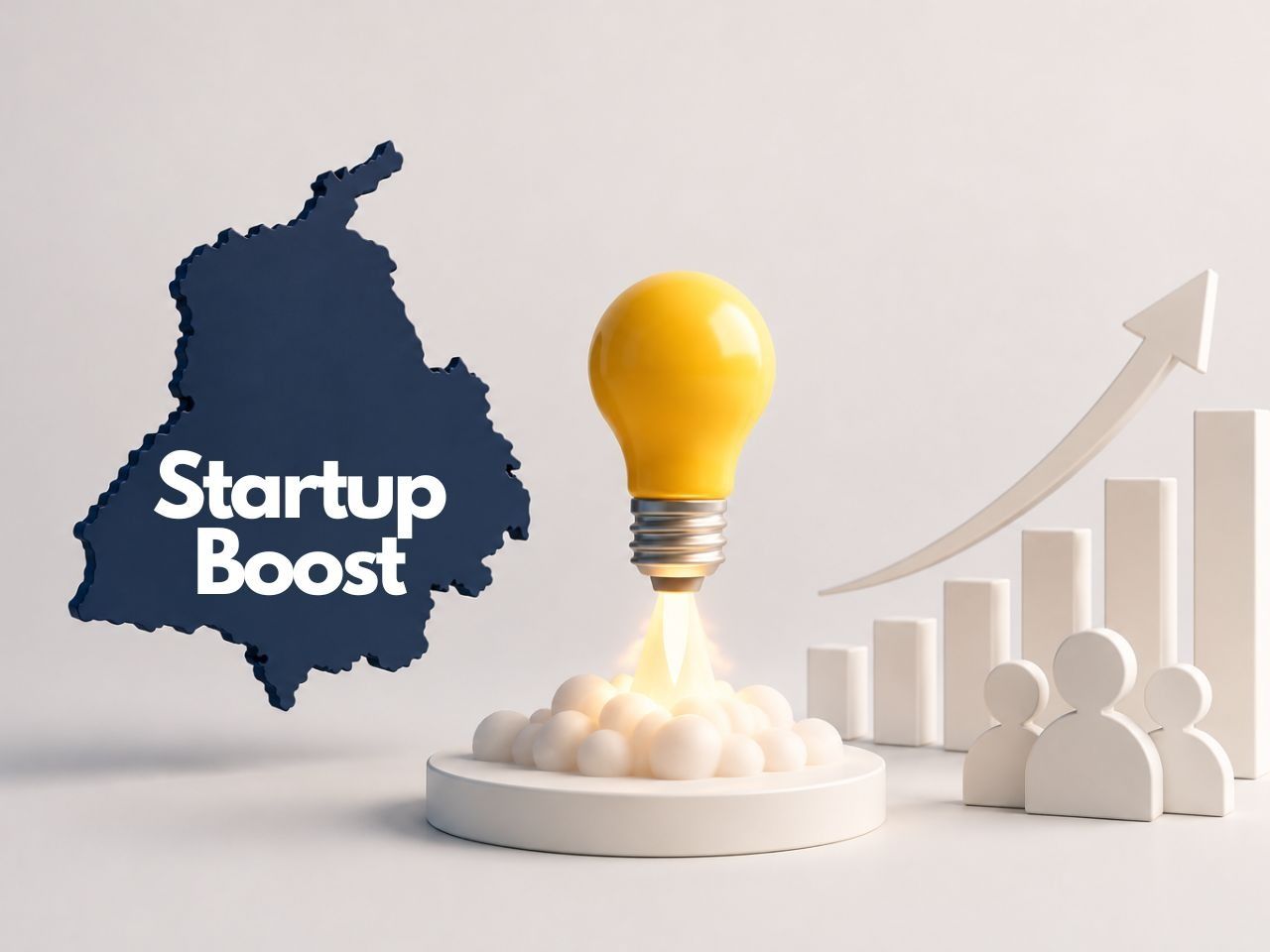
Pubjab Gets A Startup Boost
A Financial Boost for Emerging Entrepreneurs
Speaking at the Startup Punjab Seed Distribution function, Chief Minister Bhagwant Singh Mann described the occasion as a landmark moment for the state’s young entrepreneurs.
A total of ₹1.07 crore in seed grants was distributed among 31 startups, providing crucial early-stage capital to help founders convert ideas into viable businesses.
Under the revised Punjab Startup & Industrial Policy 2026, seed grant assistance has been increased from ₹3 lakh to ₹5 lakh. As part of the latest round of support, seven startups received grants of ₹5 lakh each, while 24 startups received grants of ₹3 lakh each.
The move reflects the government’s growing emphasis on strengthening the startup ecosystem by ensuring that promising ventures are not constrained by a lack of capital during their formative stages.
Addressing entrepreneurs, Mann said the state government remains committed to ensuring that no innovative idea is abandoned due to financial limitations.
“Today is a historic day for Punjab’s industry, especially for our young entrepreneurs who are beginning their business journey with innovative ideas and a spirit of innovation,” he said while addressing the gathering.
Building Startups, Creating Jobs
Beyond supporting entrepreneurship, the government views startups as an important vehicle for employment generation.
Mann expressed confidence that the startups receiving support today could evolve into enterprises that create thousands of jobs in the future. He said encouraging entrepreneurship within Punjab would also help reduce the need for young people to leave the state or move abroad in search of employment opportunities.
The Chief Minister stressed that startups are no longer a niche segment of the economy but a key pillar of Punjab’s future growth strategy.
As India continues to emerge as one of the world’s largest startup ecosystems, states are increasingly looking at entrepreneurship as a driver of investment, innovation and job creation. Punjab’s latest initiative is aimed at ensuring the state secures a meaningful place in that transformation.
Punjab’s Startup Ambition
Mann also highlighted the role of innovation in governance, pointing to several initiatives undertaken by the state government in recent years.
According to him, reforms such as free electricity, daytime power supply to farmers and other citizen-focused measures demonstrate how innovative thinking can create tangible benefits for people.
He argued that a similar innovation-first approach can help Punjab emerge as a leading startup destination.
With sustained support for entrepreneurship and enterprise development, Mann said Punjab is firmly on the path to becoming the startup hub of India.
The vision reflects a broader effort to reposition Punjab not only as an agricultural and industrial state but also as a growing centre for innovation and technology-driven businesses.
Drawing Parallels Between Politics and Startups
In an interesting analogy, the Chief Minister compared entrepreneurship with the journey of the Aam Aadmi Party (AAP).
Mann said that AAP itself began as an idea during a period when dynastic politics dominated the country and ordinary citizens felt excluded from the political process.
According to him, the party’s rise demonstrated how new ideas can challenge established systems and create transformational change.
“In many ways, AAP was also a startup,” Mann remarked, drawing parallels between entrepreneurial ventures and disruptive political movements.
He also referenced the 2022 Punjab Assembly elections, stating that voters chose a new direction for the state by electing an honest government committed to change.
Keeping Punjab’s Entrepreneurial Talent at Home
A key theme of the event was the government’s desire to encourage founders to build and scale their ventures within Punjab.
Highlighting the entrepreneurial DNA of Punjabis, Mann noted that individuals from the state have built successful businesses and created value across India and around the world.
He cited companies such as Zomato, Ola and Flipkart as examples of businesses linked to entrepreneurs with Punjabi roots, arguing that the state has consistently produced individuals capable of building impactful enterprises.
However, the government’s larger goal is to ensure that future startup success stories are not only founded by Punjabis but are also built and scaled from Punjab itself.
“Our goal is that the next generation of successful founders should not only come from Punjab but should also build their companies in Punjab,” Mann said.
Learning from Global Innovation Hubs
The Chief Minister also shared observations from his visits to global innovation ecosystems.
Recalling a visit to Pangyo Techno Valley in South Korea, Mann said the experience demonstrated how a well-designed innovation ecosystem can transform an entire region and help startups evolve into globally competitive companies.
Similarly, he referred to the World Horti Center in the Netherlands, where innovation, testing and commercialization are helping drive transformation in agriculture and horticulture.
The examples, he suggested, offer valuable lessons for Punjab as it seeks to build an ecosystem capable of nurturing globally competitive startups.
Startups as Catalysts for Punjab’s Future
As the state works to strengthen its startup ecosystem, the government is positioning entrepreneurs as key contributors to Punjab’s future development.
Mann urged founders to become ambassadors for the state, encouraging them to proudly represent Punjab wherever they go.
He reiterated that the government would continue to provide support, mentorship and assistance to entrepreneurs throughout their journey.
Drawing an analogy between startups and agriculture, he said that just as a seed requires water and care to grow into a healthy plant, entrepreneurs need financial support and nurturing in the early stages to transform innovative ideas into successful enterprises.
The state government, he assured, would continue working to ensure that promising ideas are not abandoned due to a lack of resources.
A Larger Vision for Punjab
The distribution of ₹1.07 crore in seed grants may appear modest in comparison to large venture capital rounds seen in major startup hubs, but it represents something more significant—a commitment to building a long-term entrepreneurial culture.
As states increasingly compete to attract founders and innovation-led businesses, Punjab is signalling its intention to be part of India’s startup growth story.
For a state known globally for its industrious spirit and entrepreneurial mindset, the focus is now shifting towards creating an ecosystem where startups can not only be launched but also scaled successfully.
The message from the Punjab government is clear: the state’s future growth will be driven not just by traditional industries, but also by innovators, entrepreneurs and startups capable of creating jobs, wealth and global impact.
And if the government’s ambitions translate into sustained support and ecosystem development, Punjab’s startup journey may only be getting started.