
For years, India’s startup story was largely defined by consumer internet companies, fintech unicorns, food delivery platforms, and ecommerce giants. But a quieter transformation has been unfolding beneath the surface—one that is increasingly positioning India as a global force in deep technology.
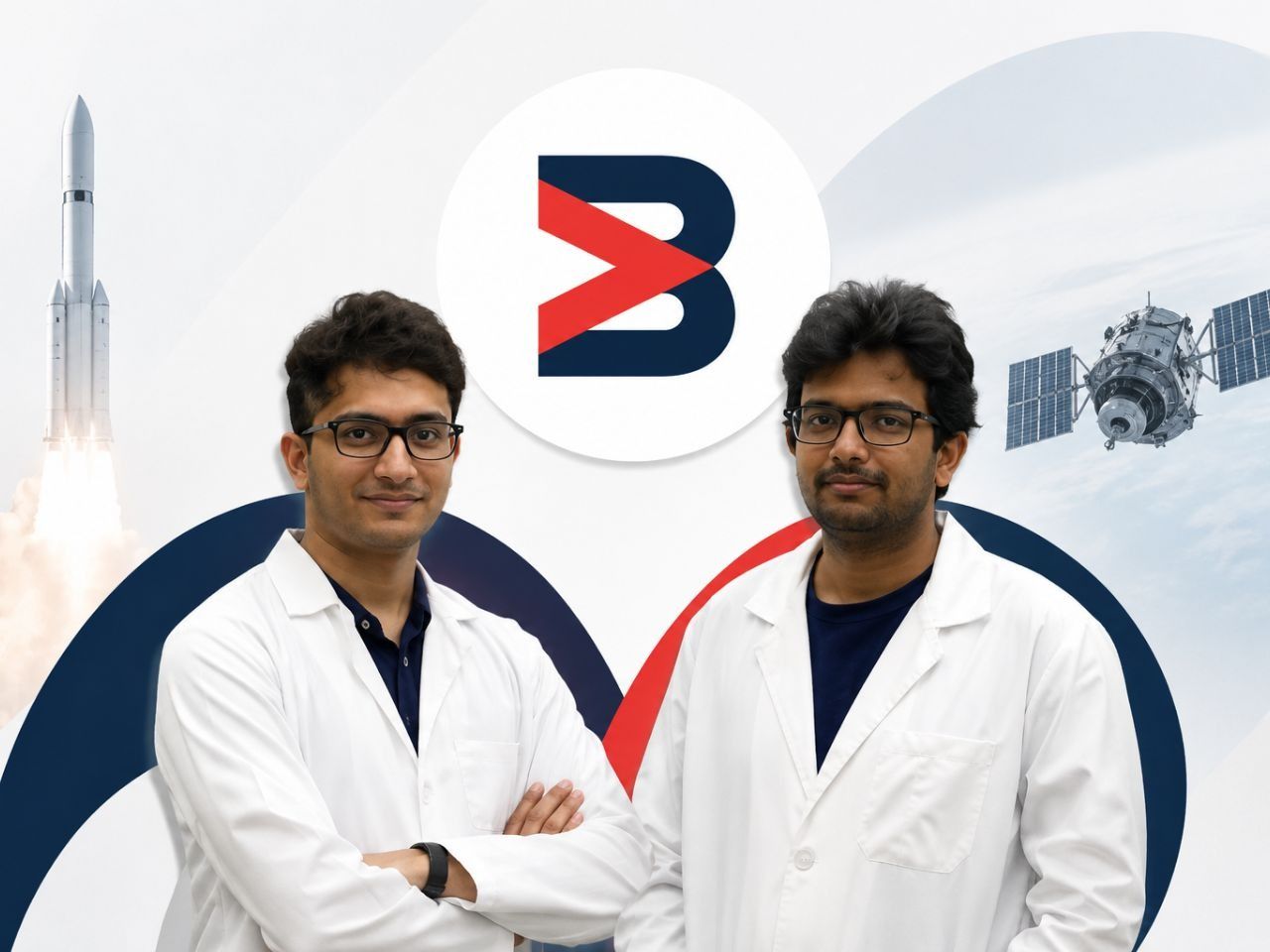
Today, a new generation of startups is building solutions in some of the world’s most complex and high-impact sectors, from artificial intelligence and advanced manufacturing to drones, semiconductors, and space technology. Among the companies leading this shift is Bellatrix Aerospace, a Bengaluru-based space-tech startup that is helping redefine India’s role in the global space economy.
The startup’s latest recognition as one of India’s top deep-tech companies selected for Bharat Innovates, France marks another milestone not only for Bellatrix Aerospace but also for the country’s rapidly maturing innovation ecosystem. As the company prepares to represent India on an international platform, its journey highlights how homegrown startups are increasingly building technologies with global relevance and impact.
Building the Future of Space Mobility
At the heart of Bellatrix Aerospace’s work is a mission to solve one of the most critical challenges in the modern space industry: efficient and sustainable movement in space.
The company develops advanced in-space propulsion technologies that support satellite deployment, orbital transfers, and complex space missions. These propulsion systems are designed to enhance satellite performance while improving operational efficiency.
As satellite launches continue to grow worldwide and space becomes increasingly commercialized, mobility solutions are becoming a critical component of the broader space infrastructure ecosystem. Bellatrix Aerospace is positioning itself at the center of this opportunity by developing technologies that can extend satellite life, reduce mission costs, and provide greater flexibility to operators.
The startup’s work reflects a broader trend within India’s deep-tech sector, where founders are moving beyond software-led innovation and tackling highly sophisticated engineering challenges that require years of research, development, and technological expertise.
A Recognition That Reflects India’s Growing Global Footprint
Bellatrix Aerospace’s selection for Bharat Innovates, France is a significant acknowledgment of the capabilities emerging from India’s startup ecosystem.
The recognition comes at a time when Indian startups are gaining increasing visibility on international platforms, particularly in sectors that demand cutting-edge innovation. Deep-tech ventures are no longer viewed merely as promising experiments but as companies capable of competing globally and contributing meaningfully to technological advancement.
For Bellatrix Aerospace, the recognition underscores the growing confidence in India’s ability to produce world-class innovation in frontier technologies. For the broader ecosystem, it signals how Indian startups are increasingly being recognized for solving global challenges through indigenous innovation.
The Ecosystem Behind the Success
While Bellatrix Aerospace has built its own success story through technological innovation and execution, its growth has also been supported by one of India’s most ambitious innovation initiatives—the Atal Innovation Mission (AIM) under NITI Aayog.
Since its launch in 2016, AIM has emerged as a key pillar of India’s startup and innovation landscape, working to nurture entrepreneurship across sectors and regions.
Over the past decade, the mission has built an extensive support infrastructure for innovators and entrepreneurs. Its network of 72 Atal Incubation Centres (AICs) has supported more than 3,500 startups and contributed to the creation of over 32,000 jobs across the country.
These incubators provide startups with access to mentorship, funding support, technical infrastructure, research facilities, strategic partnerships, and industry networks—resources that are often critical during the early stages of company building.
The impact of these incubation centres can be seen across a diverse range of sectors, including space technology, drone technology, healthtech, fintech, edtech, food processing, tourism, and advanced manufacturing.
Encouraging Inclusive Entrepreneurship
One of the notable aspects of AIM’s startup support ecosystem is its emphasis on inclusivity.
More than 1,000 startups supported through the Atal Incubation Centre network are led by women entrepreneurs, highlighting the growing participation of women in India’s innovation economy.
The initiative has helped create opportunities for founders across different backgrounds and sectors, contributing to a more diverse entrepreneurial landscape.
As India seeks to strengthen its position as a global innovation hub, increasing participation from underrepresented groups is expected to play an important role in driving future growth.
Supporting Innovation Beyond the Metro Cities
The impact of the Atal Innovation Mission extends far beyond established startup hubs.
Through its Atal Community Innovation Centres, AIM is working to foster entrepreneurship in Tier-2 and Tier-3 cities, aspirational districts, tribal regions, coastal areas, and other underserved geographies.
This expansion is helping democratize access to innovation opportunities and ensuring that entrepreneurial talent is not limited by geography.
Industry experts increasingly view this decentralization of innovation as a critical factor in India’s next phase of startup growth. As access to mentorship, infrastructure, and funding expands beyond metropolitan centres, a larger pool of innovators is expected to contribute to the country’s entrepreneurial ecosystem.
Funding Innovation That Solves National Challenges
Beyond incubation and ecosystem support, AIM has also focused on helping startups address real-world challenges through initiatives such as the Atal New India Challenge.
The programme provides funding and commercialization support to startups working on solutions for national priorities. Selected startups can receive grants of up to Rs 1 crore along with mentoring and market access support.
Such initiatives are helping bridge the gap between innovation and implementation, enabling startups to develop technologies that can create meaningful impact at scale.
Inspiring the Next Generation of Innovators
Perhaps one of AIM’s most significant contributions lies in building a culture of innovation from an early age.
The mission has established 10,000 Atal Tinkering Labs across schools in India, providing students with opportunities to experiment with emerging technologies including robotics, 3D printing, electronics, and the Internet of Things.
These labs encourage problem-solving, creativity, and hands-on learning, helping nurture future entrepreneurs, engineers, researchers, and innovators.
As India aims to become a global innovation powerhouse, such grassroots initiatives are laying the foundation for a long-term pipeline of talent capable of driving technological advancement.
India’s Deep-Tech Moment
The rise of Bellatrix Aerospace represents something larger than the success of a single startup.
It reflects a broader transformation taking place within India’s startup ecosystem—one where innovation is increasingly moving into deep-tech domains that require advanced engineering, scientific expertise, and long-term vision.
Companies working in space technology, artificial intelligence, drones, advanced manufacturing, and frontier engineering are attracting growing attention from investors, policymakers, and global stakeholders.
As these startups continue to scale, they are helping reshape perceptions of India’s innovation capabilities on the world stage.
Bellatrix Aerospace’s journey from a homegrown startup to an internationally recognized space-tech company demonstrates how far India’s entrepreneurial ecosystem has come. More importantly, it offers a glimpse into where it may be headed next—towards a future where Indian startups are not only solving domestic challenges but also building technologies that influence industries and economies around the world.