When learning what is DeFi, you will find that decentralized finance is very different from the traditional financial system. There’s no middleman. Just you, your crypto, and a piece of code running on a blockchain.
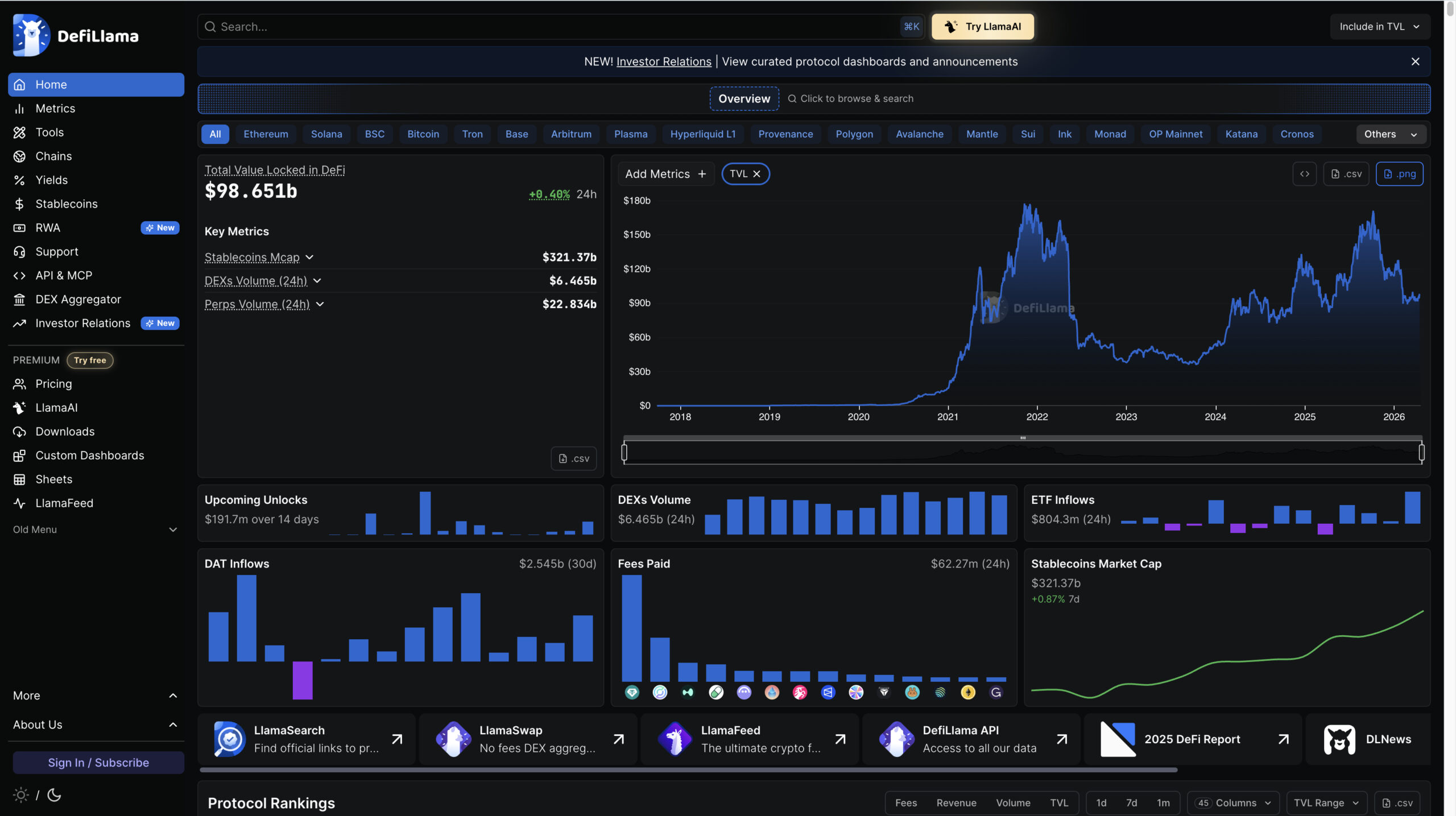
The numbers back up the massive adoption of this industry. The DeFi sector ended 2024 with $133.6 billion in total value locked. This is 2.5 times more than the $50 billion reported in December 2023.
By late 2025, that figure had increased to $172 billion.
What Does DeFi Stand For? (DeFi Meaning Explained)
DeFi stands for decentralized finance. It refers to a collection of financial services, lending, trading, saving, and earning, built on public blockchains instead of banks or corporations.
The DeFi meaning goes deeper than just removing banks. It means anyone with a crypto wallet and an internet connection can access financial services that were previously gated by geography, credit scores, or income levels.
Anyone can borrow against their crypto holdings, earn yield, or make a coin price prediction.
The term what does DeFi stand for started gaining real traction around 2018 when Ethereum developers began building open financial tools on the blockchain.
DeFi vs. Traditional Finance (Banking): Key Differences
Most people are used to traditional finance. For example, banks hold your money, set the interest rates, and decide who gets a loan. DeFi flips that model entirely.
Here’s how what is a DeFi protocol compares:
In traditional banking, a central authority controls your funds. In DeFi, smart contracts, which are self-executing pieces of code, handle everything automatically. Banks operate during business hours. DeFi runs 24 hours a day, 7 days a week, 365 days a year. Traditional finance requires identity verification and approval. DeFi only requires a crypto wallet. Banks keep their internal rules and processes private. DeFi protocols are open-source and auditable by anyone on the internet.
There’s also the question of access. Around 1.4 billion adults globally remain unbanked, according to World Bank data. For what is a DeFi protocol, it doesn’t care about your credit history or what country you live in. If you have a phone and a wallet, you’re in.
Nevertheless, there are still massive issues with DeFi. For instance, banks offer consumer protection, fraud recovery, and deposit insurance.
DeFi offers none of that. If you make a mistake or get exploited, there’s no helpline to call. That makes understanding what is DeFi and how it actually works critically important before putting any money in.
How Does the Technology Work?
You can’t talk about what is DeFi yield farming or the term itself without smart contracts? Smart contracts are the engine that makes the entire system run.
A smart contract is like a computer program that is stored on a blockchain. It does things on its own when certain things happen.
Think of it like a vending machine. You put in the amount of money and it gives you what you paid for. You do not need someone to help you.
The machine does not care who you are. It just does what the program tells it to do.
Smart contracts are programs that run by themselves. They help people make agreements and do what they say they will do without needing someone in the middle. Smart contracts are good because they are fair and everyone can see what is happening. Smart contracts are, like programs that make sure everything is done correctly and that is what smart contracts do.
Users interact with these contracts through decentralized applications, or dApps. These look like regular websites or mobile apps, but instead of connecting to a company’s server, they connect directly to the blockchain through your personal wallet.
For example, in the case of what is DeFi yield farming, you don’t hand over your personal data or create an account like in the bank.
Ethereum is the top blockchain within the DeFi sector because it has more than 68% of total value locked.

Image from DeFiLlama
But other chains like Solana, BNB Chain, and Avalanche have some of the market share too. And for some of them, they even offer faster transactions or lower fees than the Ethereum network.
On Ethereum alone, smart contract interactions account for nearly 62% of all daily transactions, with DeFi protocols contributing roughly 25% of the network’s transaction volume. The code is doing the work, constantly, automatically, without a single human approving anything.
What Can You Do With DeFi? Top Crypto Use Cases
This is where decentralized finance gets practical. Here are the main things people actually do inside DeFi every day.
Decentralized Exchanges (DEXs)
A decentralized exchange (DEX) allows users to swap cryptocurrencies directly from their personal wallets, eliminating the need for account creation, KYC verification, or corporate-imposed withdrawal limits.
Instead of a traditional order book matching buyers and sellers, DEXs use liquidity pools. Users deposit pairs of coins into a shared pool.
At the same time, an algorithm called an Automated Market Maker (AMM) sets prices based on supply and demand. Uniswap is the largest DEX by volume while Curve is the top choice for many investors for stablecoin swaps.
If you’re looking for somewhere to start, exploring the best decentralized crypto exchanges will show you what’s available. This applies to different blockchains and fee structures.
What is DeFi Lending and Borrowing?
DeFi lending works like a bank loan, except that the process is less stressful than what happens in the bank. For what is DeFi lending, you deposit crypto into a protocol like Aave or Compound. Then what happens is that other users can borrow against that pool.
The smart contract handles interest rates, collateral requirements, and repayments automatically, in real time.

Image from Uniswap
Borrowers must usually put up more crypto than they borrow. This overcollateralization protects lenders if prices drop sharply. In return, lenders earn interest paid directly to their wallets. Apparently, these rates are usually bigger than what you might get at the bank.
What is DeFi lending biggest advantage? For many people, it is the fact that you stay in control the entire time. The smart contract holds the funds, and every rule is written in publicly visible code. There’s no loan officer making subjective decisions about your eligibility.
What is DeFi Staking & Yield Farming?
What is DeFi staking means locking your coins into a protocol to support its operations and earning rewards in return. On proof-of-stake blockchains like Ethereum, stakers help validate transactions and earn a portion of network fees for doing so.
Protocols like Lido have made this accessible without technical knowledge. Instead of running your own validator node, you deposit ETH and receive stETH — a liquid token representing your staked position — while still earning staking rewards. Lido currently holds around $27.5 billion in TVL, making it the largest single DeFi protocol by that metric.

Image from Pancakeswap
What is DeFi yield farming? It takes things further. Yield farmers do something smart with their money. Traders shift their crypto across various platforms to secure the highest yields. They typically deposit capital into liquidity pools, earning special reward tokens in return. Afterward, they stake these newly acquired assets in other decentralized applications to maximize their overall profits.
The returns can look really good, especially when the market is doing well. There are also some big risks that yield farmers have to think about. They might lose some of their money because of something called impermanent loss. They also have to worry about people finding ways to cheat the system and steal their money. Sometimes the whole thing can be a scam. These are all risks that come with being a yield farmer.
What is a DeFi Wallet?
To know what is a DeFi wallet, it is basically what you use to access the whole crypto market. Unlike wallets held on centralized exchanges, where the exchange technically controls your coins, a DeFi wallet gives you full, direct control.
For what is a DeFi wallet, MetaMask is the most widely used option for Ethereum and EVM-compatible chains. Trust Wallet supports multiple blockchains in one app. Phantom is popular among Solana users.
Benefits and Risks of Decentralized Finance
DeFi has produced many benefits for millions of people. It’s open to anyone and gives users control that traditional banks never offered. Moreover, it has created entirely new ways to earn yield on crypto that simply didn’t exist five years ago.
For example, the amount of people who are now using DeFi has increased over the years. increased to over 83 million by August 2024
The earning potential is a major benefit. Yield farming, liquidity provision, and staking can generate returns above what savings accounts or government bonds offer.
For example, there are many people who became millionaires by entering the DeFi sector. You can make free money from airdrops. You can join presales and turn a small amount of money into hundreds or thousands of dollars. That’s why many people keep coming into this sector.
However, there are still security risks. Smart contract bugs, exit scams, and extreme market volatility have wiped out funds overnight. Even experienced users have lost money to poorly audited protocols or sudden price crashes that triggered liquidations.
At the same time, most jurisdictions are still figuring out how to treat what is DeFi crypto activity for tax and legal purposes. What’s permissible today may look different in two years.
Conclusion: Is DeFi the Future of Finance?
So, what is DeFi crypto? It is a financial system that runs on code instead of institutions, accessible to anyone with a wallet and an internet connection, operating without permission from any central authority.
It won’t replace banks overnight because regulation is still catching up. The user experience still has a learning curve that can intimidate newcomers. Smart contract risk is real and permanent. But the growth is hard to ignore.
The post What is DeFi? A Beginner’s Guide to Decentralized Finance appeared first on Ventureburn.