
As Maharashtra invests in infrastructure, technology, creative industries and global connectivity, Chief Minister Devendra Fadnavis’s emerging vision offers something bigger than a media-and-entertainment strategy: the possibility of making Mumbai and Maharashtra a model creative-economy ecosystem for the Global South.
For decades, Mumbai’s identity as India’s film capital has been almost unquestioned. But what if its next chapter is bigger than cinema?
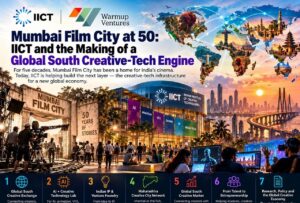
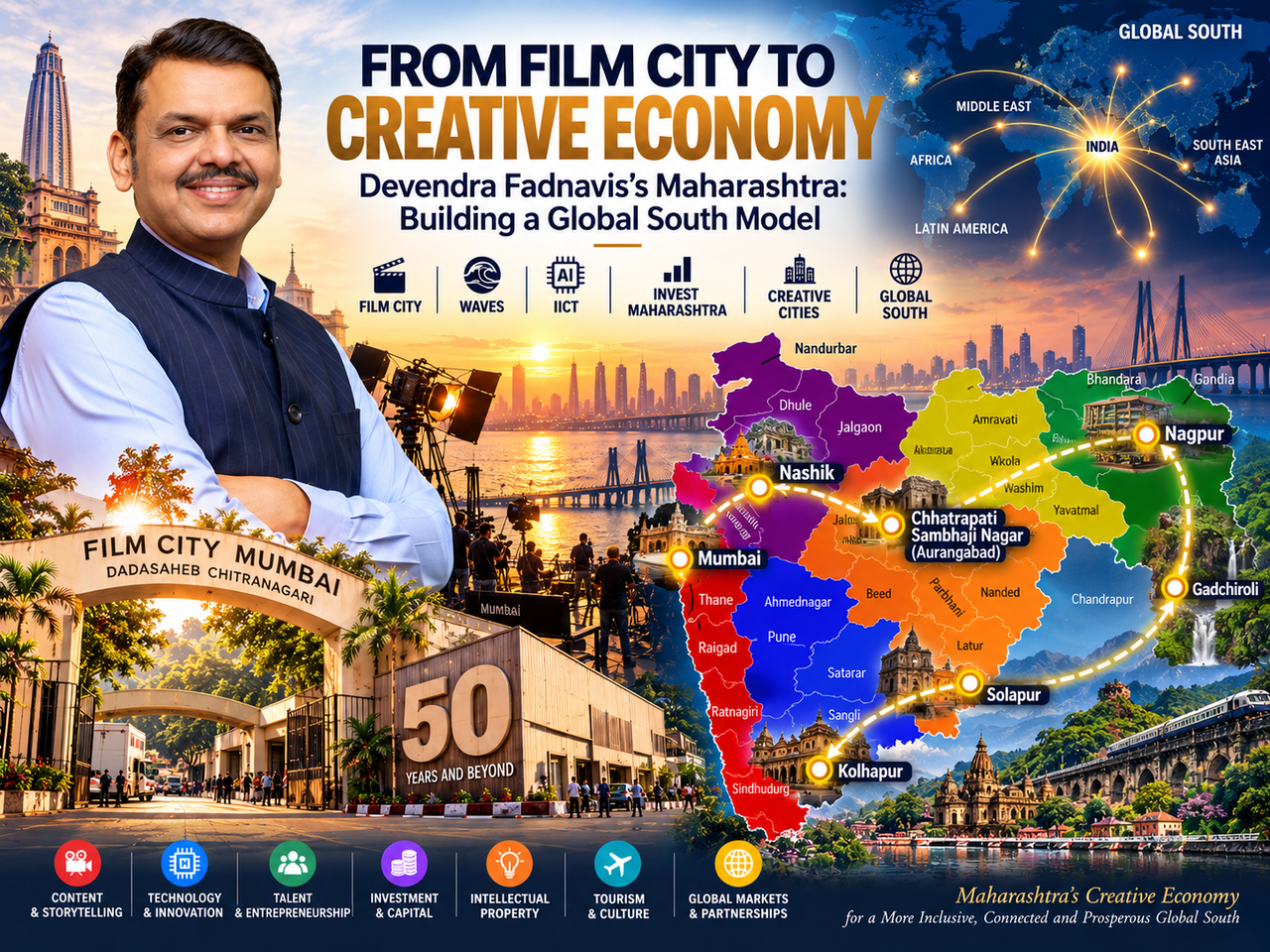
As Mumbai Film City completes 50 years, Maharashtra is entering a period in which film, technology, investment, culture, tourism, intellectual property and entrepreneurship can increasingly be viewed as parts of one economic ecosystem.
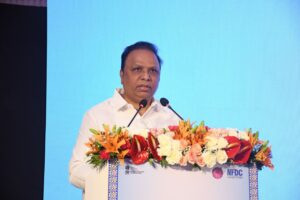
Chief Minister Devendra Fadnavis has already indicated the direction. As Maharashtra prepares with the Ministry of Information & Broadcasting for WAVES 2027 in Mumbai, he has called for the next edition to grow further as a global platform bringing together films, music, gaming, animation, storytelling, artists and creators from around the world.
That is an important shift in thinking. A Film City provides production infrastructure.
A creative-economy ecosystem connects production with technology, talent, capital, intellectual property, markets, tourism, culture, entrepreneurship and global partnerships.
From Film Capital to Creative-Economy Capital
Mumbai already possesses most of the ingredients.
Cinema and television. Music and advertising. Animation and VFX. Digital content. Gaming. Live entertainment. Finance. Startups. Investors. Technology companies. Global connectivity. Film City. IICT. WAVES.
The opportunity is to connect them.
Content + Technology + Culture + IP + Capital + Global Markets.
That is no longer merely an entertainment industry.
It is an economic ecosystem.
Mumbai Film City itself remains a formidable physical asset. The official Film City ecosystem spans more than 500 acres with studios, sets and shooting infrastructure at the heart of Mumbai’s production industry.
The next fifty years can add another layer: creative technology, venture building, globally scalable IP and international markets.
WAVES Can Become the Global Gateway
WAVES is already creating the international-facing layer of that ecosystem.
In August 2026, the BRICS WAVES Bazaar in Mumbai brought together representatives from 20 BRICS member and partner countries. More than 900 industry delegates attended, with over 275 curated B2B meetings involving producers, studios, broadcasters, film commissions, investors, technology companies and creative enterprises.
Those numbers matter because creative economies grow through connections.
A filmmaker meets a financier.
A startup meets an investor.
A cultural property meets an international buyer.
A city meets a production house.
A story finds a new market.
Mumbai already has the convening power to make those connections happen.
WAVES 2027 can deepen that role.
Invest Maharashtra and Invest in Creativity
The launch of Invest Maharashtra adds another powerful dimension.
The state recently announced 67 MoUs representing about ₹8.57 lakh crore in proposed investments, with potential employment of approximately 2.91 lakh people across sectors including semiconductors, data centres, renewable energy, aerospace, healthcare and agro-processing.
The creative economy should increasingly become part of that investment conversation.
Creative investment does not mean only financing films.
It can mean investing in an animation studio, gaming company, VFX business, AI filmmaking venture, music IP, cultural platform, experiential-tourism company, creative district, technology startup or internationally scalable Indian entertainment property.
These are businesses.
They create jobs. They own IP. They attract capital. And successful creative IP can continue generating value long after the first production or event ends.
Mumbai as Hub. Maharashtra as Network.
The larger opportunity should not remain concentrated in Mumbai.
Mumbai can become the global-facing hub, connecting capital, technology, platforms, studios, international buyers and investors.
Across Maharashtra, cities can develop specialised creative economies based on their own strengths.
Nashik can connect cinema with culture, heritage, pilgrimage, tourism, cuisine and creative enterprise.
Nagpur can develop around technology, AI, animation and gaming.
Kolhapur brings a deep legacy of Marathi cinema, music, theatre, crafts and cultural heritage.
Chhatrapati Sambhajinagar brings Ajanta-Ellora, architecture, tourism and cultural storytelling.
Solapur offers textiles, handloom, crafts and creative enterprise.
Gadchiroli can bring tribal culture, indigenous knowledge, forests, biodiversity and underrepresented stories into a responsible creative economy.
The objective is not to create smaller Mumbais.
It is to create distinctive creative economies connected to Mumbai and to each other.
Why the Global South Matters
This is where Maharashtra’s opportunity becomes international.
Countries across Asia, Africa, Latin America and the Middle East possess enormous cultural wealth, young populations and increasingly sophisticated technology ecosystems.
Yet many still need stronger bridges connecting:
Culture → IP → Capital → Enterprise → Global Markets.
Mumbai can become one of those bridges.
The Global South does not need every creative industry to travel through traditional Western gateways before connecting with another Global South market.
Mumbai can help enable more direct creative relationships: India–Brazil, India–South Africa, India–Thailand, India–UAE, India–Central Asia and beyond.
That creates opportunity not just for films, but for technology, tourism, music, fashion, design, gaming, animation, cultural experiences and creative entrepreneurship.
From Exporting Content to Owning IP
India’s next creative-economy phase should therefore be measured not only by how much content we produce.
It should also ask:
-How much IP do we own?
-How many creative companies do we build?
-How much investment do they attract?
-How many Indian-origin platforms does the world want to host, license and experience?
The Global South Film Festival (GSFF) is one example of this thinking an Indian-owned IP conceived around the Global South and designed from the beginning to travel across countries, cities and cultures.
The ambition is not simply to export an event. It is to create a platform connecting cinema, culture, capital, cities and international partnerships.
A Maharashtra Playbook for the Global South
Viewed together, Maharashtra’s emerging pieces form an interesting architecture:
Film City provides production legacy.
IICT adds creative-technology capability.
WAVES provides an international platform.
Invest Maharashtra brings investment infrastructure.
Mumbai provides the global hub.
Maharashtra’s cities provide specialised creative depth.
If these pieces increasingly connect, Maharashtra can become more than India’s entertainment capital. It can become a creative-economy investment destination and a working model for the Global South.
Mumbai has already shown the world how India makes cinema.
The next opportunity is larger:
To show how culture, technology, capital and IP can work together to build a creative economy ecosystem, creating new companies & new jobs plus bring new investment and international markets for Maharashtra.
And in doing so, Mumbai and Maharashtra can become not merely participants in the Global South creative economy, but one of its leading gateways.
– Dr Seema
GSFF India Lead
https://globalsouthfilmfestival.org/