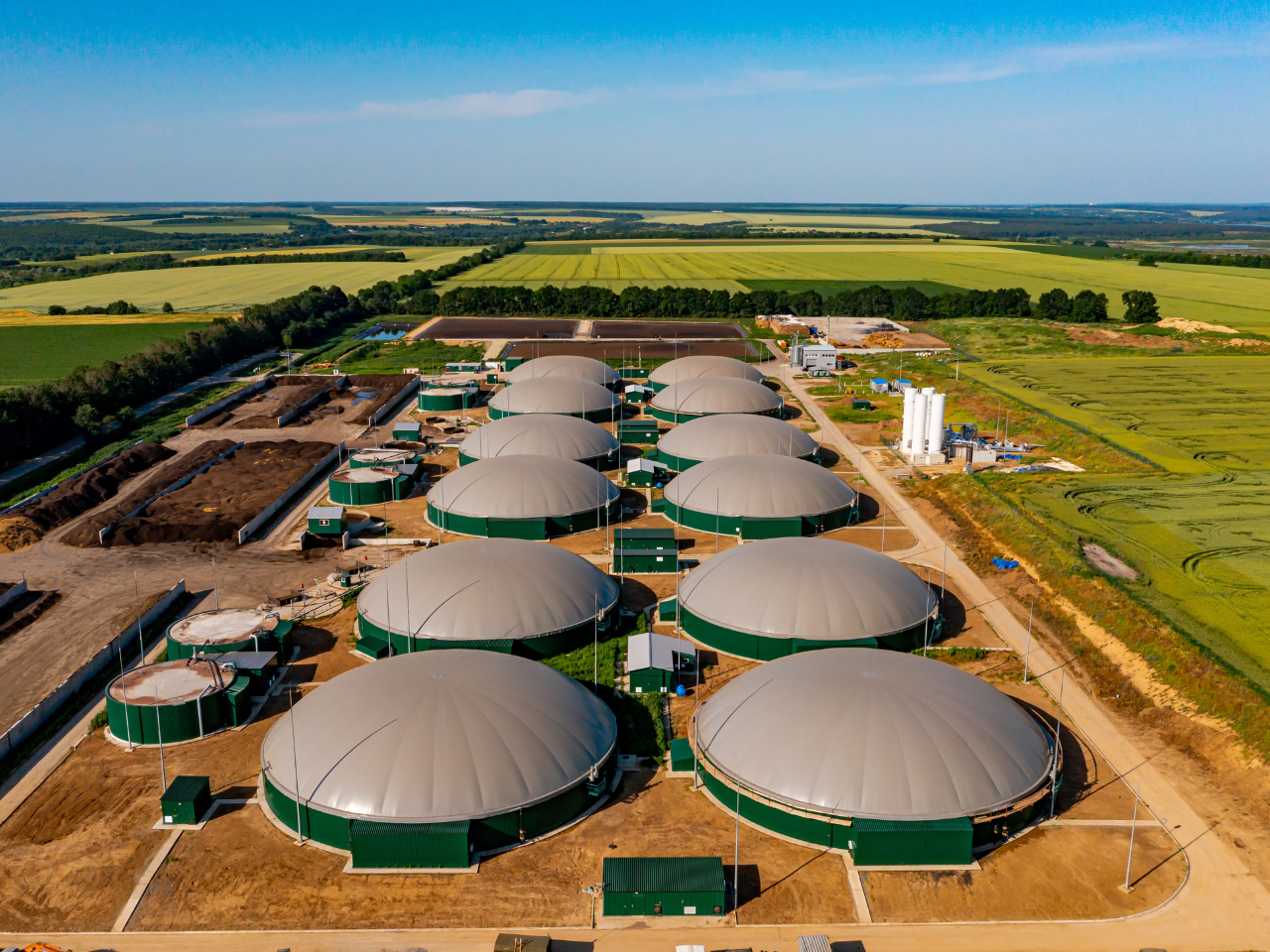

The Cabinet has approved India’s first unified Compressed Biogas (CBG) framework, aiming to transform agricultural residue, cattle dung and organic waste into clean energy, rural incomes and a new bioeconomy.
India’s villages may soon become more than the country’s food producers.
They could become its next clean energy producers.
The Union Cabinet on Wednesday approved GOBARdhan – the National Unified Scheme for Compressed Biogas (CBG) with an outlay of ₹23,731 crore, creating the country’s first integrated framework to scale up compressed biogas production. More than another clean-energy programme, the scheme seeks to convert agricultural residue, cattle dung, municipal organic waste and other biomass into renewable fuel, organic manure and rural enterprise, while reducing India’s dependence on imported fossil fuels.
The ambition is significant.
Over the next decade, the government wants to increase domestic CBG production nearly ten-fold, creating an entirely new rural economy where waste becomes a source of income rather than a cost of disposal.
/fit-in/580x348/filters:format(webp)/tice-news-prod/media/media_files/2026/08/06/gobardhan-scheme-rural-2026-08-06-20-04-19.png)
India Is Building a Circular Economy Around Rural Waste
For decades, crop residue, cattle dung and organic waste have largely been viewed as environmental challenges.
GOBARdhan attempts to change that equation.
Instead of treating biomass as waste, the scheme positions it as an economic resource capable of generating clean fuel, supporting organic farming and creating new business opportunities across villages. Every CBG plant has the potential to create a local value chain involving farmers, feedstock aggregators, transporters, plant operators and organic manure producers.
The vision extends beyond energy production.
It is about building rural industries around resources that already exist in abundance.
In many ways, the scheme marks India’s most ambitious attempt yet to create a nationwide circular bioeconomy.
The Biggest Challenge Was Never Technology. It Was Business Viability
India’s compressed biogas technology has existed for years.
Scaling it commercially has been the real challenge.
Uncertain pricing, limited financing, weak pipeline connectivity and unpredictable demand often discouraged private investment despite strong technical potential.
GOBARdhan attempts to solve those structural problems simultaneously.
The scheme introduces assured offtake through City Gas Distribution companies, a stable administered price of ₹2,110 per MMBTU, capital assistance for new projects, dedicated pipeline connectivity, credit guarantees for MSMEs and a challenge fund to strengthen district-level ecosystems.
Instead of supporting individual projects, the government is trying to create an entire market.
That distinction could prove critical in attracting long-term private investment.
/fit-in/580x348/filters:format(webp)/tice-news-prod/media/media_files/2026/08/06/biogas-2026-08-06-20-04-19.png)
A New Opportunity Is Emerging for Farmers and Rural Entrepreneurs
Perhaps the biggest beneficiaries may not be energy companies.
They could be India’s farmers.
Agricultural residue that was once burnt in fields could now generate additional income. Cattle dung gains commercial value beyond traditional farming. Rural cooperatives, women-led enterprises, MSMEs and first-time entrepreneurs can participate in feedstock collection, transportation, processing and plant operations.
The scheme also strengthens the market for fermented organic manure (FOM) and liquid fermented organic manure (LFOM), creating an additional revenue stream alongside biogas production.
For rural India, the opportunity is not limited to producing clean fuel.
It is about participating in an entirely new value chain.
Energy Security Will Be Built Closer to Home
India’s natural gas demand continues to grow across transport, households and industry.
Every additional unit of domestically produced compressed biogas reduces dependence on imported fossil fuels while making productive use of local biomass resources.
Because CBG is chemically equivalent to natural gas, it can flow through existing gas infrastructure without requiring an entirely new distribution network. That makes it one of the few renewable fuels capable of integrating directly into India’s expanding gas economy.
The government’s strategy therefore connects three national priorities through one programme—energy security, cleaner waste management and rural economic development.
Few renewable energy initiatives attempt to address all three simultaneously.
/fit-in/580x348/filters:format(webp)/tice-news-prod/media/media_files/2026/08/06/gobardhan-2026-08-06-20-03-55.png)
India’s Next Green Economy May Begin in Its Villages
The most important feature of GOBARdhan is not its budget.
It is its approach.
Instead of treating agriculture, energy, waste management and rural development as separate sectors, the scheme brings them together under one integrated framework.
That creates opportunities not only for large energy companies but also for startups developing bioenergy technologies, equipment manufacturers, logistics providers, agri-tech firms, climate-tech innovators and rural enterprises.
Countries across the world are searching for cleaner fuels.
India is attempting something broader.
It wants to prove that the raw material for the next energy transition may already be lying in its villages.
If that vision succeeds, the country’s next energy revolution may not begin in an oil field or a refinery.
It may begin on a farm.