Linea is a Layer 2 network built by ConsenSys to make Ethereum faster and cheaper through zk-rollups. It lets users enjoy low fees while keeping Ethereum’s security. The Linea airdrop rewards early users who supported the network before the snapshot date. This guide explains what Linea is, how its token works, the roadmap, and how to claim your airdrop before December 9, 2025.
What Is Linea?
A Layer 2 network called Linea was created to help Ethereum grow. It uses zk-rollups, a method that executes transactions off-chain before supplying proof to Ethereum. This strategy maintains the network’s speed, affordability, and security. Customers can make cheaper transactions without having to wait for long confirmation times.
Linea’s EVM-equivalence provides significant advantages for developers. It allows for the deployment of Ethereum smart contracts with minimal to no modifications, which creates a seamless migration path. This direct compatibility saves valuable time and reduces development costs.
Consensys, the firm behind Infura and MetaMask, developed Linea. Since millions of people have already used these technologies, Linea has robust infrastructure support. MetaMask’s default support for Linea makes it simple for users to connect and interact with the network.
How Linea Works
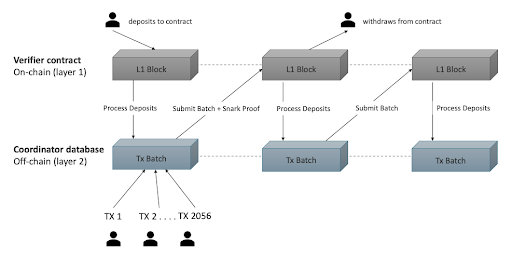
Linea scales Ethereum using zk-rollups to batch multiple transactions off-chain. It then submits a single summary to Ethereum, secured by a Zero-Knowledge Proof (ZKP). This proof verifies the validity of every transaction within the bundle, all while preserving privacy.

The network relies on zk-SNARKs (zero-knowledge Succinct Non-interactive Argument of Knowledge). zk-SNARKs make proofs small, quick to verify, and require no back-and-forth communication. This keeps verification efficient, even for large batches of transactions.
Because zk-SNARKs are compact and fast, Linea can process more transactions at lower cost while maintaining Ethereum-level security. This approach allows near-instant withdrawals, unlike optimistic rollups which often require a seven-day delay.
For developers, zk-rollups simplify building dApps by removing the need for complex dispute systems. This creates a smoother experience for DeFi protocols, NFT platforms, and games that need fast, final confirmations.
Linea Team and Founder
Linea is led by experienced people in blockchain and AI. Joseph Lubin, co-founder of Ethereum, is the Linea founder. The team also includes Rob Dawson (CTO) and Chris McKibbin (COO). Their expertise ensures that Linea grows in the right direction and stays aligned with Ethereum’s mission.
Linea Token Overview
The network uses the LINEA token, built on Ethereum. The total supply is 72,009,990,000 LINEA. Unlike most projects, there is no token allocation for insiders or investors.
The token model focuses on users and ecosystem growth:
- ETH is used as the gas token, so users don’t need to hold LINEA to pay fees.
- LINEA has no governance rights and no allocations to the team or VCs.
- 85% of tokens are allocated to the community – 10% through an unlocked airdrop, 75% for a 10-year ecosystem fund.
This approach rewards early supporters and encourages long-term adoption.

Linea Funding and Governance
Microsoft, Coinbase Ventures, SoftBank, Temasek, and Animoca Brands are among the leading investors who have contributed over $725 million to ConsenSys, the company that supports Linea. This solid support ensures steadiness in finances.

The non-profit Linea Association in Switzerland is in charge of governance. It is in charge of treasury, decentralization, and protocol development. Ethereum-native companies like Status, Eigen Labs, and ENS are partners.
Protocol transaction fees and ETH staking yield are the sources of income. Since a portion of the fees are burned, the token concept is deflationary and consistent with Ethereum’s business strategy.
Linea Roadmap
Linea’s development roadmap is divided into 5 phases that the team plans to implement sequentially with the collaboration of the Linea community and ecosystem.
Phase 0 – Complete
Phase 0 started with the launch of Linea Mainnet Alpha. The network introduced its zkEVM, making it possible for developers to migrate dApps from Ethereum without changing smart contracts.
The Linea Security Council established to oversee network safety and manage risks using a multi-signature security contract. Client software for running a local node was released to the public, giving users more power to verify transactions independently and reduce reliance on the operator.
Phase 1 – In Progress
- Open Source Stack: Linea is licensing its software under AGPL-3.0, allowing anyone to view, fork, or modify the code. This improves transparency and keeps the platform open.
- 100% EVM Coverage: Linea is working to support all EVM opcodes and precompiles. This will allow trustless execution for every use case. The arithmetic specifications will be published, audited, and included in bug bounty programs to improve reliability.
Phase 2 – Next
The second phase will focus on governance improvements and censorship resistance:
- Diversifying the Security Council: Adding more participants will prevent power concentration and improve decision-making.
- Censorship-Free Withdrawals: The network will be upgraded so that no aggregator can block withdrawals, giving users full control over their assets.
Phase 3 – Next
- Decentralizing Miners and Validators: To increase security and balance, the network will divide key positions, such as validators, among several participants. Although it can be technically difficult, doing this is essential to lowering trust and preventing manipulation.
- Decentralized Governance: The network will expose governance to the community to ensure openness and fairness. This will limit unilateral decisions and boost network resiliency.
Phase 4 – Final
- Multi-Vendor Deployment: The system will deploy multiple zkEVM proof sources to ensure continuity, even if one fails..
- Limited Governance: The system will apply upgrades only when necessary, in response to modifications to the EVM specification, and governance will be applied only where needed.
- The role of the Security Council is to maintain a balance between decentralization and government by only taking action in situations involving systemic risk or inconsistency.
How To Get Linea Airdrop?
Qualified users can claim tokens by doing the following:
- Open the Linea Hub airdrop page.
- Connect your wallet. For multisig wallets, claim via LineaScan with WalletConnect.


- Check your eligibility and view your token amount.

4.Click the claim button after September 10, approve the transaction, and pay a small ETH fee.Following confirmation, the LINEA tokens will show up in your wallet.
To stay safe from phishing scams, users should always visit the official website. Tokens will be returned to the ecosystem fund if they are not claimed by December 9, 2025.
How To Withdraw Linea Airdrop?
Step-by-Step Guide
- Open the official claim contract: https://lineascan.build/address/0x87baa1694381ae3ecae2660d97fe60404080eb64
- Go to the Contract tab and select Write Contract.

- Connect your wallet (MetaMask or any supported option).

- Find the Claim function and click Write:

– If you have already claimed from the connected account, you cannot claim again, and the transaction will fail.
– If the claiming period is over, the transaction will fail. The deadline is 23:59:59 UTC on December 9, 2025.
– If the wallet has no tokens available, the transaction will fail. - Approve the transaction in your wallet popup.

- After you confirm, the system will add your $LINEA tokens to your wallet.
What Is the Date of Linea TGE?
The checker went live on September 3, 2025, marking the beginning of Linea’s Token Generation Event (TGE), which allowed users to confirm their eligibility prior to the claim period.
On September 10, 2025, the formal claim window opened, and it will stay open until December 9, 2025, at 23:59 UTC. There is a ninety-day claim period. The countdown doesn’t start when you link your wallet; it starts when the claim procedure goes live.
The Linea Consortium Ecosystem Fund will return any leftover tokens after the deadline to fund the growth of the Ethereum and Linea ecosystems.
Linea Airdrop: Conclusion
Linea appears to be one of Ethereum’s most user-friendly Layer 2 networks. Its design prioritizes actual users and builders over insiders or venture capitalists. The Linea airdrop rewards early backers and encourages them to continue expanding the ecosystem.
ConsenSys and reliable Ethereum partners support the network, lending it legitimacy and resources for sustained expansion. Even for those who are unfamiliar with Layer 2 networks, its integration with MetaMask and Infura makes it simple to utilize.
Advantages:
- Transparent and fair token distribution
- Strong support from ConsenSys and Ethereum-native partners
- Simple onboarding through MetaMask
- Low fees and fast transaction speed
- Long-term ecosystem fund to support developers and users
Disadvantages:
- Still new, adoption and liquidity are growing
- LINEA token does not have governance rights
- You cannot recover missed airdrop claims.
- Competing with other Layer 2 solutions like Arbitrum and Optimism
Although it is still in its infancy, Linea is an intriguing project to follow because of its well-defined path, emphasis on decentralization, and dedication to the community.
More News:
- Linea (LINEA) Set for Binance Alpha Launch on September 10: Details of the Airdrop
- Binance To Feature Boundless (ZKC) on September 15 With Exclusive Alpha Airdrop
- Aleo (ALEO) Goes Live on Binance Alpha: Airdrop and Trading Competition Detail
The post What Is Linea? Complete Guide to the Airdrop and Claim Process appeared first on Ventureburn.