
Wednesday’s startup headlines seemed unrelated at first glance.
Ather Energy raised ₹1,200 crore to expand manufacturing and accelerate its electric mobility roadmap. Artificial intelligence startup Emergent entered the unicorn club after raising $130 million. Fresh capital flowed into clean-tech, voice AI and consumer brands, while the Union Cabinet approved the ₹62,500-crore Mobile Phone Manufacturing Scheme (MPMS) to strengthen India’s electronics manufacturing ecosystem.
Read individually, these were important business updates.
Read together, they point to a larger shift in India’s startup economy.
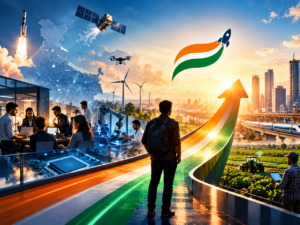
Venture capital is no longer chasing only the next breakout consumer app. Investors are steadily expanding their bets into artificial intelligence, electric mobility, advanced manufacturing and climate technologies—businesses that demand deeper engineering, longer development cycles and stronger technology capabilities.
That doesn’t mean consumer startups are losing favour. It means India’s innovation economy is becoming far more diversified than it was during its first startup boom.
The Biggest Bets Are Backing Technology Builders
The day’s largest investment came from Ather Energy, where Hero MotoCorp invested ₹960 crore as part of a ₹1,200-crore preferential issue, increasing its stake in the electric two-wheeler maker to 30.68%.
The fresh capital will help Ather expand manufacturing capacity, strengthen research and development, and launch new products.
More importantly, the investment reflects growing confidence that electric mobility has moved beyond an emerging opportunity to become a long-term manufacturing play.
The same trend is visible in artificial intelligence.
Emergent reached a $1.5 billion valuation after raising $130 million in a Series C round led by Creaegis. Founded by Mukund Jha and Madhav Jha, the company develops autonomous AI agents capable of building software applications.
Neither company is chasing the next viral consumer platform.
Both are creating technologies that other businesses are expected to rely on, signalling how India’s startup ecosystem is steadily moving deeper into technology creation.
AI Is Moving Beyond Applications
Artificial intelligence is no longer just another feature inside software products.
Indian startups are increasingly building AI infrastructure and specialised technologies for global and domestic markets.
Shunya Labs, for example, is developing CPU-first voice AI infrastructure designed specifically for India’s multilingual, accented and code-switched speech patterns—a challenge that conventional AI models have often struggled to address.
The commercial opportunities are already becoming visible.
Zomato has begun piloting AI-powered voice ordering, reflecting how conversational AI is gradually moving from research labs into everyday consumer experiences.
Investor interest mirrors this trend. AI-focused venture capital funds raised $4.5 billion during the first half of 2026, underlining sustained confidence in businesses developing foundational AI capabilities.
Manufacturing Is Returning to the Startup Story
The day’s developments also highlighted the growing convergence between technology startups and India’s manufacturing ambitions.
Electric mobility startup E3 Electric.Ai secured ₹100 crore in a Series A round led by BluVenture to launch its first electric scooter, E3 TRION.
The funding comes alongside the government’s push to strengthen domestic manufacturing through the newly approved ₹62,500-crore Mobile Phone Manufacturing Scheme (MPMS) and the earlier ₹1.27 lakh-crore semiconductor programme.
For years, software defined India’s startup identity.
Today, software and manufacturing are increasingly becoming part of the same growth story, with founders building businesses that combine digital intelligence with physical production across sectors such as electric mobility, robotics, semiconductor design and industrial automation.
A Broader Investment Landscape Is Emerging
Consumer-focused startups continue to attract investor confidence.
BiofuelCircle raised ₹35 crore to expand India’s biomass supply chain. Hyperlocal grocery platform Anmasa secured ₹30 crore in seed funding from Fireside Ventures and Blume Ventures, while maternal and baby care brand Promomraised an equal amount backed by Fireside Ventures.
Meanwhile, investment platform Groww reported a 94% year-on-year increase in profit during the first quarter of FY27, highlighting the resilience of India’s consumer fintech ecosystem.
The picture that emerges is not one of investors moving away from consumer businesses.
Instead, venture capital is expanding into a wider range of opportunities than ever before.
India’s first startup wave transformed the way people shop, travel and make payments.
The next wave appears to be focused on something equally important—building the technologies that will power factories, enterprises, electric vehicles, artificial intelligence and clean energy.
If Wednesday’s developments are any indication, India’s next generation of startup leaders may not simply build products used by millions. They could build the technologies that shape entire industries.