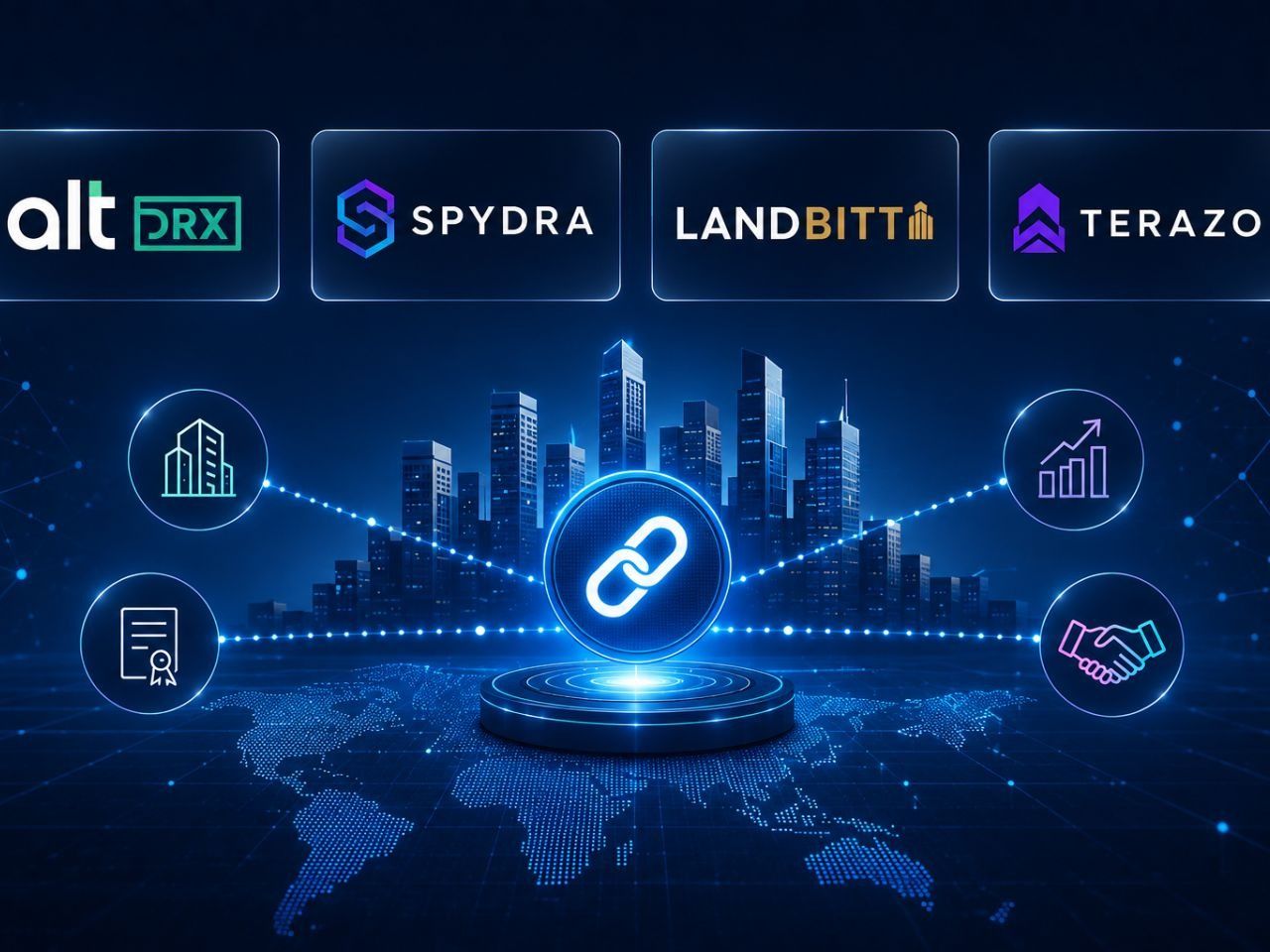

For years, conversations around blockchain in India revolved largely around cryptocurrencies.
Today, however, a different conversation is gaining momentum—one that has less to do with speculative digital assets and more to do with transforming ownership itself.
From commercial real estate and private market investments to digital securities and enterprise assets, tokenisation is emerging as one of the most closely watched developments in financial innovation. The idea is simple: represent ownership of a real-world asset through blockchain-based digital tokens, making those assets more accessible, liquid, and efficient to manage.
Globally, financial giants are increasingly exploring tokenisation as the next evolution of capital markets. In India, a growing number of startups are betting that the future of ownership will be digital.
While the ecosystem remains at an early stage, several startups are already building platforms, infrastructure, and marketplaces that could power India’s tokenisation economy in the years ahead.
Why Tokenisation Is Suddenly Becoming Important
Tokenisation promises to solve some of the biggest challenges associated with traditional assets.
Many high-value investments remain inaccessible to retail investors due to large ticket sizes. Real estate transactions are often cumbersome and illiquid. Private market opportunities are typically available only to institutional investors and high-net-worth individuals.
Tokenisation seeks to address these challenges by enabling fractional ownership, increasing liquidity, improving transparency, and automating transactions through blockchain infrastructure.
The opportunity is attracting attention from regulators, financial institutions, investors, and entrepreneurs alike.
Alt DRX: Bringing Real Estate Ownership Into the Digital Era
Among the most prominent names in India’s tokenisation landscape is Alt DRX.
The Bengaluru-based startup is focused on transforming how people invest in real estate by enabling fractional ownership through tokenisation. Instead of requiring investors to purchase an entire property, the platform allows ownership to be divided into smaller units, significantly lowering the entry barrier for participation. According to industry discussions around the company, Alt DRX’s approach aims to improve liquidity, transparency, and accessibility within one of India’s most important asset classes.
At a time when property ownership remains out of reach for many young investors, platforms like Alt DRX are attempting to create a more inclusive investment model.
Spydra: Building the Infrastructure Layer
While some startups are focused on specific asset classes, others are building the technology stack required to support tokenisation itself.
Spydra falls into this category.
The Bengaluru-based company has developed a low-code asset tokenisation platform that allows enterprises to create, manage, and deploy tokenised assets without extensive blockchain expertise. The platform supports applications across financial services, supply chains, healthcare, energy, insurance, and digital identity systems.
Rather than targeting retail investors directly, Spydra is positioning itself as an infrastructure provider—helping enterprises transition from traditional systems to blockchain-powered asset management.
This “picks and shovels” approach may ultimately prove just as important as the marketplaces themselves.
Terazo: Testing Tokenisation Within a Regulatory Sandbox
One of the biggest questions surrounding tokenisation globally is regulation.
Terazo has emerged as an interesting case study because it is attempting to build within regulatory frameworks rather than outside them.
The company gained attention through its partnership with Tokeny to launch what was described as India’s first regulated tokenised real estate project under the International Financial Services Centres Authority’s (IFSCA) regulatory sandbox framework in GIFT City. The initiative aims to provide broader access to private market investments while maintaining compliance with regulatory requirements.
The significance of Terazo extends beyond real estate.
Its experiment offers a glimpse into how tokenised assets could eventually coexist with regulated financial markets in India.
LandBitt: Democratizing Property Investment Through Blockchain
Another startup attempting to reshape property ownership is LandBitt.
The company has built a blockchain-based platform focused on real estate tokenisation, allowing investors to participate in property investments through digital ownership units. LandBitt argues that tokenisation can address longstanding challenges in real estate, including high entry barriers, limited liquidity, and operational complexity. The platform utilizes blockchain infrastructure to create transparent ownership records and facilitate fractional participation.
As India’s property market continues to expand, startups like LandBitt are exploring ways to make the asset class more flexible and accessible.
The Bigger Opportunity Lies Beyond Real Estate
While real estate has emerged as the most visible use case for tokenisation in India, industry experts believe the opportunity extends much further.
Potential applications include:
- Private equity and venture capital investments
- Corporate bonds and debt instruments
- Infrastructure assets
- Renewable energy projects
- Supply-chain financing
- Carbon credits
- Intellectual property rights
- Trade finance
In many of these categories, tokenisation could unlock liquidity, streamline ownership transfers, and enable wider participation from investors.
Regulation Will Determine the Pace of Growth
Despite growing enthusiasm, tokenisation remains an evolving sector.
Questions around investor protection, legal ownership rights, compliance standards, taxation, and secondary market liquidity still need to be addressed before large-scale adoption can occur.
However, developments such as GIFT City’s regulatory sandbox initiatives and increasing institutional interest suggest that policymakers are beginning to explore how tokenised assets might fit into India’s broader financial ecosystem.
Building the Rails for a New Financial System
The most important thing to understand about India’s tokenisation ecosystem is that it is still in its infrastructure-building phase.
Much like fintech startups spent years building payment rails before UPI transformed digital payments, tokenisation startups today are laying the foundations for what could become a new layer of financial infrastructure.
Whether tokenisation ultimately becomes a mainstream financial product remains to be seen.
What is becoming increasingly clear, however, is that a new generation of Indian startups is already working to ensure that if the future of ownership becomes digital, the technology powering it will be built at home.