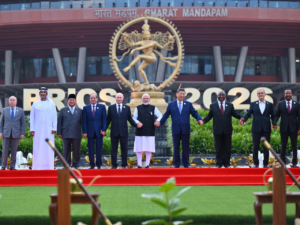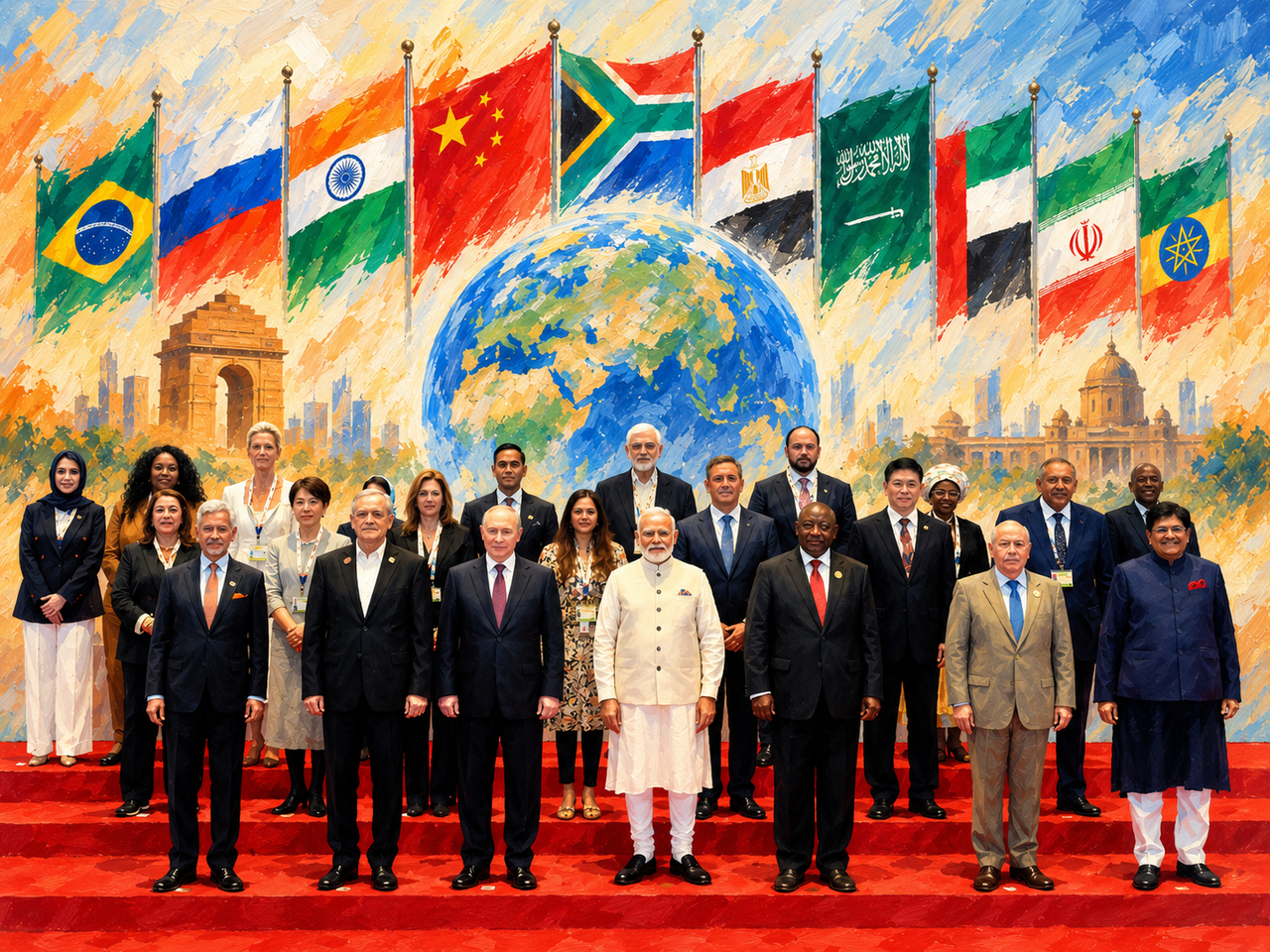

BRICS is turning 20 with a much larger economic footprint than when the grouping began. Prime Minister Narendra Modi now wants its business community to measure the next phase in something more tangible than declarations: fewer trade barriers, more startups going global and thousands of new business partnerships.
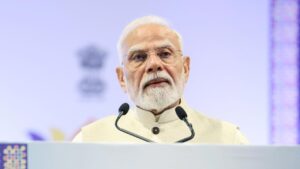
Speaking at the BRICS Business Forum in New Delhi on Friday, Modi proposed three annual targets for the BRICS Business Council: identify and work to remove the top 10 trade barriers between member countries, help 100 BRICS startups expand into other BRICS markets, and build 1,000 new business partnerships across the grouping.
His message was straightforward. BRICS has built scale. The next task is to make that scale work for businesses.
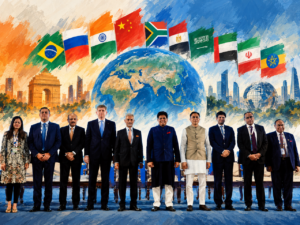
The numbers behind the grouping explain why. Modi said the expanded BRICS family, including partner countries, now represents around 50% of the world’s population, 40% of global GDP and more than 25% of global trade.
Two decades ago, the grouping had four members.
Today, it has become a much broader economic network.
The question is what businesses can do with it.
/fit-in/580x348/filters:format(webp)/tice-news-prod/media/media_files/2026/09/11/modi-at-brics-2026-09-11-21-09-04.jpg)
From a Political Grouping to a Commercial Network
When BRICS began in 2006, its economic weight was concentrated among four emerging economies. Its expansion has since brought a much wider geography and a larger mix of markets into the conversation.
Modi pointed to a striking comparison. While global GDP has grown roughly two-and-a-half times over the past two decades, the combined GDP of BRICS countries has expanded around four-and-a-half times.
That faster growth has created a market with considerable economic heft.
But size alone does not make trade easier.
A company selling machinery, pharmaceuticals or technology across borders still has to deal with customs procedures, different standards, regulations, payment systems and local market requirements.
That is why Modi’s three targets are notable. They shift the discussion from how big BRICS is to how useful it can become for the companies operating within it.
The first target—identifying the 10 biggest trade barriers—may be the most basic and potentially the most consequential.
Businesses often do not need another grand framework. They need a regulation clarified, a certification recognised, a shipment cleared faster or a payment settled without unnecessary friction.
/fit-in/580x348/filters:format(webp)/tice-news-prod/media/media_files/2026/09/11/modi-addressing-brics-2026-09-11-21-09-45.jpg)
India’s Bet: Build in India, Scale Through BRICS
Modi used the forum to underline India’s changing economic proposition.
The country is expanding infrastructure across roads, railways, ports and airports while building capabilities in areas such as shipbuilding, semiconductors, quantum technology, critical minerals and biotechnology.
At the same time, India has built a large startup ecosystem.
Modi said India now has more than 200,000 startups and over 120 unicorns, with companies working across artificial intelligence, education, healthcare, green hydrogen, batteries, defence and space.
The next challenge is taking these companies beyond India.
That is where BRICS could become more than an investment or diplomatic platform.
If a startup in Bengaluru can enter a market in Brazil, partner with a company in the UAE or find customers in another BRICS economy without having to build an entirely new market-entry system, the bloc becomes commercially useful in a very direct way.
Modi’s proposal to help 100 BRICS startups scale into other BRICS markets every year puts a number against that ambition.
It also fits with India’s broader pitch: Make in India, innovate with India and scale for the world.
The Partnership Target Could Be Harder Than It Looks
The third target is even bigger: 1,000 new business partnerships every year.
That could cover technology, manufacturing, investment, supply chains and services. It could also connect companies that would otherwise never meet.
But partnerships are easy to announce and harder to sustain.
A memorandum signed at a business forum does not necessarily become a factory, an investment, a technology transfer or a long-term supply contract.
The value will lie in what happens after the signing ceremony.
That is why the proposed annual review of the three targets matters. If the BRICS Business Council can track which barriers were removed, how many startups actually entered new markets and how many partnerships generated business, it would give the economic side of BRICS something it has often lacked: a visible scorecard.
/fit-in/580x348/filters:format(webp)/tice-news-prod/media/media_files/2026/09/11/modi-and-putin-brics-2026-09-11-21-10-25.jpg)
India’s Digital Public Infrastructure Enters the BRICS Pitch
Modi also highlighted one of India’s strongest technology exports—not a product, but an infrastructure model.
Unified Payments Interface (UPI) has become a central part of India’s digital economy. Modi said around 50% of the world’s real-time payments now take place using the technology.
India’s pitch is that this digital layer can be adapted and built upon by other countries.
For BRICS, that opens a different kind of cooperation.
Connected payment systems can make cross-border transactions easier. Digital public infrastructure can reduce the cost of delivering services. Shared technology platforms can help startups build for multiple markets rather than one country at a time.
The ambition is broader than payments.
It extends into AI, digital services and other technologies where BRICS countries are trying to build capabilities of their own.
India’s advantage is that it has already tested several of these systems at population scale.
The opportunity now is to see whether that experience can travel.
Trade Needs Open Routes, Not Just New Agreements
Modi’s speech also returned to an issue that sits underneath all of this: connectivity.
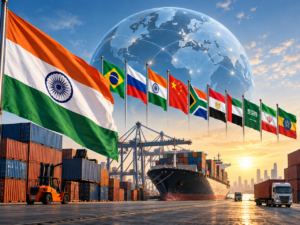
Global trade cannot function if shipping routes are disrupted, supply chains remain vulnerable or seafarers cannot operate safely. India, he said, remains committed to freedom of navigation and the safety of seafarers.
That emphasis fits the broader BRICS push for more resilient supply chains.
But resilience does not mean turning inward.
India’s approach, Modi argued, is to build economic bridges even as trade barriers rise in other parts of the world. He pointed to India’s free trade agreements with around 40 countries since 2014 and said the same principle should guide its BRICS engagement: reduce barriers and create more opportunities for business.
That could become increasingly important as companies rethink where they source, manufacture and sell.
For BRICS, the opportunity is not simply to trade more among existing members. It is to create supply chains that connect their different strengths.
/fit-in/580x348/filters:format(webp)/tice-news-prod/media/media_files/2026/09/11/brics-heads-2026-09-11-21-11-01.jpg)
The Next BRICS Milestone Will Be Measured in Business
BRICS enters its third decade with a much larger membership, a bigger economic footprint and a more ambitious agenda.
India’s chairship has placed resilience, innovation, cooperation and sustainability at the centre of that agenda. Modi’s speech added something the business community can actually measure.
Ten barriers.
One hundred startups.
One thousand partnerships.
Those numbers are modest compared with BRICS’ overall economic scale. That is precisely why they are useful.
If the grouping cannot make progress on relatively concrete targets such as these, larger ambitions around trade integration and global economic cooperation will remain difficult to judge.
But if businesses can point to fewer regulatory obstacles, new markets for startups and hundreds of partnerships that turn into actual commercial activity, BRICS will have moved beyond being a forum of emerging economies.
It will have become a network that businesses can use.
And that may be the more important milestone as BRICS begins its third decade: not how much economic power the bloc represents on paper, but how much of that power reaches the companies creating jobs, technology and trade on the ground.