
From smart medical wearables and spider silk fibres to space-grade composites and sustainable biomaterials, the Centre’s latest startup grants reveal how technical textiles are becoming one of India’s most ambitious innovation frontiers.
India’s next deep-tech success story may not emerge from artificial intelligence or semiconductor design alone.
It could come from a piece of fabric.
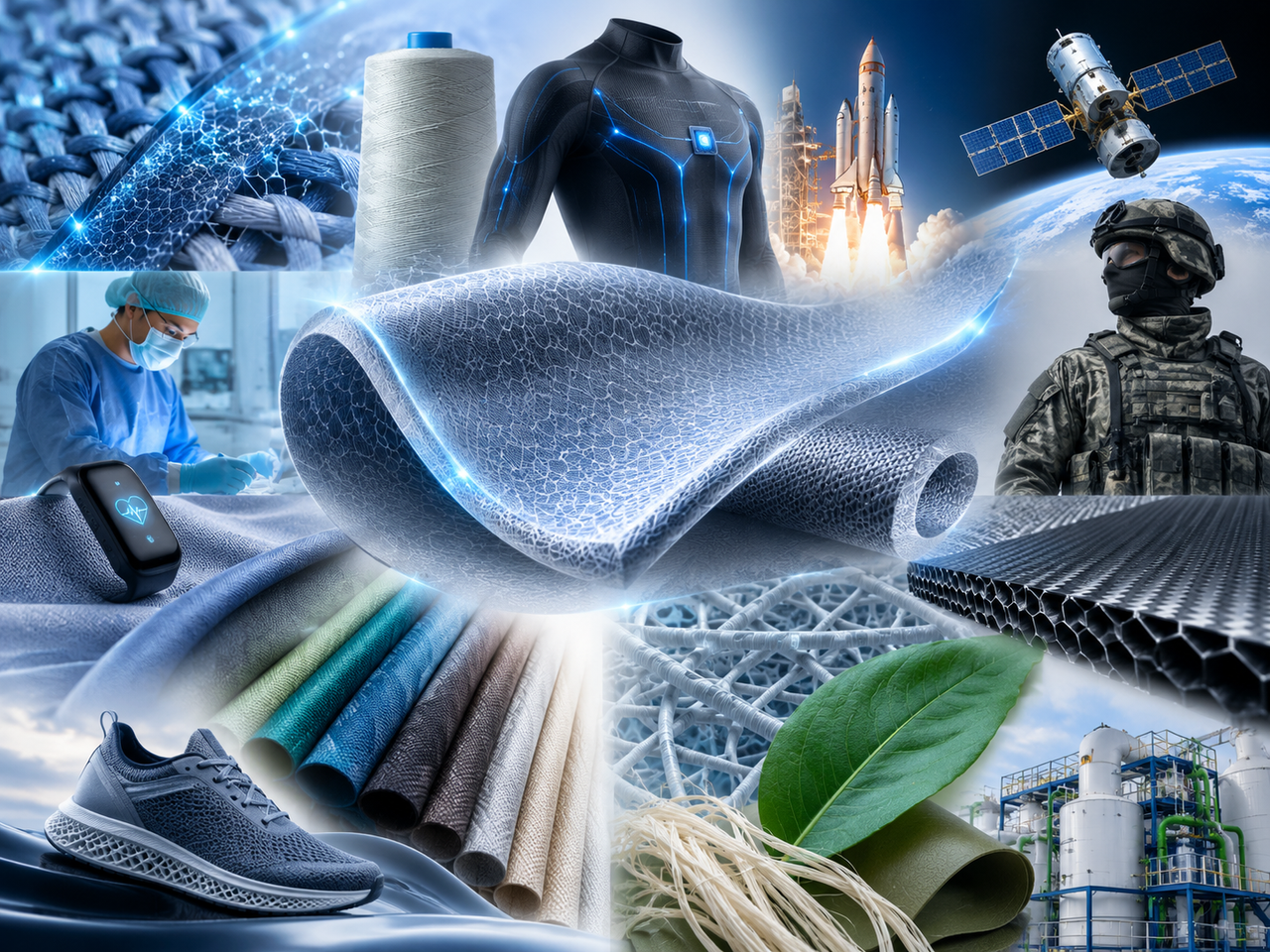
That possibility is becoming increasingly real as the Ministry of Textiles backs a new generation of startups working on technologies that have little in common with the conventional textile industry. These young companies are developing intelligent healthcare wearables, advanced defence materials, sustainable biomaterials, aerospace composites and next-generation industrial fabrics—products where textiles function less like cloth and more like high-performance engineering platforms.
The Ministry, under its National Technical Textiles Mission (NTTM), has approved 31 startup projects with a total project cost of ₹15.40 crore, including ₹13.65 crore as the Government of India’s contribution through the Grant for Research and Entrepreneurship across Aspiring Innovators in Technical Textiles (GREAT) scheme. The Mission has been allocated ₹256 crore for FY2026-27, underlining the government’s intent to accelerate innovation in one of manufacturing’s fastest-evolving sectors.
The funding itself is relatively modest.
The ideas it is backing are not.
The New Textile Industry Looks More Like a Technology Lab
The list of approved startups reads less like a textile catalogue and more like a deep-tech innovation showcase.
Among the selected projects are warming and cooling high-performance textiles, energy-generating nanofibre fabrics, nanomaterial-based smart textiles, shape-memory e-textiles for intelligent healthcare wearables, and smart fabrics capable of sensing and monitoring human health.
Other innovators are pushing the boundaries of material science through industrial hemp composites, algae-based leather alternatives, spider silk-inspired sustainable fibres, pineapple-fibre protective fabrics, bioengineered textile materials, and textile waste composite panels designed for the construction industry.
Together, these startups point towards a manufacturing future where textiles are no longer passive materials. They become intelligent, functional and application-driven technologies.
Healthcare Is Emerging as a Major Innovation Theme
One pattern stands out across the government’s startup portfolio.
Healthcare.
Several of the funded ventures are using technical textiles to solve medical challenges rather than apparel needs.
Among them are surgical simulation models for training doctors, self-sanitising medical apparel, natural antimicrobial hospital textiles, advanced biomaterial-based medical textiles, heart rhythm monitoring smart vests, mental wellbeing wearables, and hemp-based antimicrobial wound dressing materials.
Another startup is developing flushable sanitary pads, while others are working on wellness textiles and smart garments designed to improve comfort and health monitoring.
These projects illustrate how India’s textile innovation ecosystem is increasingly intersecting with healthcare technology, an area expected to witness strong global demand over the coming decade.
Defence, Space and Sustainability Are Driving the Next Wave
The approved projects also reveal where India sees future strategic opportunities.
Some startups are building braided composite materials for defence and automotive applications. Others are developing space-deployable communication antennas, radiation-shielding composite tiles for space missions, and camouflage clothing designed to perform in extreme cold conditions.
Sustainability runs through many of the innovations as well.
The portfolio includes technologies for zero solid discharge systems in textile processing, green tyre yarns, resource recovery solutions, eco-friendly processing methods and renewable bio-based materials that reduce dependence on synthetic fibres.
Rather than treating sustainability as a compliance requirement, many startups are building it directly into product design.
From Research Grants to Commercial Businesses
The GREAT programme has been designed with a clear commercial objective.
Projects are assessed by an Evaluation and Monitoring Committee, while continued funding depends on technical progress and commercial milestones. The Ministry has also emphasised industry collaboration to support prototype development, field trials and market launches, recognising that innovation succeeds only when it reaches customers rather than remaining confined to laboratories.
This reflects a broader shift in India’s innovation policy.
Government support is increasingly moving beyond research grants towards building commercially viable technology companies capable of serving domestic and international markets.
The Next Manufacturing Revolution May Wear Fabric
For years, India’s startup ecosystem has been defined by software, fintech and consumer internet companies.
Technical textiles represent a different kind of entrepreneurship.
Here, founders are building businesses around intellectual property, advanced materials, engineering and manufacturing—creating products for hospitals, defence organisations, aerospace companies, infrastructure developers and industrial manufacturers rather than smartphone users.
That may ultimately be the biggest takeaway from the government’s latest startup portfolio.
It shows that India’s manufacturing ambitions are expanding well beyond producing more textiles.
The country is beginning to build companies that treat textiles as a platform for science, engineering and high-value innovation.
If even a handful of these 31 startups successfully commercialise their technologies, India’s next globally competitive deep-tech companies may not emerge from coding labs.
They could emerge from textile laboratories where the fabric itself has become the innovation.