
After a prolonged phase of diplomatic caution and slowed trade discussions, India and Canada are once again attempting to reset the tone of their economic relationship — and this time, the intent appears far more ambitious.
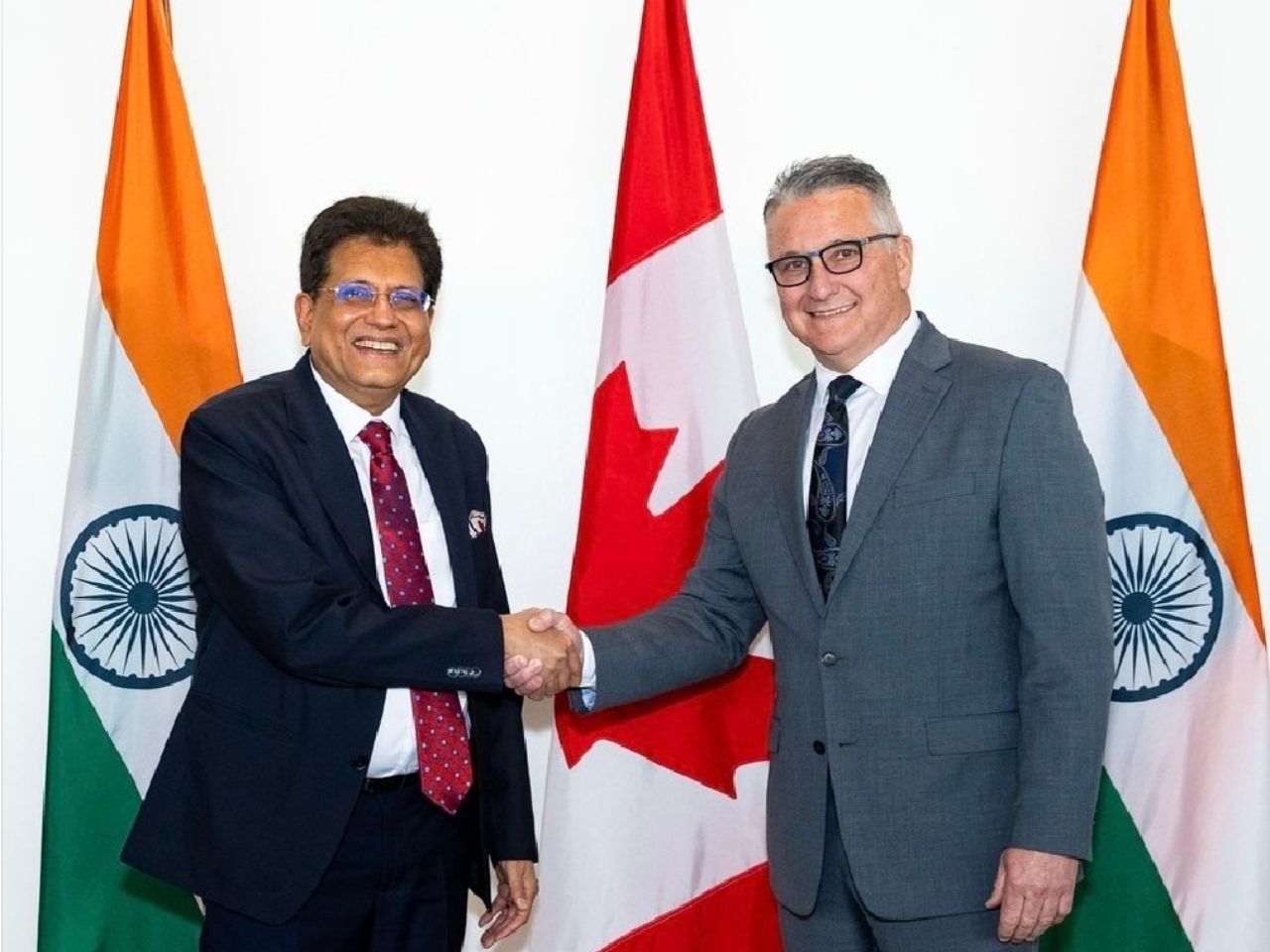
Union Commerce and Industry Minister Piyush Goyal arrived in Ottawa this week leading what officials described as the largest-ever Indian business delegation to Canada, with representatives from more than 100 Indian companies travelling across Ottawa and Toronto for a packed schedule of ministerial meetings, policy discussions, business roundtables and sector-focused engagements.
The visit is not just another diplomatic outreach. It marks one of the strongest signals yet that both countries are serious about reviving momentum around the long-pending India-Canada Comprehensive Economic Partnership Agreement (CEPA), a proposed trade pact that both sides now believe could dramatically reshape bilateral trade and investment flows over the coming years.
At the centre of the discussions is a shared goal: taking India-Canada bilateral trade from the current level of nearly USD 8.5 billion to USD 50 billion by 2030.
That target, while ambitious, reflects the growing recognition in both New Delhi and Ottawa that the two economies have far more room to collaborate — especially at a time when countries globally are seeking trusted trade partners, diversified supply chains and deeper technology cooperation.
A Renewed Push After Months of Diplomatic Uncertainty
The three-day visit comes at a crucial moment for India-Canada relations, which had witnessed visible tensions over the past year. But recent high-level engagements between both nations appear to have reopened channels for economic cooperation, with trade emerging as the most immediate and practical bridge for rebuilding momentum.
During his meetings in Ottawa, Goyal held discussions with Canadian Prime Minister Mark Carney and several senior ministers, while also conveying greetings from Prime Minister Narendra Modi.
Officials familiar with the discussions said both sides acknowledged the importance of restoring confidence and accelerating economic collaboration in areas that can deliver long-term strategic value for both countries.
The strongest signal from the meetings was the renewed urgency around CEPA negotiations.
Prime Minister Carney reportedly described the proposed agreement as a “game changer,” underlining its potential to unlock significant new market opportunities for businesses on both sides. India and Canada also reiterated their commitment to pursuing what officials called a “balanced, commercially meaningful and ambitious” trade pact.
For businesses watching the negotiations closely, the messaging from Ottawa was clear: the political appetite to move forward appears stronger than it has been in recent years.
CEPA Back in Focus as 2026 Deadline Emerges
One of the most important developments from the visit was the indication that both nations are now actively working towards concluding CEPA negotiations by the end of 2026.
In bilateral discussions with Canada’s Minister of International Trade Maninder Sidhu, Goyal reviewed the progress made so far and explored ways to expand trade and investment cooperation across sectors.
The proposed agreement is expected to cover a broad range of areas including goods, services, investment, technology collaboration and market access. Businesses from both countries have long argued that a comprehensive trade agreement could reduce barriers, improve investment confidence and create easier pathways for companies looking to scale internationally.
For Indian businesses, Canada represents not only a developed consumer market but also a strategic gateway into North America. For Canada, India’s rapidly expanding economy, rising middle class, manufacturing push and digital growth story continue to make it one of the world’s most attractive long-term markets.
Agriculture and Farmer Income Become Key Talking Points
Interestingly, agriculture and farmer welfare emerged as one of the most significant focus areas during the discussions.
In meetings with Canada’s Minister of Agriculture and Agri-Food Heath MacDonald, both countries explored deeper cooperation in sustainable agriculture, food security, food processing and agri-technology.
Officials said the conversations were particularly focused on how modern agricultural technologies and advanced food processing systems could help strengthen productivity and improve agricultural value chains in India.
The discussions also touched upon innovation-led farming practices, which could potentially help Indian farmers increase efficiency, reduce wastage and improve income opportunities over time.
For India’s startup ecosystem, this is especially notable.
Over the past few years, India’s agri-tech sector has emerged as one of the country’s most closely watched innovation segments, with startups building solutions across farm mechanisation, supply chain efficiency, precision agriculture, crop monitoring, climate-tech and food processing infrastructure.
The India-Canada discussions indicate that agriculture cooperation may now move beyond traditional commodity trade and increasingly focus on technology partnerships, research collaboration and innovation-driven farming ecosystems.
That opens up fresh possibilities not only for policymakers but also for startups, agri-tech companies, food processing firms and rural innovation platforms looking to access international expertise and investment.
Investment Opportunities Across Infrastructure, Clean Energy and Digital Growth
Beyond agriculture and trade, the visit also highlighted India’s broader investment pitch to Canadian stakeholders.
During meetings with Canada’s Foreign Minister Anita Anand, Goyal highlighted opportunities for Canadian investors across India’s rapidly expanding sectors including infrastructure, renewable energy, logistics, digital infrastructure and consumer markets.
India’s positioning in these discussions reflects how the country increasingly wants to present itself not merely as a manufacturing destination, but as a large-scale growth market powered by infrastructure expansion, consumption growth, digital adoption and entrepreneurship.
The emphasis on clean energy and logistics also aligns with India’s larger economic priorities around supply chain resilience, green transition and industrial competitiveness.
Canadian pension funds and institutional investors already have significant exposure to Indian infrastructure and real estate assets. Officials believe a stronger economic partnership could encourage even deeper investment participation across emerging sectors.
Business Delegation to Drive Commercial Partnerships
While the political meetings set the tone, much of the real business action is expected to unfold in Toronto over May 26–27.
The Indian delegation will participate in multiple business roundtables and B2B meetings designed to convert policy-level conversations into actual commercial partnerships.
The discussions are expected to span sectors including energy, mining, pharmaceuticals, artificial intelligence, automotive goods, telecommunications, textiles and leather.
For Indian startups and growth-stage companies, the delegation also reflects a broader trend: Indian businesses are increasingly looking at global expansion opportunities earlier than ever before.
Canada, with its strong innovation ecosystem, skilled workforce, research institutions and access to North American markets, is becoming an increasingly relevant destination for Indian companies exploring international partnerships.
At the same time, Canadian businesses are also seeking stronger engagement with India’s rapidly growing startup and technology ecosystem, particularly in sectors linked to AI, clean-tech, enterprise technology and digital infrastructure.
Diaspora and Economic Diplomacy
Another recurring theme during the visit was the role of the Indian diaspora in strengthening bilateral economic ties.
Addressing a reception hosted by Maninder Sidhu, Goyal highlighted India’s economic growth trajectory, pointing to entrepreneurship, skilled talent and rising consumer demand as major drivers of the country’s transformation.
He also acknowledged the contribution of the Indian community in Canada, which continues to play a major role in strengthening cultural and business linkages between both nations.
For both governments, diaspora networks are increasingly becoming an important pillar of economic diplomacy — helping facilitate investments, business partnerships, talent exchange and cross-border entrepreneurship.
Why This Visit Matters
The significance of this visit extends beyond immediate trade discussions.
At a time when global supply chains are being reorganised and countries are reassessing long-term strategic partnerships, India and Canada appear to be attempting a pragmatic economic reset built around trade, investment, technology and agriculture cooperation.
The revival of CEPA negotiations, the scale of the Indian business delegation and the push towards sector-specific partnerships all indicate that both countries want to move from diplomatic uncertainty towards commercially driven engagement.
Whether the ambitious USD 50 billion trade target is eventually achieved will depend on how quickly negotiations progress and how effectively businesses on both sides convert policy momentum into real investments and partnerships.
But for now, one message from Ottawa is becoming increasingly clear: India and Canada are once again trying to place economic cooperation at the centre of their bilateral relationship.