
India’s growth story is no longer being written only in boardrooms or policy corridors. It is being shaped on factory floors, inside research labs, and within the fast-moving world of startups.
And increasingly, that story is converging with something much larger—national security and self-reliance.
At a time when global uncertainties are reshaping geopolitical priorities, India is turning inward—not in isolation, but with intent. The focus is clear: build, innovate, and secure from within. And at the heart of this transformation are two powerful forces—startups and MSMEs.
The New Engines of Growth
Speaking at the North Tech Symposium 2026 in Prayagraj, Union Minister of State for Defence Sanjay Seth made it clear that these sectors are no longer peripheral to India’s economic ambitions—they are central to them.
He described MSMEs as the “backbone of the Indian economy” and startups as the “brand ambassadors of the country.”
But beyond the rhetoric lies a deeper shift.
Startups and MSMEs are no longer just contributors to GDP—they are becoming strategic assets in India’s journey towards becoming a developed nation. Seth linked their role directly to Prime Minister Narendra Modi’s vision of Viksit Bharat by 2047, positioning them as the driving force behind future growth.
“They are the Vishwakarmas of our age,” he said—drawing a powerful parallel between traditional craftsmanship and modern innovation.
Where Innovation Meets National Security
One of the most striking themes emerging from the symposium was the growing intersection of innovation and defence.
India’s push for self-reliance—Aatmanirbharta—is no longer just an economic policy. It is becoming a strategic necessity.
Seth highlighted how indigenous industries are increasingly contributing to India’s defence capabilities. Referring to the success of Operation Sindoor, he pointed to the effective deployment of Made-in-India systems as a testament to how far the country has come.
His message was clear:
India’s military strength is no longer just imported—it is being built at home.
“India’s military strength is forged in the factories of our defence industries,” he said, underlining how domestic innovation is now directly linked to national preparedness.
The Rise of a “New India”
Behind this transformation lies a steady build-up of capability.
India has been witnessing record defence production and export figures, signaling the emergence of what Seth called a “New India”—one that is increasingly confident in its own technological and industrial strength.
This shift is not accidental.
It is being powered by startups bringing agility and innovation, and MSMEs offering scale, specialization, and manufacturing depth. Together, they are creating an ecosystem that is not only responsive but also globally competitive.
In a world where technology cycles are shrinking and threats are evolving faster than ever, this innovation-led growth model is becoming essential—not optional.
Staying Ahead of the Curve
But growth alone is not enough.
Seth emphasized the need for continuous innovation, urging industry players to stay ahead of the technological curve. The defence sector, in particular, demands constant evolution—whether it is in drones, surveillance systems, or next-generation combat technologies.
This is where startups come in.
With their ability to experiment, pivot, and build rapidly, startups are uniquely positioned to address emerging defence challenges. MSMEs, on the other hand, provide the execution strength needed to scale these innovations.
The combination is powerful—and increasingly indispensable.
Building the Ecosystem: Policy Meets Opportunity
The government, too, is playing a catalytic role.
Initiatives like the Uttar Pradesh Defence Industrial Corridor are transforming regional industrial landscapes, creating new opportunities for startups and MSMEs to participate in defence manufacturing.
These initiatives are doing more than just boosting infrastructure—they are opening doors.
For smaller enterprises and early-stage startups, this means access to:
- New markets
- Strategic partnerships
- Long-term government-backed opportunities
It is a shift from being suppliers at the margins to becoming core contributors in the defence ecosystem.
Collaboration Becomes Critical
The importance of collaboration was another key theme at the symposium.
Lieutenant General Anindya Sengupta, speaking at the event, highlighted how industry partnerships are essential to meeting the evolving needs of modern warfare.
As defence requirements become more complex, no single entity can operate in isolation. The future lies in co-creation—where startups, MSMEs, large industries, and the armed forces work together.
Self-reliance in defence, he noted, is not just about manufacturing—it is about ensuring strategic autonomy and technological sovereignty.
A Convergence of Forces
The North Tech Symposium itself reflected this convergence.
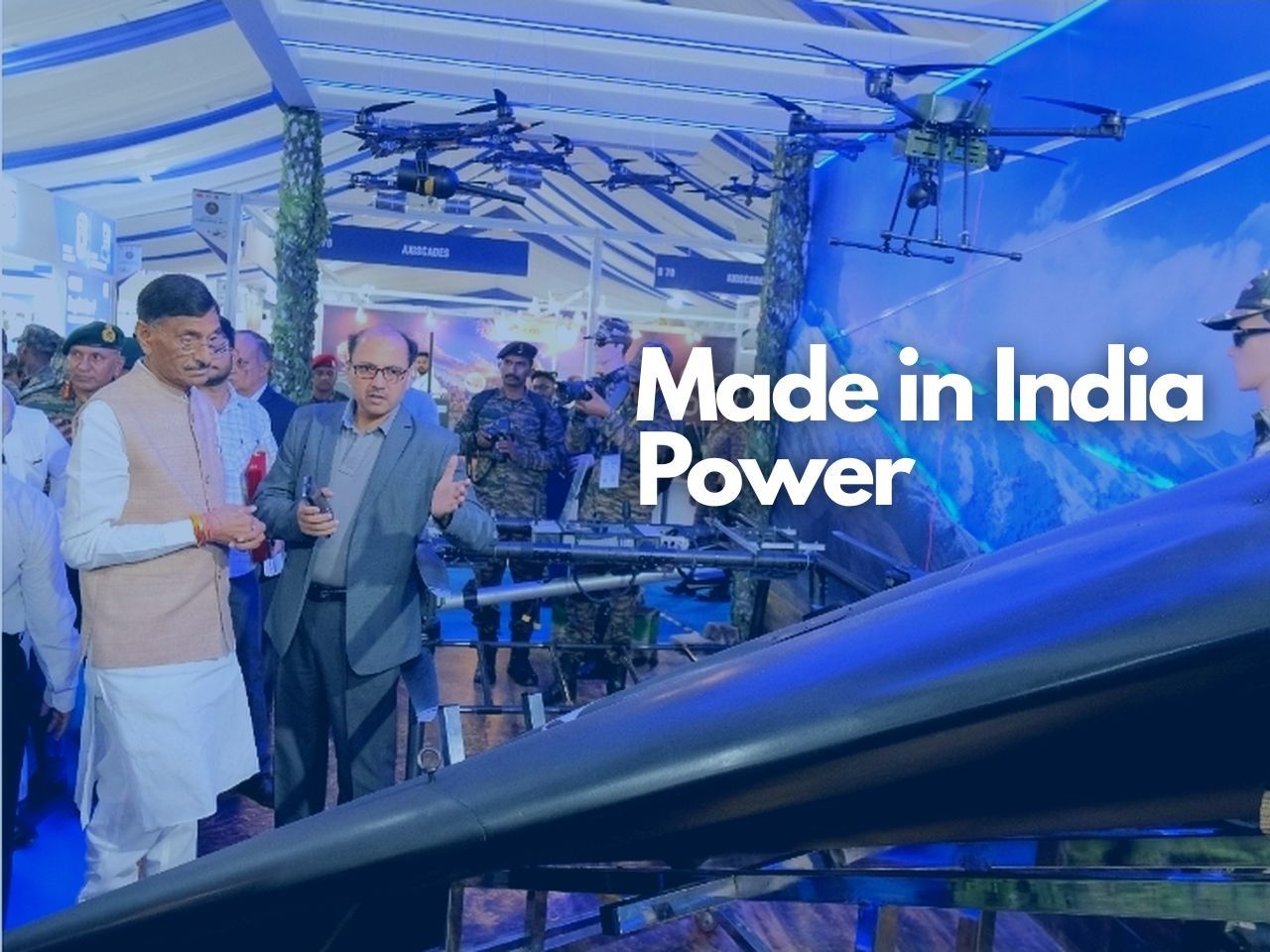
Organised by the Indian Army’s Northern and Central Commands in collaboration with the Society of Indian Defence Manufacturers, the event brought together a wide spectrum of stakeholders—from military leaders and policymakers to startups, innovators, and academia.
With 284 exhibitors, including startups and MSMEs, the symposium showcased a range of advanced technologies:
- Drones and UAVs
- Counter-UAV systems
- Surveillance solutions
- Next-generation defence equipment
The theme—“Raksha Triveni Sangam: Where Technology, Industry & Soldiering Converge”—captured the essence of what is unfolding.
This is not just about defence.
It is about the coming together of innovation, industry, and national purpose.
The Bigger Picture
What emerges from all of this is a powerful narrative shift.
India’s startup ecosystem is no longer confined to consumer tech, fintech, or e-commerce. It is moving into areas of strategic importance—defence, deep tech, and national infrastructure.
MSMEs, long considered the backbone of the economy, are now stepping into a more visible and critical role—powering production, enabling scale, and strengthening supply chains.
Together, they are shaping a future where:
- Innovation is homegrown
- Manufacturing is local
- And capability is sovereign
Building Towards Viksit Bharat
The road to Viksit Bharat 2047 is not just about economic milestones—it is about capability, confidence, and control over critical technologies.
Startups and MSMEs are at the center of this journey.
They are not just building companies.
They are building systems, solutions, and strengths that will define India’s place in the world.
And as the lines between innovation and national interest continue to blur, one thing is becoming increasingly clear:
India’s future will be built not just by policy—but by its builders.