
After hearing Prime Minister Narendra Modi set an ambitious target of 1,000 new BRICS business partnerships, Dr Seema Narera asks what that vision could mean for cinema and whether the creative economy can become a powerful engine for South-South collaboration.
/fit-in/580x348/filters:format(webp)/tice-news-prod/media/media_files/2026/09/11/modi-and-putin-brics-2026-09-11-21-10-25.jpg)
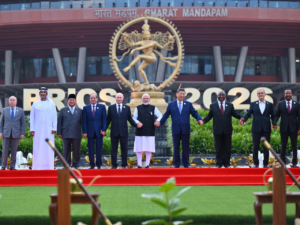
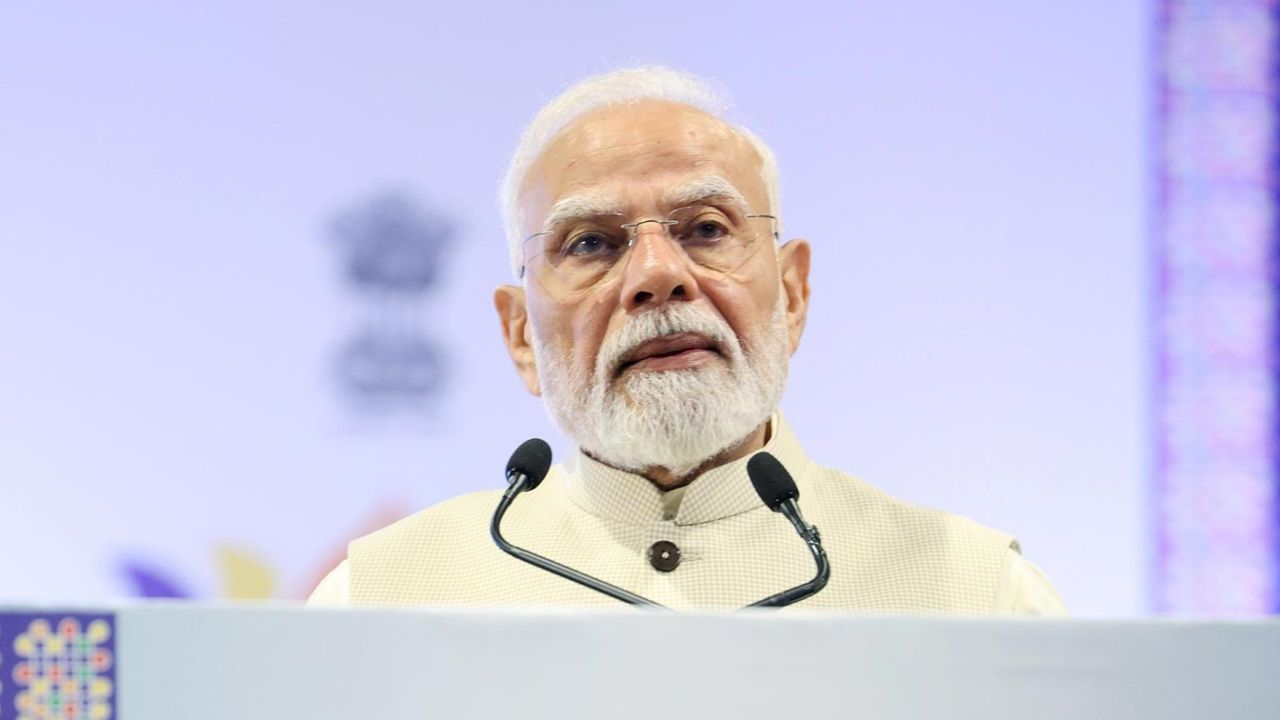
I was amongst the select few present at the BRICS Business Forum when Prime Minister Narendra Modi laid out three measurable ambitions for BRICS: identify and work towards removing the top 10 trade barriers between BRICS countries, help 100 BRICS startups expand into other BRICS markets every year and build 1,000 new business partnerships annually.
“As I listened, one thought kept coming back to me: what could this vision mean for the creative economy?”
Because cinema is not simply culture. It is also an industry involving producers, investors, distributors, technology companies, talent, locations, studios, post-production, animation, VFX and increasingly artificial intelligence.
And, perhaps more than almost any other industry, cinema is built on relationships.
The real value is what happens after the meeting
BRICS has already created an important platform for countries of the Global South to engage with one another. But the real test of any such platform is what happens beyond the meeting rooms.
-Do conversations become collaborations?
-Do introductions become businesses?
-Do businesses enter new markets?
-Do filmmakers from two countries actually make a film together?
That is where I see an important parallel with the vision Prime Minister Modi articulated.
The real question is not how many people attend a film festival. It is how many meaningful relationships begin there and what happens to them afterwards.
For too long, film festivals have largely been measured through screenings, attendance, awards and red carpets. Those things matter.
But the creative economy needs something more. It needs connections that convert into collaborations.
Cinema is naturally cross-border
A film can bring together a producer from India, a director from Brazil, actors from Kazakhstan, locations in Thailand, VFX from another country, financing from the UAE and distribution across several markets.
-The technology already exists.
-The talent exists.
-The audiences exist.
What is often missing is the infrastructure that helps the right people find each other. This is particularly relevant for the Global South.
There are enormous creative ecosystems across Asia, Africa, Latin America, the Middle East and other emerging markets. Yet filmmakers and creative businesses from these regions often operate in parallel rather than together.
We should be asking a different question:
What happens if the Global South begins making more films, building more IP and creating more businesses together?
We are not starting from zero
At the BRICS WAVES Bazaar in Mumbai in August, the Global South Film Festival Consortium began building precisely this kind of network. We established relationships across countries including Russia, Brazil, China, Thailand, South Africa, the UAE and Kazakhstan. The starting point is roughly 14 international relationships.
Fourteen is a small number compared with the scale of the opportunity. But every large network begins with its first connections.
Our ambition is to use the coming months to build from those initial relationships towards around 100 meaningful creative partnerships in the making by March 2027, when GSFF holds its inaugural edition in India.
And I deliberately use the words “in the making.”
I am not talking about collecting 100 MoUs.
I am talking about partnerships where something is actually being developed.
-A co-production.
-A distribution relationship.
-A financing opportunity.
-A location partnership.
-A post-production or VFX collaboration.
-An AI or creative-technology partnership.
-A talent exchange.
-A film-school or skills partnership.
-A new IP.
That is the difference between networking and building an ecosystem.
From roadshows to real matchmaking
Our GSFF Roadshow begins in October. But I do not see the roadshow simply as a promotional tour for a festival. I see every stop as an opportunity to create a South-South Creative Partnership Lab.
The objective is simple: Move from “Who is here?” to “What can we build together?”
/fit-in/580x348/filters:format(webp)/tice-news-prod/media/media_files/2026/09/07/kavya-article-2026-09-07-20-09-57.png)
KAVYA can bring the next generation into the network
The second part of this strategy is KAVYA, the AI filmmaking initiative being unveiled at BRICS Delhi.
KAVYA is built around Kumbh, one of India’s most enduring living cultural traditions and invites a new generation of storytellers to explore this heritage through AI and new forms of filmmaking.
Our ambition is to engage around 10,000 young participants from across the Global South.
For me, KAVYA is therefore much more than an AI film challenge. It can become a discovery engine.
Among thousands of participants could be filmmakers, writers, animators, designers, technologists, storytellers and creative-tech entrepreneurs who have never previously found an international platform.
-Some may create films.
-Some may develop new IP.
-Some may build startups.
-Some may find collaborators in another country.
-And some may become the creative entrepreneurs of the next decade.
This is where talent, technology and partnerships come together.
From 14 relationships to 100 partnerships
The objective is therefore not to arrive at the GSFF inaugural edition with a list of people who have simply registered. It is to arrive with a network of relationships that are already moving. By March 2027, our ambition is to have around 100 South-South creative partnerships in development.
The festival then becomes a convergence point. People should not arrive in India saying, “I am looking for a partner.” Ideally, they should arrive saying: “We have already started something. Now let’s build it further.”
That would represent a very different model for a film festival.
/fit-in/580x348/filters:format(webp)/tice-news-prod/media/media_files/2026/09/11/modi-addressing-brics-2026-09-11-21-09-45.jpg)
What can cinema contribute to the BRICS vision?
Prime Minister Modi’s targets are designed for the wider BRICS business ecosystem, not specifically for cinema.
But I believe the creative economy can contribute to the same direction.
-The first target — removing trade barriers — has a clear creative-industry parallel.
Cross-border productions can encounter barriers involving visas, payments, taxation, intellectual property, incentives, permissions, locations and movement of talent and equipment.
-The second target — helping 100 startups expand across BRICS markets — has a growing relevance to creative technology.
AI filmmaking, animation, VFX, virtual production and other technologies are creating new categories of businesses that can scale internationally.
-And the third target — 1,000 new partnerships — is perhaps the most directly relevant.
The creative economy needs more structured pathways for people who meet to actually build together.
Global South Film Festival can be one small experiment in how that might work.
The bigger opportunity
BRICS is trying to move from dialogue to measurable economic cooperation. The Global South’s creative industries can make the same transition.
Because filmmakers do not only exchange products. They exchange stories, talent, technology, locations, culture and imagination.
And sometimes, a film made together can create a relationship between two countries that lasts far longer than the film itself.
“Our starting point is around 14 international relationships. Our ambition is to build a pipeline towards 100 meaningful creative partnerships by March.”
The numbers are very different from the BRICS target.
But the philosophy is the same:
Turn proximity into relationships.
Turn relationships into partnerships.
Turn partnerships into economic and cultural value.
If 1,000 new business partnerships can become an annual ambition for BRICS, perhaps 100 meaningful South-South creative partnerships can become a starting ambition for cinema.
And perhaps the real measure of a film festival of the future will not simply be how many films it screened.
It will be what the world started making together because it happened.
Dr Seema Narera
India Lead: Global South Film Festival