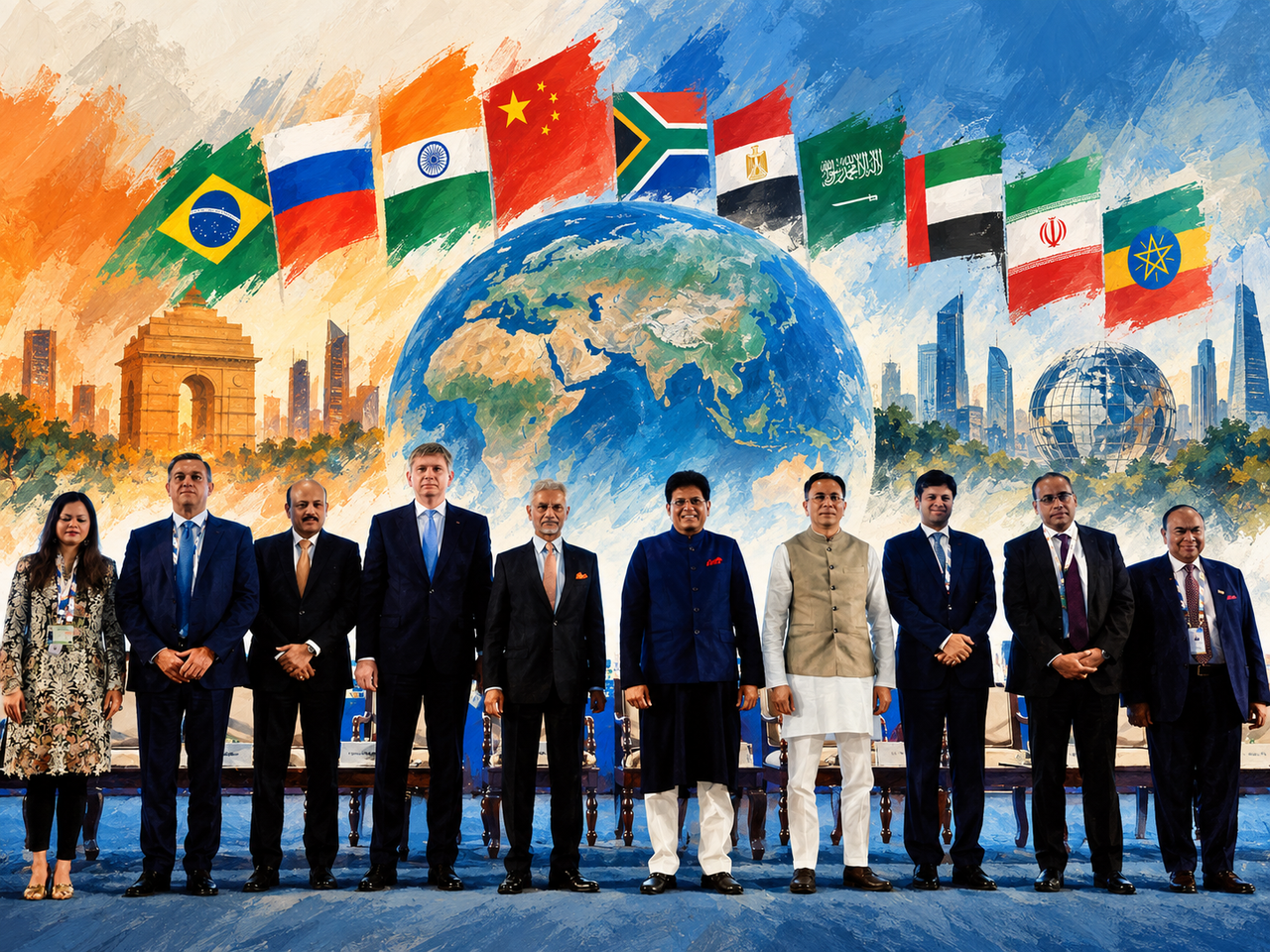

BRICS trade has grown into a nearly $1.2 trillion market. India now wants its companies to capture more of it.
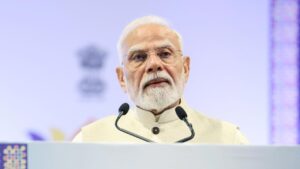
At the BRICS Business Forum in New Delhi on Friday, Commerce and Industry Minister Piyush Goyal called on member and partner countries to open their markets, cut regulatory barriers, diversify supply chains and make cross-border payments easier.
The push comes against a familiar problem: India’s access to BRICS markets has expanded, but its exports have not kept pace.
Goyal called for faster clearances, fewer non-tariff barriers, easier movement of professionals, greater use of local currencies and stronger business links, particularly for MSMEs and startups.
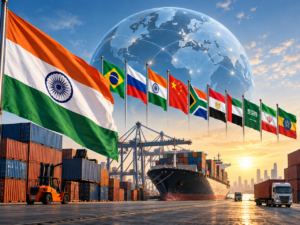
Commerce Secretary Rajesh Agrawal said trade among BRICS countries has risen from $84 billion in 2003 to nearly $1.2 trillion in 2024.
The opportunity is already visible. The challenge is getting Indian businesses to capture it.
/fit-in/580x348/filters:format(webp)/tice-news-prod/media/media_files/2026/09/11/goyal-2026-09-11-18-20-23.jpeg)
India Wants Supply Chains That Work Both Ways
Goyal’s message was straightforward: a resilient supply chain cannot depend on one direction of trade.
“Supply chains would be resilient when they run both ways,” he said, urging BRICS countries to open their markets to finished goods as well as raw materials and critical minerals.
For India, that matters as manufacturers look to diversify sourcing and build more reliable supply chains.
But market access is rarely blocked by tariffs alone.
Goyal noted that non-tariff measures impose higher export costs than tariffs for 88% of countries. Certification, documentation, product standards, approvals and customs procedures can add costs long before a shipment reaches a customer.
For an exporter, those details can decide whether a deal makes commercial sense.
India therefore needs BRICS to tackle the less visible barriers to trade, not just negotiate headline commitments.
The Export Opportunity Is in Manufacturing—and Beyond
Goyal pointed to sectors where India already has scale: engineering goods, electronics, pharmaceuticals, automobiles and components, agriculture and services.
But selling more across BRICS will require more than having competitive products.
Services companies need easier movement of professionals and recognition of qualifications. Manufacturers need predictable standards. Agricultural exporters need reliable market access. Technology companies need local partners.
Startups are part of that equation too.
India now has 250,000 recognised startups, Goyal said, with more than 45% having at least one woman partner or director. He also called for greater participation by women-led businesses in BRICS trade fairs, exhibitions and other commercial opportunities.
That broadens the purpose of BRICS cooperation.
It cannot remain a conversation between governments and large corporations. Smaller companies need a way into the trade.
/fit-in/580x348/filters:format(webp)/tice-news-prod/media/media_files/2026/09/11/brics-2026-09-11-18-21-46.jpeg)
For MSMEs, Market Access Starts With Finding a Buyer
For a large corporation, entering a foreign market is expensive. For an MSME, it can be prohibitive.
A small Indian manufacturer may need to find a credible distributor, understand local regulations, meet certification requirements, arrange working capital and manage payment risk before it gets its first repeat order.
That is where stronger BRICS business-to-business networks could make a difference.
Proposals around BRICS Connect, B2B partnerships and dedicated platforms for MSMEs and startups are intended to make it easier for businesses to identify partners and opportunities.
But the real measure will be what happens after registration and meetings.
If an Indian manufacturer finds a distributor in Brazil, wins a contract in South Africa or builds a technology partnership in another BRICS market, the system is working.
If businesses still struggle to find credible customers, the institutional machinery will remain just that—machinery.
Payments Could Remove Another Barrier
Goyal also put digital payments at the heart of India’s trade pitch.
He highlighted UPI, which he said now handles more than 250 billion transactions annually and accounts for more than half of global transactions by volume. UPI is accepted in 11 countries, he said.
India is pushing BRICS countries to link payment systems and encourage trade in local currencies.
The immediate opportunity is less about creating a common BRICS currency and more about making cross-border payments cheaper and faster.
For exporters, multiple intermediaries, foreign-exchange costs and settlement delays can tie up working capital. Faster settlement would not fix the trade imbalance, but it could make smaller cross-border transactions easier to undertake.
Payment infrastructure may sound like a technical issue. For an MSME, it can directly affect whether an export order is worth taking.
/fit-in/580x348/filters:format(webp)/tice-news-prod/media/media_files/2026/09/11/jaishankar-2026-09-11-18-21-22.jpeg)
AI and Semiconductors Expand the Trade Agenda
The BRICS economic conversation is also moving beyond conventional merchandise trade.
Minister of State Jitin Prasada called for greater cooperation in artificial intelligence, semiconductors, digital public infrastructure and data centres. He highlighted India’s Semiconductor Mission 2.0, with an incentive outlay of about $13 billion, as an area for collaboration across the semiconductor ecosystem.
External Affairs Minister S. Jaishankar similarly pointed to AI, fintech, advanced manufacturing, agritech, startups and digital delivery alongside traditional areas such as trade facilitation and supply-chain connectivity.
The opportunity is significant, but so are the complications. Technology cooperation brings questions around standards, security, access and trust.
For BRICS, that means the next phase of economic cooperation will have to connect technology ambition with rules that businesses can actually work with.
The Test Is What Happens After the Summit
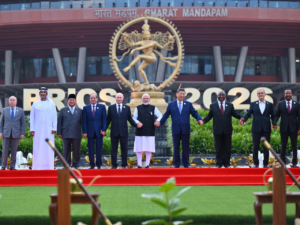
BRICS has changed dramatically since institutional cooperation began two decades ago. India’s 2026 chairship has put resilience, innovation, cooperation and sustainability at the centre of that evolution.
The business agenda now needs to deliver something more tangible.
Rajesh Agrawal pointed to BRICS Connect, an annual BRICS Trade and Investment Expo, digital trade documentation, B2B partnerships and stronger sectoral cooperation as tools to deepen economic integration. He also called for affordable working capital for MSMEs and continued support for the multilateral trading system with the WTO at its core.
All of that matters. But the commercial scorecard is simpler.
Are Indian companies winning more orders?
BRICS already has the scale. Trade among its members has grown from $84 billion to nearly $1.2 trillion in two decades.
India has the manufacturing base, pharmaceutical strength, technology talent and startup ecosystem to take a larger share of that trade.
What it needs now is an easier route to the customer.
The success of India’s BRICS strategy will ultimately be visible not in the number of declarations signed, but in how much more Indian business crosses the border.