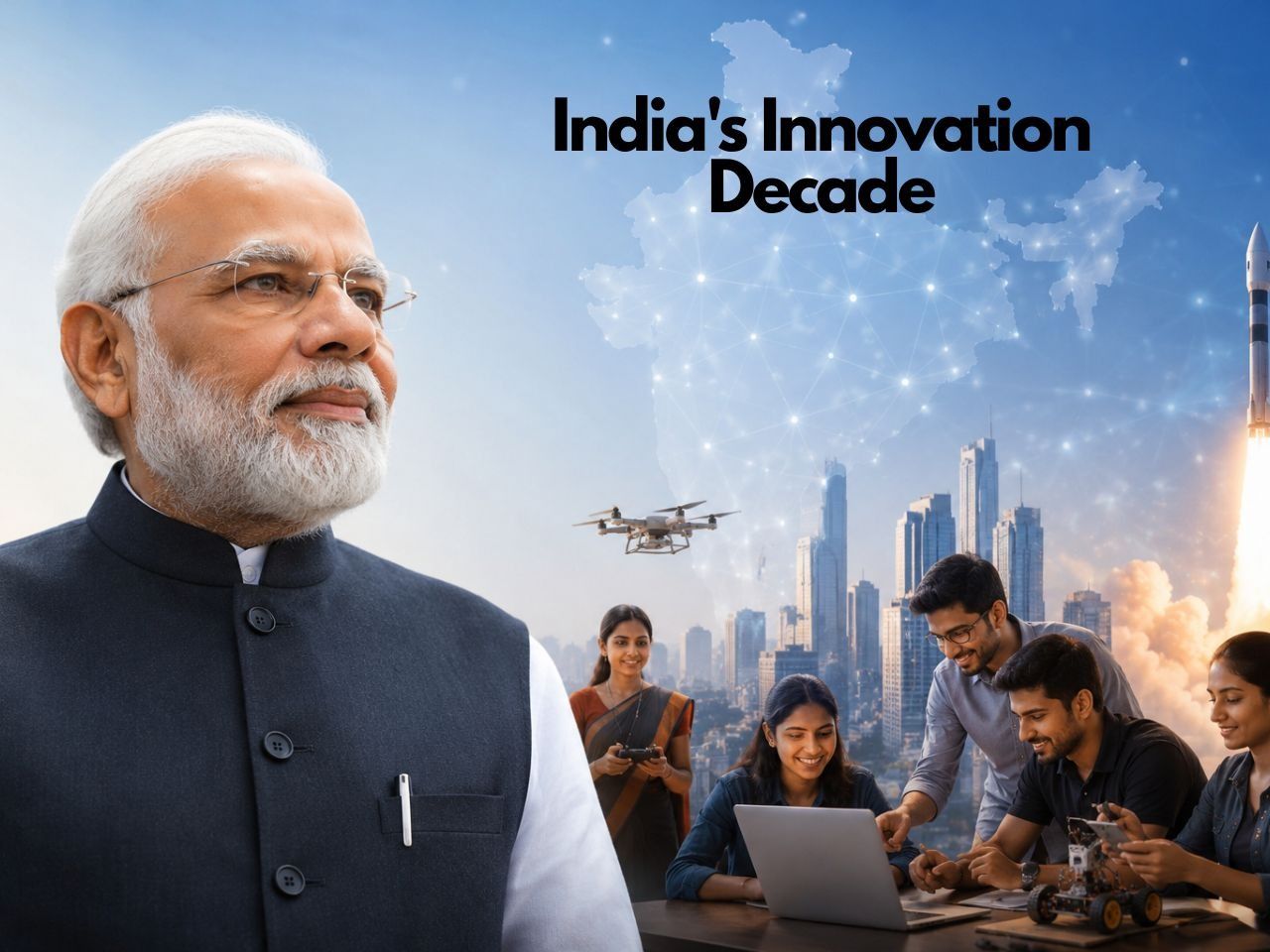

India’s startup journey has moved from being an emerging story to becoming one of the most closely watched innovation narratives in the world. Standing alongside French President Emmanuel Macron at the inauguration of Bharat Innovates 2026 in Nice, Prime Minister Narendra Modi on Sunday painted a picture of an India that is not only producing startups at scale but is also building a deep-rooted innovation culture that stretches from classrooms and villages to frontier sectors such as defence, space and nuclear energy.
Addressing a gathering of entrepreneurs, investors, innovators and policymakers from India and France, the Prime Minister underscored how India has transformed itself into the world’s third-largest startup ecosystem over the last decade through a combination of policy reforms, institutional support and grassroots innovation initiatives.
His remarks came at a time when India continues to attract global attention for the scale of its entrepreneurial activity, the rapid growth of its digital economy and the increasing number of startups emerging from non-metro regions.
India’s Startup Rise: A Decade in the Making
Reflecting on the country’s innovation journey, PM Modi said the transformation did not happen overnight but was the result of a mission-driven approach adopted over the last 11 to 12 years.
“Over the past 11-12 years, India has built a robust ecosystem for innovation. From patent filings to incubation networks, from Startup India to policy support, this entire journey has moved forward in mission mode. Today, India is the third-largest startup ecosystem in the world,” the Prime Minister said.
The statement captures the remarkable evolution of India’s startup landscape. What began as a movement driven by a handful of technology entrepreneurs has today expanded into a nationwide ecosystem supported by incubators, accelerators, research institutions, investors, government programmes and a rapidly growing talent pool.
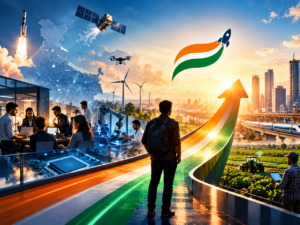
India’s startup ecosystem now spans sectors ranging from fintech and SaaS to deeptech, agritech, climate tech, healthtech, mobility and advanced manufacturing.
Taking Innovation Beyond India’s Metro Cities
One of the central themes of the Prime Minister’s address was the democratisation of innovation.
While startup success stories have traditionally been associated with cities such as Bengaluru, Delhi-NCR, Mumbai and Hyderabad, PM Modi emphasised that India’s innovation agenda is increasingly reaching smaller cities, towns and grassroots communities.
“But our vision is not limited to major cities alone. We have worked to take innovation to the grassroots level. Atal Tinkering Labs have been established in schools. Young people are being connected through hackathons and innovation challenges. Incubators and research institutions are being expanded across the country. And we are especially linking women innovators with a wide range of emerging technologies,” he said.
The government’s focus on creating innovation infrastructure at the school level through Atal Tinkering Labs and promoting entrepreneurship among young people has become a key pillar of India’s long-term innovation strategy. These initiatives are aimed at encouraging problem-solving, experimentation and technology-led thinking from an early age.
Women Entrepreneurs Powering the Next Growth Chapter
The Prime Minister also highlighted the growing role of women in shaping India’s entrepreneurial future.
Over the past few years, women-led startups have emerged across sectors including fintech, healthtech, consumer brands, agritech and climate innovation. Government-backed programmes aimed at enhancing financial inclusion, digital access and entrepreneurial support have further expanded opportunities for women founders.
“As a result of all these efforts, India has witnessed transformational change on a large scale. Today, from Drone Didis to becoming founders of startups, our women power is writing new success stories,” PM Modi said.
The reference to “Drone Didis” reflects the government’s efforts to introduce rural women to advanced technologies and create new livelihood opportunities, while simultaneously encouraging greater participation in innovation-led sectors.
Defence and Space Startups Gain Momentum
PM Modi also pointed to the opening up of India’s defence sector as a major catalyst for startup-led innovation.
For decades, defence was largely dominated by established institutions and large corporations. However, recent policy changes have enabled startups and young innovators to participate in solving strategic and national challenges.
“To further harness the energy of our youth, India’s defence sector has also been opened up for innovation. Today, hundreds of startups associated with the defence and space sectors are doing remarkable work in India,” he said.
India’s space-tech ecosystem has similarly witnessed significant momentum following regulatory reforms that allowed private sector participation. A growing number of startups are now working on satellite technologies, launch systems, earth observation, defence applications and next-generation aerospace solutions.
Nuclear Sector Reforms Open New Frontiers
In another significant highlight, the Prime Minister pointed to recent reforms in the nuclear energy sector, positioning it as a new opportunity area for innovators and researchers.
According to PM Modi, these reforms are expected to create opportunities in clean energy technologies, advanced reactor development and frontier scientific research.
“And recently, India has undertaken important reforms in the nuclear energy sector as well. This is creating new possibilities in the areas of clean energy, advanced reactors, and frontier research,” he said.
The move aligns with India’s broader ambition to strengthen energy security while accelerating its transition towards cleaner and more sustainable sources of power.
For deeptech startups, research institutions and advanced technology companies, the evolving nuclear landscape could potentially unlock new avenues for innovation and collaboration.
‘Express Train of Reforms Will Not Stop’
Perhaps the most significant takeaway from the Prime Minister’s address was his message on policy continuity.
As entrepreneurs and investors closely track regulatory signals, PM Modi reiterated that the government’s reform agenda remains firmly on course.
“This express train of reforms will not stop; it will continue to move forward. And the number of startups emerging from India will continue to multiply many times over,” he said.
The statement serves as a strong signal to both domestic and international stakeholders that India intends to further strengthen its startup ecosystem through continued policy support and innovation-led growth initiatives.
Bharat Innovates 2026: Strengthening India-France Innovation Ties
Jointly inaugurated by Prime Minister Narendra Modi and French President Emmanuel Macron, Bharat Innovates 2026 serves as a platform designed to deepen innovation cooperation between India and France.
The conclave has brought together startups, venture capital investors, policymakers, researchers and technology leaders to explore opportunities across emerging sectors and strengthen bilateral innovation partnerships.
Earlier at the event, Union Commerce and Industry Minister Piyush Goyal highlighted India’s expanding entrepreneurial landscape, describing the country as a reliable partner for global growth.
According to Goyal, India today has more than 230,000 startups, reflecting the scale and maturity of its innovation ecosystem.
As India seeks to position itself as a global innovation powerhouse, Bharat Innovates 2026 offers a glimpse into the next phase of that journey—one where startups, deep technology, international collaboration and policy reforms converge to shape the future of economic growth.
With over 230,000 startups, a growing deeptech ecosystem, expanding innovation infrastructure and sustained government backing, India’s startup story appears to be entering a new chapter—one that is increasingly global in ambition and scale.