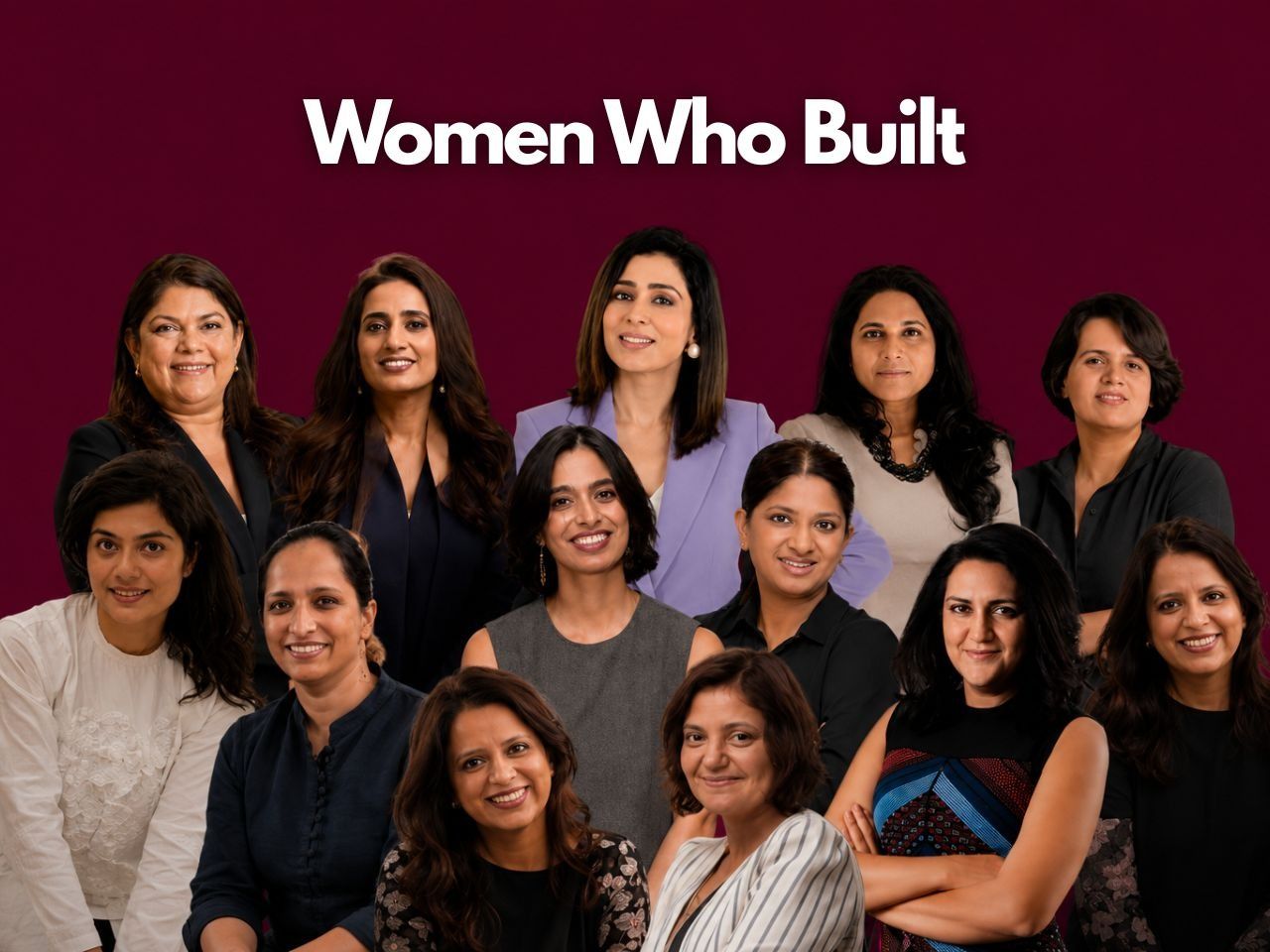

For years, the Indian startup story was narrated through billion-dollar valuations, funding announcements, and the rise of aggressive unicorn founders. But beneath the noise of pitch decks and boardrooms, another powerful story has quietly reshaped India’s consumer economy — the rise of women-led brands that Indians genuinely trust, love, and live with every day.
Whether it is a skincare product ordered at midnight, a bridal checklist saved months before a wedding, a healthy snack packed into a child’s school bag, or a digital wallet used for daily transactions, women founders today are influencing how India shops, spends, eats, beautifies, and builds communities.
And unlike many businesses that chased scale before substance, these brands were often built with empathy first.
Today, names like Nykaa, Mamaearth, Sugar Cosmetics, Mobikwik, SHEROES, Slurrp Farm, and others are not merely startups — they are household brands. Behind them stand women entrepreneurs who disrupted industries traditionally dominated by legacy players and male-led business structures.
Their journeys are not just stories of entrepreneurship. They are stories of resilience, reinvention, intuition, and the changing face of Indian business leadership.
Top Indian Female Founders: The Shift From “Women Entrepreneurs” To “Industry Leaders”
There was a time when women founders in India were treated as exceptions in startup conversations. Panels discussed “women in business” separately, as though their ventures belonged to a niche category.
That narrative is collapsing rapidly.
Today’s women-led startups are competing directly with the biggest consumer brands in the country. They are raising capital, going public, creating jobs, building profitable businesses, and influencing how millions of Indians consume products and services.
More importantly, they are creating brands rooted in authenticity — something increasingly valued in the modern digital economy.
Unlike the hyper-growth-at-all-costs mindset that defined much of startup culture over the last decade, many women founders focused deeply on consumer trust, community building, and long-term brand loyalty. Ironically, these qualities have now become the strongest differentiators in India’s crowded startup ecosystem.
Falguni Nayar: The Corporate Veteran Who Built Nykaa Into A Beauty Empire
Among the most iconic stories is that of Falguni Nayar, founder of Nykaa.
After spending nearly two decades in investment banking, Nayar took what many considered a late entrepreneurial leap at the age of 50. At a stage where most executives think about stability, she chose disruption.
Nykaa entered a market where beauty retail was fragmented and underserved. India lacked a trusted beauty commerce platform that combined authenticity, education, premium experience, and accessibility.
Nykaa changed that.
The company didn’t merely sell cosmetics — it created aspiration. It normalized premium beauty consumption for millions of Indian women while simultaneously empowering Indian and international beauty brands through digital commerce.
Its IPO became one of India’s landmark startup moments, not just because of financial success, but because it proved that women-led companies could dominate public markets too.
Today, Falguni Nayar represents a new generation of Indian business icons — strategic, disciplined, and deeply consumer-focused.
Vineeta Singh And The Rise Of Bold Indian Beauty Brands
Before Sugar Cosmetics became a youth favorite, India’s beauty market was heavily dependent on international aesthetics and legacy brands.
Vineeta Singh changed that equation.
Sugar Cosmetics built its identity around boldness, individuality, and Indian skin tones. Its marketing spoke the language of modern Indian consumers — confident, expressive, and digitally native.
The brand’s rise reflects a larger transformation in Indian consumer culture: customers no longer want imported identity; they want relatable authenticity.
Vineeta Singh also became one of the most recognizable faces of startup India through public appearances and television entrepreneurship platforms, helping inspire a new generation of aspiring women founders.
Her journey highlighted an important truth — women entrepreneurs are no longer building businesses “for women.” They are building category-defining brands for mainstream India.
Ghazal Alagh And Mamaearth’s Digital-First Consumer Revolution
Few brands captured India’s digital-first consumer wave as aggressively as Mamaearth.
Co-founded by Ghazal Alagh, the brand entered the highly competitive personal care market with a sharp proposition — toxin-free, modern products designed for young Indian families.
But the real innovation was not only in products.
Mamaearth mastered influencer-driven commerce, digital storytelling, and community-led marketing before many traditional brands fully understood creator ecosystems. It became one of the clearest examples of how Indian startups could leverage content, trust, and relatability to challenge established FMCG giants.
The company’s rapid rise also symbolized the emergence of women founders in India’s D2C revolution — a space where emotional intelligence and consumer understanding became major competitive advantages.
Upasana Taku: Building Trust In India’s Fintech Revolution
Fintech has historically been viewed as a male-dominated sector, but Upasana Taku broke through those barriers with Mobikwik.
At a time when digital payments were still evolving in India, Mobikwik helped simplify online transactions for millions of users navigating the early years of digital finance adoption.
The journey was far from easy.
Fintech demanded regulatory understanding, operational discipline, technological capability, and consumer trust at scale. Upasana Taku helped steer the company through intense competition while helping shape India’s rapidly evolving digital payments ecosystem.
Her success challenges another persistent stereotype in the startup world — that women founders are concentrated only in lifestyle or consumer categories.
Today, women entrepreneurs are building high-impact companies across fintech, SaaS, deeptech, logistics, healthtech, and AI.
Sairee Chahal And The Business Of Women-Centric Communities
Long before “community commerce” became a startup buzzword, Sairee Chahal was building SHEROES around the idea of creating safe digital spaces for women.
SHEROES evolved as more than just a platform. It became a support ecosystem where women could access career opportunities, conversations, mentorship, and entrepreneurship networks.
In many ways, the platform addressed a deeper societal challenge — the lack of inclusive professional spaces for women navigating career breaks, family expectations, and workplace barriers.
The rise of SHEROES showed that startups can generate impact while building scalable business models.
And importantly, it proved that women founders often identify underserved human problems long before markets formally recognize them.
The Founders Building India’s Everyday Consumer Economy
Beyond the headline unicorns are several women founders quietly transforming niche but meaningful categories.
Mehak Sagar’s WedMeGood modernized wedding planning for India’s digital generation, turning one of the country’s most chaotic industries into an organized discovery ecosystem.
Ruchi Kalra’s Oxyzo brought innovation to SME financing, helping businesses access credit solutions more efficiently.
Shauravi Malik and Meghna Narayan built Slurrp Farm around healthier food choices for children and families, tapping into India’s growing awareness around nutrition and conscious eating.
Kanika Gupta Shori helped build Square Yards into a globally recognized proptech platform, while Radhika Ghai’s Kindlife positioned itself at the intersection of wellness, beauty, and creator-driven commerce.
Each founder represents a broader movement: Indian women are no longer participating at the edges of entrepreneurship — they are defining entire sectors.
Why Women-Led Brands Connect Deeply With Consumers
One of the most interesting aspects of women-led startups is their unusually high consumer trust quotient.
Many of these founders built businesses after personally experiencing gaps in the market themselves. Their understanding of customer pain points often came not from spreadsheets, but from lived experience.
This has resulted in brands that feel emotionally intelligent, community-oriented, and culturally aware.
In a digital economy flooded with advertising noise, authenticity has become one of the most valuable business currencies — and many women-led startups have mastered it exceptionally well.
Consumers today do not simply buy products. They buy stories, values, relatability, and trust.
Women founders have leveraged these elements brilliantly.
The Funding Gap Still Exists
Despite the success stories, India’s startup ecosystem still has a long way to go in terms of gender inclusivity.
Women-led startups continue to receive a disproportionately smaller share of venture capital funding compared to male-led ventures. Access to networks, investor bias, and leadership representation gaps remain persistent challenges.
However, the momentum is shifting.
The visibility of successful founders like Falguni Nayar, Vineeta Singh, Ghazal Alagh, and others is creating a ripple effect across the ecosystem. More women are entering entrepreneurship with confidence, and investors are increasingly recognizing the commercial strength of women-led businesses.
The future of Indian entrepreneurship will likely be more diverse, more consumer-aware, and more inclusive than ever before.
And women founders will play a defining role in shaping that future.
Beyond Representation, This Is About Economic Leadership
The significance of these founders goes far beyond representation.
They are generating employment, building globally competitive companies, influencing consumption patterns, and contributing meaningfully to India’s economic transformation.
Their journeys also carry a larger cultural message — leadership no longer has a single face, background, or style.
India’s startup ecosystem is evolving from aggressive founder mythology toward more balanced, resilient, and sustainable entrepreneurship models.
And many women founders are leading that transition.
The New Architects Of Brand India
India’s next generation of iconic consumer brands may not emerge from old industrial houses or traditional conglomerates.
They may emerge from founders who understand communities better than corporations do.
From beauty and wellness to fintech and food, women entrepreneurs are increasingly becoming the architects of modern Brand India.
Not through noise.
But through trust, consistency, and deep consumer connection.
And perhaps that is why these brands are not just successful.
They are loved.