
Mumbai’s Film City enters its 50th year, Maharashtra is sitting at an unusual intersection of technology, artificial intelligence and culture.
/fit-in/580x348/filters:format(webp)/tice-news-prod/media/media_files/2026/10/01/mumbai-film-city-shelar-sir-2026-10-01-22-12-57.jpeg)
Watching Maharashtra Cabinet Minister of Electronics, IT, AI & Cultural affairs, Shri Ashish Shelar ji work across these domains, I wonder whether this combination can make Mumbai an engine for the emerging Global South creative economy.
There are moments when a policy portfolio starts looking less like a collection of departments and more like a thesis.
At BRICS WAVES BAZAAR Mumbai in August 2026, he described the Orange Economy as an important pillar of India’s journey and spoke about how the boundaries between art and technology are shaping the future of the global creative economy.
/fit-in/580x348/filters:format(webp)/tice-news-prod/media/media_files/2026/10/01/shri-ashish-shelar-ji-address-at-brics-waves-bazaar-2026-10-01-22-27-35.jpeg)
At FICCI FRAMES September 2026, Shelar Sir message has been remarkably consistent: the boundaries between art and technology are dissolving, and India’s opportunity lies in bringing creativity, technology and culture together.
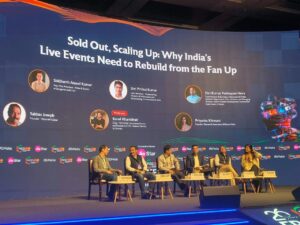
That conversation became particularly personal for me at FICCI FRAMES.
/fit-in/580x348/filters:format(webp)/tice-news-prod/media/media_files/2026/10/01/warmup-ventures-vision-at-iict-warmup-mou-2026-10-01-22-00-39.jpeg)
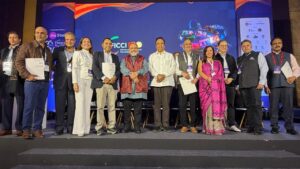
I had the pleasure of signing an MoU with the Indian Institute of Creative Technologies (IICT) under the august presence of Shelar Sir, around creative technologies, entrepreneurship, startups, global south markets and building new IP.
I also had the opportunity to spend a couple of minutes speaking with Shelar Ji. Two minutes can sometimes be enough to trigger a much bigger thought.
That brief interaction inspired me to think about projects where Artificial Intelligence, technology, culture, entrepreneurship and IP could come together, ideas that align closely with the larger creative and Orange Economy direction being articulated regularly by our Honorable Prime Minister Modi Ji.
What happens when technology meets culture?
India has spent decades building extraordinary capabilities in IT. We are now building serious capabilities in Artifical Intelligence. But we also possess something technology cannot manufacture and countries like China, USA, UK, Japan can’t produce or replicate: India, our Bharat has thousands of years of stories, languages, music, architecture, cinema, crafts, festivals, food, traditions and lived cultural experience.
The opportunity is to connect the two.
IT can provide the infrastructure. AI can provide the tools. Culture can provide the raw material. Creativity can become the enterprise.
This is not about technology replacing culture. It is about technology helping culture travel further, reach new audiences, create new IP and generate new economic opportunities.
Marathi cinema could be a test case
Shelar Sir has articulated this thinking specifically for Marathi cinema. In August, he said that production needs to be considered alongside screens, distribution and audience development and said the state could play the role of investor if a viable model emerges. I find that particularly significant.
Technology should not dilute culture; it should help culture travel further.
A Marathi story should be able to remain deeply Marathi while being produced with modern technology, distributed through global platforms and discovered by audiences far beyond Maharashtra.
If Maharashtra can demonstrate that model with Marathi cinema, it could become a template for other regional creative industries across India and eventually for the wider Global South.
From Film City to Creative City. This becomes even more significant as Dadasaheb Phalke Chitranagari “Mumbai’s Film City” enters its 50th year.
For five decades, Film City has been associated with film production. Perhaps its next fifty years can be about something much bigger.
Not simply a place where films are made, but an ecosystem where films, streaming, animation, VFX, gaming, music, live entertainment, Artifical Intelligence, virtual production, digital content and cultural IP can be created, developed, financed and taken to the world.
The first fifty years built a physical home for Indian cinema. What if the next fifty build a global home for India’s creative economy?
Shelar Sir’s ecosystem thinking
/fit-in/580x348/filters:format(webp)/tice-news-prod/media/media_files/2026/10/01/shelar-sir-ficci-frames-address-2026-10-01-21-10-03.jpeg)
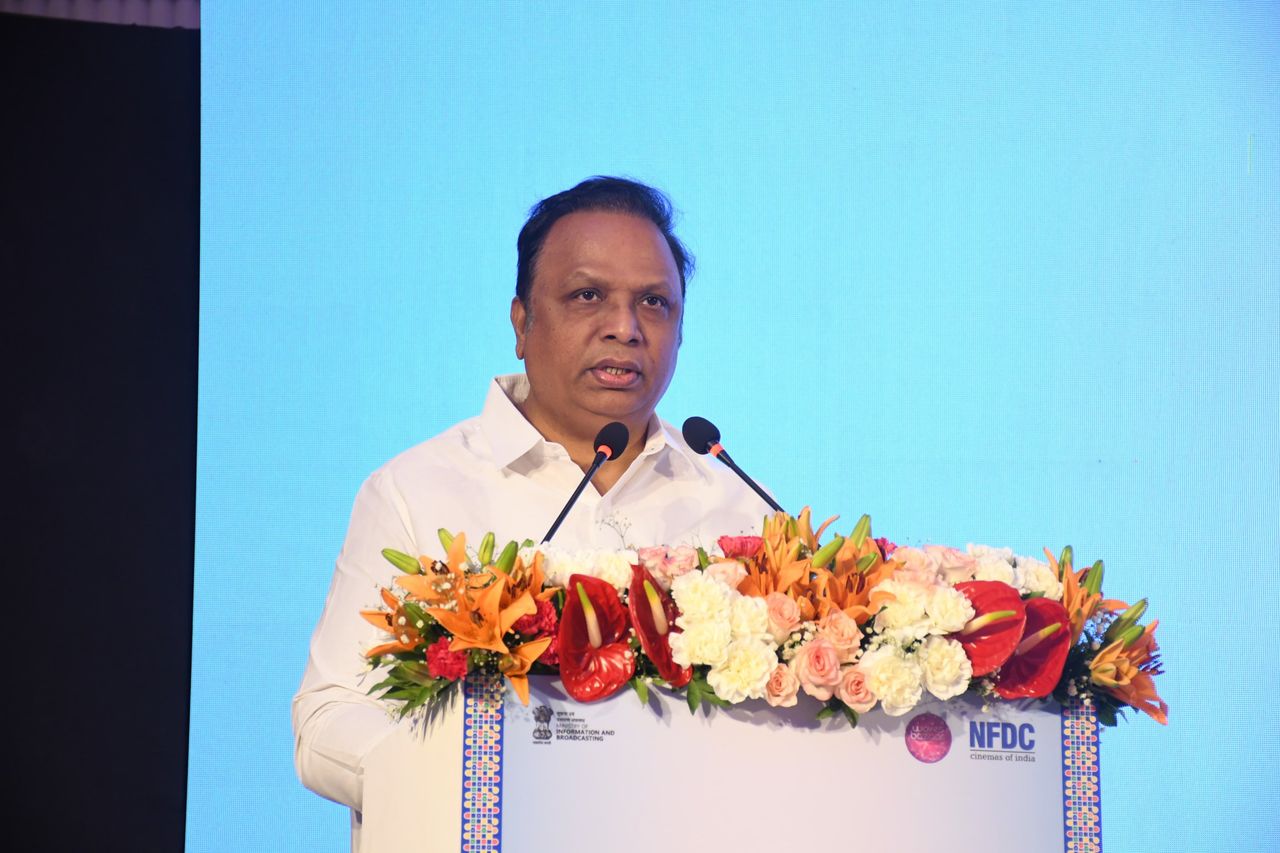
At FICCI FRAMES, Shelar Sir said “India is uniquely positioned to lead the next transformation in media and entertainment” and described the opportunity as building an ecosystem of creators, innovators and entrepreneurs. He echoed the vision of Honorable PM Modi Ji to build an orange economy ecosystem.”
I think this is the more important conversation. AI will not create India’s creative economy by itself. Neither will another studio or another app.
The opportunity lies in connecting talent + technology + capital + IP + infrastructure + markets.
That is an ecosystem.
And this is where IICT can become particularly important creating bridges between creative talent, technology, education, entrepreneurship, industry and IP building. The MoUs signed at FICCI FRAMES 2026, including the partnership with Warm Up Ventures, are part of this emerging creative-tech ecosystem.
From WAVES 2025 to WAVES 2027
There is also a larger national context. At WAVES 2025, Prime Minister Narendra Modi placed creativity, culture, technology and entrepreneurship within the larger conversation around India’s Orange Economy.
BRICS WAVES Bazaar subsequently demonstrated Mumbai’s ability to convene the global creative economy, bringing international creators, industry, investors and technology players into the same conversation. More than 500 delegates participated at the opening, with the platform designed to turn cross-border creative conversations into partnerships.
/fit-in/580x348/filters:format(webp)/tice-news-prod/media/media_files/2026/10/01/shelar-sir-waves-2025-2026-10-01-21-10-03.jpeg)
And now Mumbai is preparing to host WAVES again in 2027. The Union Ministry of Information & Broadcasting and Maharashtra government are already coordinating preparations for the second edition.
The opportunity is to move from conversation to creation, from showcasing India’s creative strength to building Indian-owned IP, companies, technologies and experiences that can travel globally.
One hub. Many creative spokes.
Maharashtra does not have to build this opportunity around Mumbai alone. The state could think about its creative economy through a hub-and-spoke model.
Mumbai can become the global-facing hub connecting capital, technology, studios, international markets, platforms and talent. Around it, cities such as Nashik, Nagpur, Kolhapur and Gadchiroli can become specialised creative spokes, each building on what already makes it distinctive.
-Nashik can connect cinema with culture, heritage, pilgrimage, tourism, cuisine and creative enterprise.
-Nagpur can develop around technology, animation, gaming, AI and its central geographic position.
-Chhatrapati Sambhajinagar has Ajanta-Ellora, heritage, tourism, architecture and cultural storytelling.
-Gadchiroli offers something very different tribal culture, indigenous knowledge, forests, biodiversity and stories that have rarely received a global creative platform.
–Solapur for its textiles, handloom, crafts and creative enterprise
-Kolhapur brings a deep legacy of Marathi cinema, music, theatre, crafts and cultural heritage.
The objective should not be to create smaller MUMBAIs. It should be to create distinctive creative economies connected to Mumbai and to each other.
Mumbai can provide global connections, technology, capital and distribution. The spokes can provide stories, talent, culture, locations, experiences, enterprises and new IP.
That could create a network in which creative value is generated across Maharashtra and connected to the world through Mumbai.
Invest Maharashtra.
/fit-in/580x348/filters:format(webp)/tice-news-prod/media/media_files/2026/10/02/invest-maharashtra-shelar-sir-2026-10-02-02-29-15.jpeg)
The launch of Invest Maharashtra makes this hub-and-spoke idea even more relevant. If Maharashtra is looking to distribute investment and economic opportunity across the state, the creative economy should be part of that conversation too. Invest Maharashtra need not only attract capital into manufacturing, infrastructure and technology; it can also attract capital into creative enterprises, cultural IP, film and media, tourism and experiences.
Mumbai can be the global-facing hub, while cities such as Nashik, Nagpur, Kolhapur and Gadchiroli can become specialised creative investment destinations, each building on its own cultural and economic strengths.
If Invest Maharashtra can bring capital to the state’s physical and industrial economy, perhaps the next opportunity is to bring capital, technology and global markets to its creative economy as well.
Could Maharashtra offer a playbook for the Global South?
There may be a larger significance to what Maharashtra is attempting.
Many Global South countries have enormous cultural wealth, young populations, growing technology capabilities and increasingly sophisticated creative industries. What they often need is not more culture, but the connective infrastructure that can turn culture into enterprise, IP, jobs, investment and global influence.
/fit-in/580x348/filters:format(webp)/tice-news-prod/media/media_files/2026/10/01/shelar-sir-brics-waves-2026-10-01-21-10-03.jpeg)
Maharashtra’s emerging model offers one possible direction: combine IT and AI with cultural capital; build institutions such as IICT; connect a major global hub with specialised cities; create indigenous IP; and use international platforms such as WAVES to connect local creative economies with global markets.
If this experiment succeeds, Shelar Sir’s stewardship could offer useful lessons for leaders across the Global South not a formula to copy, but a playbook to adapt to their own languages, cultures, cities and creative strengths.
That, to me, is the larger opportunity.
Mumbai’s next chapter
I believe Shelar Sir deserves credit for recognising that these conversations cannot remain in separate silos. His work across IT, AI and Culture creates an opportunity to connect three worlds that have often operated separately: technology, creativity and cultural capital.
I personally came away from those two minutes with Shelar Sir at FICCI FRAMES with a simple thought: What if Mumbai’s future creative industry is built at the intersection of AI + IT + Culture?
/fit-in/580x348/filters:format(webp)/tice-news-prod/media/media_files/2026/10/01/shri-ashish-shelar-ji-iict-warmup-ficci-frames-2026-10-01-22-00-39.jpeg)
Perhaps Mumbai can do more than build this ecosystem for itself. It can show the world how IT and AI can be used responsibly by not replacing culture and creativity, but as catalysts and enablers for a more inclusive, sustainable and globally connected creative economy.
/fit-in/580x348/filters:format(webp)/tice-news-prod/media/media_files/2026/10/01/shelar-sir-ficci-frames-mou-2026-10-01-21-10-03.jpeg)
The ingredients to make Mumbai, Maharashtra the Creatitve economy of Global South are already here.
-Film City has the legacy.
-IICT can help build the bridge.
-Maharashtra has the depth.
-Its cities have stories waiting to become new IP.
The next step is to connect them.
-AI can provide the new tools.
-IT can provide the infrastructure.
-Every city can provide its own cultural soul.
-And IICT @ Mumbai can provide the global engine.
I am convinced that, under the stewardship of the Hon’ble Cabinet Minister Shri Ashish Shelar Ji, Mumbai and Maharashtra can become a global model for the creative economy, creating a playbook that the Global South can learn from and adapt to its own cultural strengths.
– Rajesh Joshi
Venture Partner,
Warmup Ventures