
India’s startup ecosystem had a busy week, but the strongest signal from September 7–13, 2026 was not simply the amount of capital raised. It was the growing evidence that Indian startups are trying to move from domestic opportunity to global markets, particularly in space technology, AI, climate tech and deep tech.
The week saw Pixxel raise $100 million, GalaxEye secure a US patent for satellite imaging, Agnikul Cosmos expand its reusable rocket infrastructure and Indian startups deepen commercial links with the US, Saudi Arabia and BRICS economies. At the same time, India’s next-unicorn pipeline continued to widen, with 110 high-growth startups now identified as potential unicorns.
Taken together, these developments point to a startup market entering a different phase. The question is increasingly less about whether India can produce innovative companies and more about whether those companies can build technology, capital and market access at a scale that travels beyond India.
Space Tech Is Emerging as the Week’s Strongest Signal
The most striking concentration of activity came from India’s private space sector.
ISRO Chairman V. Narayanan said India could need 200–300 satellites and around 50 launches a year in the coming years, making greater participation from industry, startups and academia essential. Indian industry already accounts for nearly 80% of launch-programme spending, while the country has more than 450 space startups, according to the bulletin.
Capital is following that ambition.
Bengaluru-based Pixxel raised $100 million in Series C funding, taking its total funding to $195 million. The company plans to expand its sensing technologies, Earth-intelligence software, satellite manufacturing and sovereign space systems.
Then came two different kinds of technology milestones.
GalaxEye became the first Indian space startup to receive a US patent for satellite imaging technology covering its OptoSAR system, which combines optical and synthetic aperture radar capabilities. The company plans a 30-satellite constellation over the next five years.
Meanwhile, Agnikul Cosmos inaugurated facilities for testing and manufacturing components linked to reusable launch vehicles, strengthening its ability to develop and qualify reusable rocket stages.
The pattern is important. Funding, intellectual property and physical infrastructure are beginning to develop alongside each other. That is closer to the architecture of an industry than a collection of individual startups.
The Next Unicorns Are Getting Easier to Spot
India’s startup maturity is also visible in the companies sitting just below unicorn territory.
The 2026 Hurun India Cheetah Index identified 110 startups valued between $200 million and $500 million that could potentially become unicorns within five years. The number has more than doubled from 54 in 2021. Bengaluru leads with 36, followed by the National Capital Region and Mumbai.
What is changing is the sector mix.
AI remains central, but aerospace, defence, clean mobility and services are increasingly represented in the high-growth pipeline. That suggests India’s startup economy is broadening beyond the consumer internet and software categories that defined much of its first major expansion.
There are other signals of this diversification.
Navana.ai raised ₹40 crore to expand enterprise voice AI across BFSI, with speech models covering 12 Indian languages and 45 dialects. The company says it has already processed more than 100 million voice-AI minutes for financial institutions.
In mobility, Uber invested another $10 million in Carrum Mobility, whose fleet is expected to expand from more than 5,100 vehicles to around 11,000 over the next year.
The common thread is scale—technology businesses are increasingly being funded to expand operating capacity, not merely prove that a product works.
AI Is Finding Its Indian Context
AI funding during the week was not confined to generic enterprise automation.
Navana.ai’s focus on Indian languages and regulated financial institutions illustrates one route through which Indian AI companies can build an edge: solving problems shaped by local complexity and then taking those capabilities to larger markets.
Another example came from Dognosis, which is combining trained detection dogs with AI to analyse scent-related disease signals. The Bengaluru startup reported more than 90% accuracy across seven major cancer types in a study involving more than 1,500 participants across six hospitals, and plans commercial launch of its screening solution next year.
These companies operate in very different markets. But both point to a broader opportunity for Indian startups: combining advanced technology with difficult, domain-specific problems where data, language, regulation or operating conditions create barriers to entry.
Global Markets Are Becoming Part of the Startup Strategy
Perhaps the most consequential development of the week was happening outside the funding headlines.
The US signalled greater openness to Indian space startups, with discussions moving towards joint technology development, co-funded startups and shared missions.
India and Saudi Arabia also moved to create a more structured startup and fintech corridor. An MoU between IAMAI and Saudi Arabia’s Ministry of Investment is intended to support investor-startup matchmaking, business expansion, delegations, knowledge sharing and cross-border market access.
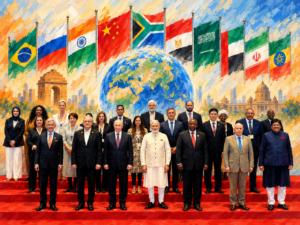
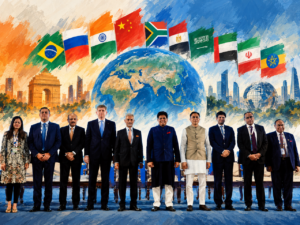
And through its BRICS chairship, India advanced initiatives around startups, MSMEs and supply chains, including a proposed BRICS Startup Innovation Fund, BRICS Incubator Network and MSME Cooperation Portal.
The BRICS India Innovates 2026 exhibition added another layer, showcasing 37 Indian deep-tech startups to investors, CEOs, policymakers and business leaders from BRICS economies. The stated objective was not simply visibility, but technology partnerships, investment discussions and international market access.
For Indian startups, this could prove more important than another funding round. Capital can extend a runway; access to customers and strategic partners can change the trajectory of a company.
The Hard Part Starts After the Funding Round
There was plenty of money in the ecosystem this week. Info Edge committed ₹10 crore to its startup investment subsidiary, while gaming startup ARC raised ₹10.5 crore to develop its portable gaming platform.
But the more interesting story is what happens after the cheque.
India’s space startups now have funding, policy support, technology milestones and growing international interest. AI companies are finding specialised enterprise applications. A larger group of companies is moving towards the $1 billion valuation threshold. And new international frameworks are attempting to connect Indian founders with capital and markets abroad.
The test now is commercial execution.
Can a satellite startup turn a patent into global contracts? Can deep-tech companies convert investor interest into manufacturing scale? Can Indian AI startups turn domestic complexity into an exportable advantage?
The coming phase of India’s startup story will be judged less by how many companies raise money—and more by how many can turn Indian innovation into global businesses.