Base is an Ethereum Layer 2 network, built to make onchain applications faster, cheaper, and easier to scale. It is EVM-compatible, built by Coinbase.
Teams use Base for DeFi apps, consumer crypto products, wallets, NFT platforms, payment flows, trading tools, and Web3 infrastructure. If your product needs to read Base data, send transactions, monitor smart contracts, or track user activity, reliable RPC infrastructure is essential.
You can run your own Base node, but maintaining it requires ongoing operational resources. Teams have to deal with storage, making sure it’s synced up, keeping it running, updating it, monitoring it, and making sure the RPC works.
For many products, maintaining Base node infrastructure internally may not be the most efficient use of engineering resources.
This is where Base RPC node providers become useful by offering ready-to-use API endpoints.Instead of managing infrastructure internally, teams can connect their wallets, exchanges, payment systems, analytics tools, and trading setups right to Base.
What Is a Base RPC Node?
A Base RPC node lets applications communicate with the Base network. Because Base is EVM-compatible, developers can use familiar Ethereum-style JSON-RPC methods to read blockchain data, send transactions, estimate gas, call smart contracts, monitor logs, and track new blocks.
Base exposes an EVM-compatible JSON-RPC API, so teams already building with Ethereum tooling can integrate Base without learning a completely different RPC model. That can simplify Base integration for wallets, DeFi apps, analytics platforms, NFT products, and trading tools.
A managed Base RPC node provider handles the infrastructure behind that connection. Instead of running and maintaining Base node infrastructure internally, teams connect through API endpoints and use the provider for availability, routing, scaling, archive access, and developer interfaces.
What is the Public RPC Endpoint?
A public RPC endpoint is an open URL that lets applications connect to a blockchain network, request data, and send transactions. Public RPC endpoints are useful for testing, experiments, and early development.
They are not ideal for production traffic because they are usually rate-limited and may become unreliable during traffic spikes, heavy contract activity, or periods of high network demand.
A provider should make it clear how many requests the application can send, how limits scale, and what happens when traffic grows. For example, some providers offer paid Base RPC access with higher or flexible request limits, while others use request caps, credits, or usage-based pricing.
The exact model matters less than transparency. A production team should know how the endpoint behaves before users depend on it.

Start With the Type of dApp You Are Building
The most suitable Base RPC provider depends on the product:
A wallet needs stable balance reads, token data, transaction broadcasting, and fast status updates. A DeFi protocol needs reliable smart contract reads, event logs, and low-latency transaction submission.
Before comparing providers — define the workload. Look at the methods your dApp calls most often, the traffic pattern, the number of users, the data depth required, and whether the application depends on real-time updates.
Evaluate Base RPC Providers by Production Criteria
Choosing a Base RPC provider should be based on infrastructure requirements, not only pricing or brand recognition.
A production dApp needs more than an endpoint that works during testing. It needs predictable access under real traffic, clear Base RPS rules, and the right data depth for the product.
| Criterion | Why It Matters for Production dApps | What to Check |
| Uptime | Downtime affects balance reads, transactions, smart contract calls, and user trust. | Look for a clear uptime target ~99.9% or SLA, not vague reliability claims. |
| Geo-balanced infrastructure | Users in different regions may experience different response times. | Check whether requests are routed across regions such as the US, EU, or Asia. |
| Base RPS limits | Production traffic can exceed free or shared endpoint limits quickly. | Review RPS limits, request caps, overage rules, and scaling options. |
| WebSocket support | Real-time apps need live updates for blocks, events, and transaction status. | Confirm WSS availability, connection limits, and whether WebSockets are included. |
| Archive access | Analytics platforms, explorers, and DeFi dashboards often need historical state. | Check whether archive Base nodes are available and which historical queries are supported. |
| Debug methods | Developers need deeper visibility into transaction execution and contract behavior. | Confirm support for debug methods before building analytics or debugging tools. |
| Base Mainnet and testnet support | Teams need separate environments for development, testing, and production. | Make sure the provider supports production and development workflows. |
| Dedicated node options | Shared endpoints may not be enough for high-volume applications. | Check whether dedicated Base Node infrastructure or custom plans are available. |
| Multi-chain coverage | Many dApps expand beyond Base after launch. | Review support for Ethereum, Optimism, Arbitrum, Polygon, Solana, Bitcoin, and other planned networks. |
| Monitoring and support | Production teams need visibility when something breaks. | Look for usage dashboards, error tracking, alerts, and technical support. |
This table is not a checklist for every project:
A simple wallet may not need archive access or debug methods at launch. A DeFi analytics platform probably will. The goal is to match the provider to the workload instead of buying infrastructure based on generic promises.
Base Mainnet and Testnet Support
A production Base setup should support both development and live environments.
A reliable provider should make it easy to move from testing to production without changing the entire infrastructure model.
Developers need testnet endpoints while building and validating product logic. Once the product is ready, the production endpoint should offer stronger performance, better limits, and clearer monitoring.
If a provider only solves one side of that workflow, the team may face extra work later.
Some providers focus only on mainnet access. Others support broader workflows through testnets, shared and dedicated nodes, WebSockets, and archive access. When comparing options, teams should check which environments are available for Base specifically, not just for Ethereum or other EVM chains.
Evaluate Rate Limits and Request Handling
Rate limits are one of the most important factors in RPC provider selection.
A dApp may work during testing and still fail in production if request volume grows beyond the provider’s limits. This is especially common when frontend apps make repeated balance checks, contract reads, or token metadata requests.
Teams should ask direct questions before choosing a provider.
What are the Base RPS limits? Are there method-specific limits? What happens when the limit is exceeded? Does the endpoint return clear errors? Can limits scale with the product?
These details are more useful than general claims about performance.
For production dApps, predictable limits are usually better than vague promises. A provider should explain how traffic is handled and what options exist when the application grows.
For example, if a provider offers no RPS limits on paid Base access, that can be useful for teams with unpredictable traffic. If another provider uses credits or request caps, that may still work, but the team needs to plan usage more carefully.
The point is not that one pricing model fits every dApp.
The point is that unclear limits are a production risk.
Why WebSocket Support Matters for dApps
WebSocket connections allow applications to receive real-time updates instead of constantly polling the network. This is useful for tracking new blocks, contract events, pending activity, and transaction status changes.
For DeFi interfaces, NFT tools, trading dashboards, and monitoring products, WebSocket stability can be critical.
A weak WebSocket connection can cause missed events or delayed updates. That creates a poor user experience and may force developers to build extra fallback logic.
When comparing Base RPC providers, check whether WebSocket access is available, stable, and included in the plan you need.
Base Archive Access
A Base archive node lets developers query older blockchain states and retrieve data from a genesis block. This is useful for analytics platforms, explorers, compliance tools, DeFi dashboards, and products that need historical balances, contract activity, or transaction context.
Providers should make clear whether archive Base Node access is available, which methods are supported, and whether archive access is included in the same plan as standard RPC. Some providers include archive Base RPC access as part of their infrastructure offerings, which may be relevant for analytics-heavy products.
Archive requirements should be confirmed before the dApp reaches production.
Debug Methods Add Deeper Visibility
Production teams often need more than standard RPC calls.
Debug methods help developers inspect transaction execution, internal calls, contract behavior, and state changes. These methods are especially useful when investigating failed transactions, complex DeFi interactions, or smart contract execution paths.
This level of visibility matters during development and after deployment.
When users report failed actions, developers need to understand what happened. Standard transaction receipts may not provide enough detail. Debug methods can help identify where execution failed and why.
Not every provider supports these methods on every plan.
Teams building more complex Base dApps should confirm whether debug methods are available before choosing a provider.
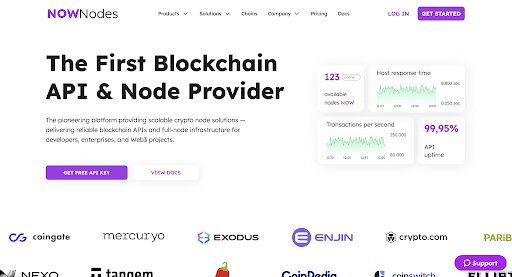
For example, NOWNodes lists Debug Base API support for Base and other crypto nodes, which may be useful for teams that need to inspect internal calls, execution paths, and failed transactions. For simpler applications, these methods may not be necessary at launch. For DeFi, analytics, and infrastructure products, they can become essential quickly.
Debugging should not depend on whatever visibility happens to be available after launch.
Evaluate Latency and Geographic Routing
A good Base RPC provider should route requests efficiently and support regions close to the application’s main users. Geo-balanced infrastructure can reduce response times and improve reliability during regional traffic spikes.
Teams should test providers under realistic conditions. Do not rely only on average latency shown on a website. Test contract reads, transaction submission, log queries, and WebSocket behavior from the regions where users are actually located.
If a provider offers geo-balanced routing across regions such as the US and Europe, that may help teams serving users in those markets.
Final Thoughts
Choosing a Base node provider depends primarily on the type of product being built.
For example, a wallet needs to reliably show balances and send transactions. An exchange needs to keep a close eye on deposits. A payment processor needs to track confirmations quickly. And an analytics platform needs steady access to blocks and transactions.
Before you pick one, you should look into things like: does it support Base mainnet, can you access the testnet, how fast does it respond, what are their uptime guarantees, what are the request limits, how much does it cost, how good is their support, and do they offer shared or dedicated nodes?
The right provider should align with the application’s workload and infrastructure requirements.
If Base is just one of many assets you’re dealing with, then having broad support for multiple chains is key. But if your product is all about Base payments, then dedicated Base support is a bigger priority. And if you expect a ton of requests, then performance and scaling considerations may become higher priorities.
The post How to Choose a Base RPC Provider for Production dApps appeared first on Ventureburn.