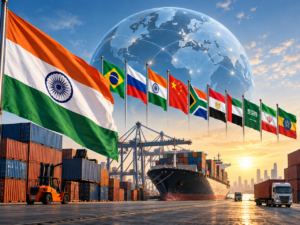

BRICS New Delhi Declaration recognises strenthening people-to-people cooperation, integration of culture and the creative economy visioin as pivotal future building blocks of BRICS. Dr Seema Narera reflects on how the Global South Film Festival was built around precisely that idea.
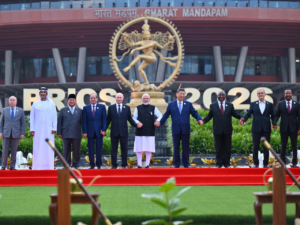
/fit-in/580x348/filters:format(webp)/tice-news-prod/media/media_files/2026/09/12/brics-leaders-delhi-declaration-2026-09-12-19-09-17.jpg)
“When I read the BRICS Declaration, one part immediately resonated with me: people-to-people cooperation. Not because it was a new idea to us. But because it described something we had already experienced while building the Global South Film Festival (GSFF).
GSFF was conceived by people from the creative and film industries of BRICS nations coming together and saying: Let us build this together.
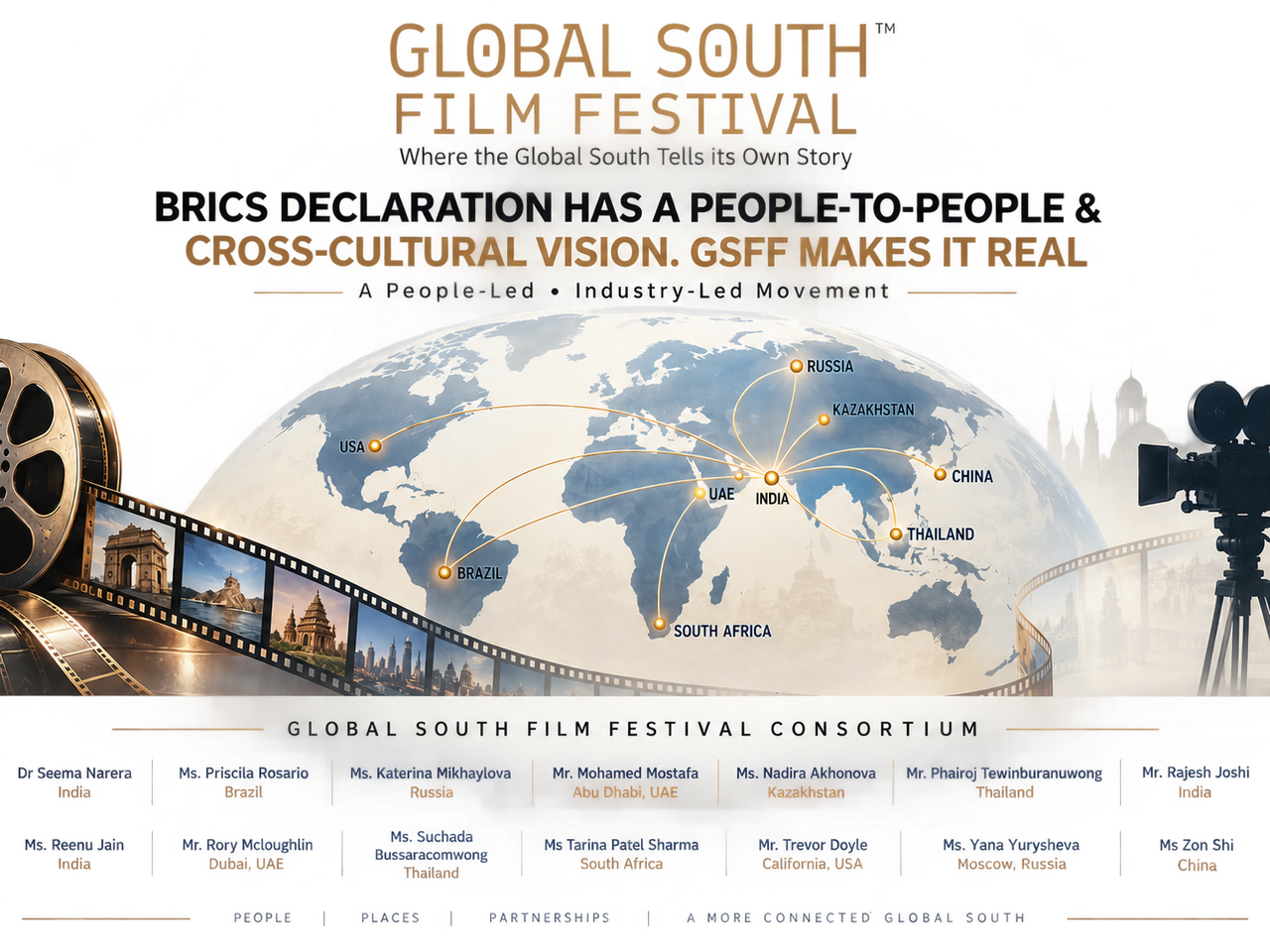
The concept move forward during the BRICS WAVES Bazaar in Mumbai in August 2026, when people and industry representatives came together around the idea of creating a travelling Global South Film platform. The GSFF consortium took shape of 14 individuals/organisations across 8 BRICS countries.
“Today, the consortium brings together participants from around 8 BRICS countries. And that, for me, is the most important story behind GSFF.”
/fit-in/580x348/filters:format(webp)/tice-news-prod/media/media_files/2026/09/13/collaboration-brics-2026-09-13-03-57-59.jpeg)
A festival created by the industry, for the industry
I believe GSFF is unusual because it is emerging as a people-led and industry-led international film festival, rather than a festival created first by a government or a single institution.
Our Lead Chair, Ms Priscila Rosario of Fênix Filmes, Brazil, represents that international character. Fenix Flimes is already working on co-production with Indian film makers and their film will soon be in the theatres.
India will host the inaugural edition. But India is not intended to be the permanent centre of the festival. The idea is to travel.
Brazil is already looking ahead to hosting the 2028 edition as part of the emerging roadmap, followed by Kazakhstan. During the launch of GSFF, Ms Nadira, Media & Tourism Ambassador, spoke about Kazakhstan’s interest in hosting the festival in 2029. That makes GSFF more than a destination. It makes it a moving cultural bridge across the Global South.
/fit-in/580x348/filters:format(webp)/tice-news-prod/media/media_files/2026/08/21/1786529125681-2026-08-21-16-14-37.jpeg)
Why should a film festival travel?
There is something powerful about taking a festival to different countries and, importantly, different cities. Ms Yana, an independent producer from Moscow, captured this beautifully when she spoke about the opportunity to experience different cultures and places through GSFF. For her, one of the strengths of the concept is precisely that it can move beyond the obvious metropolitan centres.
I agree. If we always hold international festivals only in the biggest cities, we see only a small part of a country’s cultural identity. A travelling festival creates opportunities to discover Tier-2 cities, emerging creative centres, local filmmakers, local stories, local audiences and local economies.
It allows the host country not merely to screen films, but to showcase itself. And for visiting filmmakers, it creates a deeper cultural experience.
That is what people-to-people exchange should look like. Not simply meeting in a conference room.
Travelling, discovering, creating and understanding each other’s cultures.
Women cannot be a footnote
The other principle that is particularly important to us is women. The BRICS Women Track under India’s Chairship has put women’s leadership, entrepreneurship, skills, digital and financial inclusion firmly on the agenda.
At GSFF, this is embedded in our three pillars: WOMEN. STORIES. CAPITAL.
Ms Suchada from Theme Work Studio, Thailand made an important observation when we discussed the festival: women should not simply be invited as token panelists. They should have space to create, lead, own, finance and create. That distinction matters.
And it is particularly relevant to the creative economy, where women are not only artists and storytellers but also producers, entrepreneurs, investors and industry leaders.
Ms Katerina, one of GSFF consortium members and co-founder of the Women Russian Association of Producers, puts the idea simply: women need to be part of the industry not merely as participants, but as people shaping the decisions, businesses and opportunities of the industry.
That is the kind of participation we want GSFF to encourage.
From declaration to lived experience
The BRICS Culture Track has recognised Creative Economy and Cultural and Creative Industries, alongside people-to-people cooperation. India’s 2026 Culture Working Group has explicitly brought these themes together, including innovation, partnerships, market access and digital creativity.
For me, GSFF is an example of how those ideas can move from policy language into lived experience.
-A producer from Brazil meeting a filmmaker from India.
-A Russian producer discovering a new location in South Africa.
-A Thai creative entrepreneur finding an UAE partner.
-A woman producer discovering capital for her next project.
-A young filmmaker travelling to another country and discovering that the culture she thought was foreign actually has stories that resonate deeply with her own. Thats why we unveiled the KAVYA platform at BRICS, Delhi
This is people-to-people cooperation through cinema.
The festival is only the beginning
The ambition of GSFF is therefore bigger than an annual event. The festival is the meeting point.
The relationships begin before it. The collaborations continue afterwards.
The travelling format allows us to keep discovering new cultures, new cities and new creative communities.
And our three pillars Women, Stories, Capital are designed to connect the cultural with the commercial.
BRICS New Delhi Declaration has articulated a vision of stronger people-to-people cooperation and a more connected cultural and creative economy.
We did not create GSFF because the Declaration asked us to. We created GSFF because people across the Global South were already asking for this connection.
The Declaration now gives a powerful institutional language to something we have been trying to build from the ground up.
-A festival that does not belong to one country.
-A festival that travels.
-A festival organised by people and industry.
-A festival that celebrates cultures rather than simply displaying them.
-And, ultimately, a festival that asks a very simple question: What can we create together?
Perhaps that is what people-to-people cooperation looks like when it becomes a movement. Interested, Join us now at https://globalsouthfilmfestival.org or Want to know more, write to us on info@globalsouthfilmfestival.org
-Dr Seema Narera
India Lead: Global South Film Festival