Dramatic market regime shift reshaping the global economy this year. Driven by a massive infrastructure race, tech giants have scaled their capex exponentially to historic highs, mirroring a widespread corporate surge where general AI adoption has broken out to unprecedented levels. Yet, while organizations aggressively scale their generative AI capabilities, a stark contrast remains between rapid enterprise implementation and cautious public sentiment. This comprehensive breakdown analyzes the hard data behind the billions spent, the actual phases of business integration, and the evolving human perspective—balancing immense technological optimism against lingering structural concerns.
AI Spending
- Exponential Growth: All four tech giants have scaled their capex massively, driven by the AI infrastructure race from 2024 to 2026.
- Amazon has consistently been the largest or among the top spenders, peaking at $200B in 2026.
- In 2026, capex for all companies reached historic highs, with Amazon ($200B), Google ($190B), and Microsoft ($190B) leading the surge.
- Meta nearly doubled its spending from 2025 ($70B) to 2026 ($135B).
- Google’s capex remained flat for years before more than 3x from 2024 ($53B) to 2026 ($190B).
- Microsoft grew its spend more than 10x, rising from $14B in 2018 to $190B in 2026.
- The percentage of organizations using AI in at least one business function increased more than fourfold, rising from 20% in 2017 to 88% in 2025.
- Generative AI usage more than doubled in just two years, jumping from 33% in 2023 to 79% in 2025.
- As of 2025, 62% of organizations using AI are still in the early stages of implementation, consisting of experimenting (32%) and piloting (30%).
- Only 7% of organizations using AI in 2025 have fully deployed and integrated the technology across the entire enterprise.
- General AI adoption remained mostly stagnant between 2019 (58%) and 2023 (55%) before experiencing an exponential upward breakout.
AI Adoption

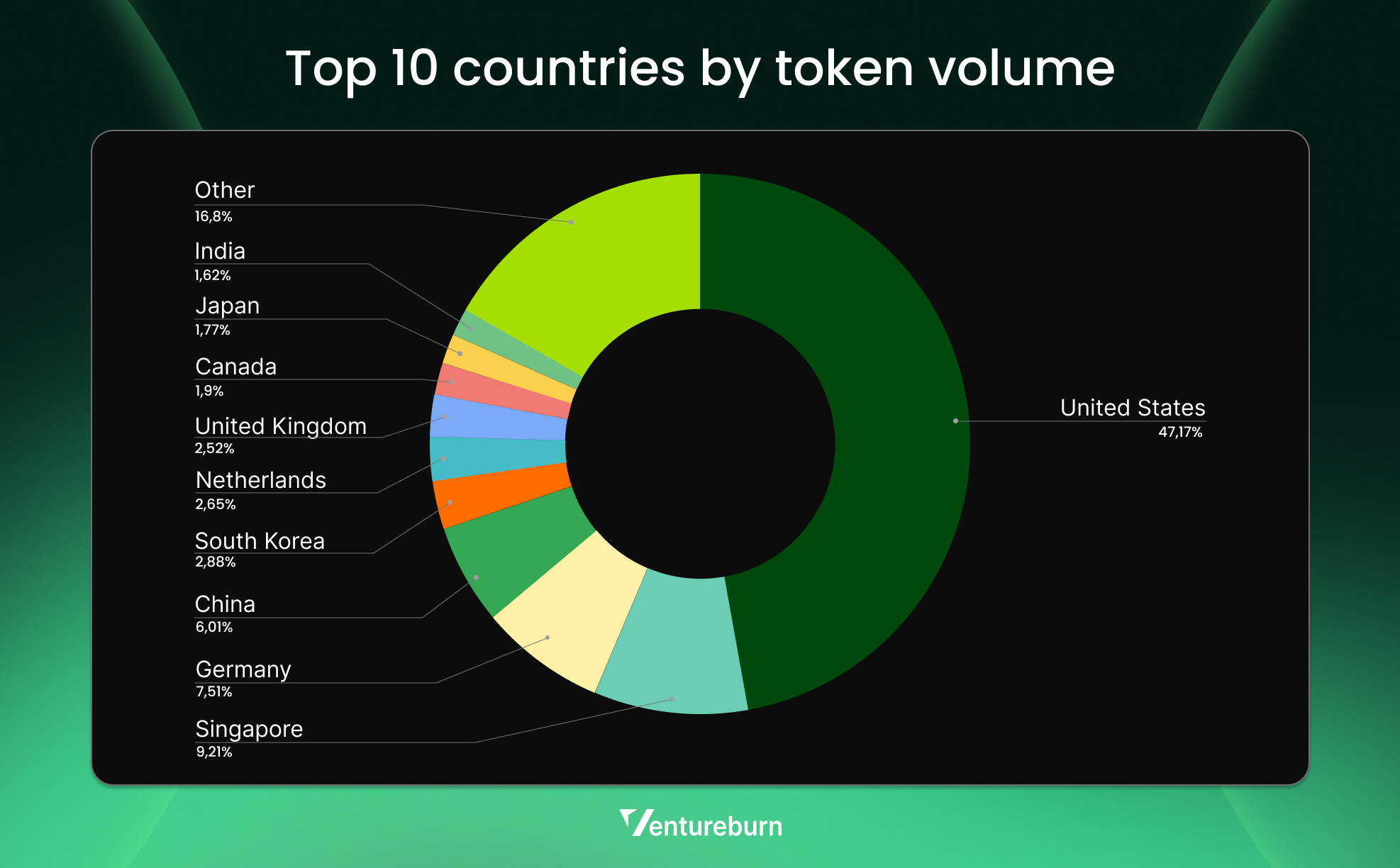
- The United States holds a commanding lead, accounting for 47.17% of total global LLM token volume—nearly half of the market.
- Following the US, the next tier—consisting of Singapore (9.21%), Germany (7.51%), and China (6.01%)—represents a substantial drop in market share, despite being the next largest contributors.
- Globally, roughly one in six people were using generative AI tools by the end of 2025.
- 35.49% of people now use AI tools every day
- Only 8.5% of people believe they can “always trust” AI Overviews when searching online
- 57% foresee AI increasing web traffic for their company.
- 90% of tech workers are using AI tools

- The top ways consumers use AI are as follows:
- Respond to people via text/email: 45%
- Answer financial questions: 43%
- Plan travel itinerary: 38%
- Craft an email: 31%
- Prepare for a job interview: 30%
- Write a social media post: 25%
- Summarize complex or long copy: 19%
- 9 in 10 students want to learn more about AI in school.
- More than half (54%) could tell the difference between human and AI-generated content in early 2025,
- About 2 out of 3 (67%) people would use ChatGPT instead of Google.
- ChatGPT once held the record for the fastest-growing consumer app, reaching 100 million users in about two months. However, DeepSeek broke that record in early 2025, surpassing 100 million users in just 20 days after the launch of the DeepSeek-R1 app.
- Cooking and meal planning is the top “life situation” AI use case

- 38% also believed AI could help improve healthcare outcomes.
- 40% also thought AI would reduce errors.
- 51% thought AI would reduce instances of racial and ethnic bias.
- 77% of devices being used now have some form of AI.
Enterprise

- 88% of companies are now using AI in at least one business function, and 83% of companies claim that AI is a top priority in their business plans.
- The percentage of organizations using AI in at least one business function increased more than 4x, rising from 20% in 2017 to 88% in 2025.
- 9 out of 10 organizations support AI for a competitive advantage.
- In 2017, only 20% of companies incorporated AI into their product offerings and business operations, in 2026, its 88%, more than 4x

AI Adoption Stages
-
Only 7% of organizations using AI in 2025 have fully deployed and integrated the technology across the entire enterprise.
-
General AI adoption remained mostly stagnant between 2019 (58%) and 2023 (55%) before experiencing an exponential upward breakout.
- As of 2025, 62% of organizations using AI are still in the early stages of implementation, consisting of experimenting (32%) and piloting (30%).
- Generative AI usage more than doubled in just two years, jumping from 33% in 2023 to 79% in 2025.
- According to Forbes, the most common uses for AI in business are:
- Customer service – 56%
- Cybersecurity and fraud management – 51%
- Digital personal assistants – 47%
- Customer relationship management – 46%
- Inventory management – 40%
- Software development, marketing, and customer service are three fields that have seen the highest rate of adoption and investment.

- The most common reason for businesses not using AI was finance/cost (51%).
- 43% of businesses are concerned about technology dependence.
- 35% worry that they don’t have the technical skills to use AI.
- 80% are concerned about AI being used for cyber attacks,
- 78% are concerned about AI being used for identity theft.
- 74% are concerned about AI being used to create deceptive political ads.
- 63% of top-performing companies are increasing cloud budgets in order to to leverage GenAI.
- AI is used in drug development to discover new treatments.
- Artificial intelligence effectively solved the 50-year-old biological mystery of protein folding and now being used to doing the research.
Sentiment
- 53% expect AI to streamline job processes within their organization.
- Nearly 25% of business owners worry about AI negatively affecting website traffic.
- Nearly 2/3 of business owners think AI will improve their customer relationships.
- 97% of business owners think using ChatGPT will help their business.
- Nearly 3/4 (74%) of business owners expect AI to generate responses to customers, such as chatbots.
- 7 in 10 (70%) anticipate AI to speed up content generation processes.
- 58% believe AI will be able to create personalized experiences for customers.
- 50% of consumers view AI optimistically.
- 54% of consumers think AI could improve the customer experience.
- 65% of consumers trust businesses that use AI.
- 14% of consumers do not trust businesses that use AI.
- 21% of consumers are neutral on businesses using AI.
- 78% of people polled think the benefits of generative AI outweigh the risks.
- Another 53% believe AI will be able to summarize information effectively.
- Half of business owners expect AI to improve decision-making processes.
- 47% anticipate AI improving their business credibility.
- The same percentage, 47%, believe AI will be able to translate information efficiently.
- 52% of experts believe automation will displace jobs and also create new ones.
- AI could increase labor productivity growth by 1.5 percentage points over the next ten years.
- Globally, AI-driven growth could be nearly 25% higher than automation without AI.
- 46% of business owners expect AI to generate responses to colleagues, such as emails.
- 44% anticipate AI being able to create content in different languages.
- 41% foresee AI being used to fix coding errors effectively.
- Nearly 1 in 3 (30%) business owners expect AI to generate website copy for their company.
- 51% of email marketers believe AI-supported email marketing is more effective than manual efforts
- 39% of respondents believe current AI technology is safe and secure.
- 51% of men and 40% of women say they’re more excited than concerned about AI.
- 54% of consumers think that written content will improve with AI technology
- 4.1% of people surveyed think AI will have no benefits.
- 12.4% believe AI will not have any potential drawbacks.
- 51% think the problem of bias and unfair treatment would get better if AI was used more to do things like diagnose disease and recommend treatments for patients.
- 67% of Americans say they would not want AI-based pain management systems to guiding their pain management treatment
Sources:
- https://www.rebootonline.com/ai-statistics/
- https://www.nu.edu/blog/ai-statistics-trends/
- https://www.linkedin.com/pulse/10-shocking-ai-stats-every-executive-must-know-before-abufadda-mirxf/
- https://explodingtopics.com/blog/ai-statistics
- https://sqmagazine.co.uk/ai-coding-security-vulnerability-statistics/
- https://thunderbit.com/blog/ai-unicorn-stats-2025
- https://www.failory.com/startups/artificial-intelligence-unicorns
- https://altindex.com/news/ai-startups-unicorns
- https://menlovc.com/perspective/2025-the-state-of-generative-ai-in-the-enterprise/
- https://www.bvp.com/atlas/the-state-of-ai-2025
- https://www.cbinsights.com/research/report/unicorn-startups-valuations-headcount-investors/
- https://news.crunchbase.com/unicorn-company-list/
- https://qubit.capital/blog/funding-types-for-ai-startups
- https://gptzero.me/news/how-many-people-use-ai/
- https://resourcera.com/data/artificial-intelligence/ai-users/
- https://datareportal.com/reports/digital-2026-one-billion-people-using-ai
- https://www.edge-ai-vision.com/2025/02/global-ai-adoption-to-surge-20-exceeding-378-million-users-in-2025/
- https://www.statista.com/statistics/1602945/market-size-change-in-the-ai-market-worldwide/
- https://www.mckinsey.com/capabilities/quantumblack/our-insights/the-state-of-ai
- https://www.stateof.ai/https://2025.stateofai.dev/en-US
- https://openrouter.ai/state-of-aihttps://www.iconiq.com/growth/reports/2025-state-of-ai
- https://hai.stanford.edu/assets/files/ai_index_report_2026.pdf
- https://www.statista.com/chart/29174/time-to-one-million-users/
- https://openai.com/index/scaling-ai-for-everyone/
- https://www.semrush.com/blog/ai-search-seo-traffic-study/
- https://explodingtopics.com/blog/ai-statistics
- https://edition.cnn.com/2025/09/23/tech/google-study-90-percent-tech-jobs-ai
- https://www.vantagemarketresearch.com/industry-report/wearable-ai-market-1364
- https://www.pwc.com/gx/en/issues/analytics/assets/pwc-ai-analysis-sizing-the-prize-report.pdf
- https://explodingtopics.com/blog/ai-statistics
- https://www.statista.com/outlook/tmo/semiconductors/ai-chips/worldwide
- https://www.ama-assn.org/practice-management/digital-health/2-3-physicians-are-using-health-ai-78-2023
- https://ourworldindata.org/grapher/private-investment-in-artificial-intelligence
- https://www.statista.com/outlook/tmo/artificial-intelligence/worldwide#annual-ai-publications
- https://www.bbc.co.uk/news/articles/cgr94xxye2lo
- https://www.researchgate.net/figure/Global-AI-Market-Size-2020-2024-USD-Billion_fig1_387459616srsltid=AfmBOorYnoB9VH9vtOBJN1hqZ_INeQRwJG-Qo7nyKct1qcEefBZHnyWb#market-size
- https://www.cargoson.com/en/blog/how-big-is-the-ai-market-statistics
- https://aifundingtracker.com/top-50-ai-startups/
- https://www.cbinsights.com/research/report/unicorn-startups-valuations-headcount-investors/
- https://menlovc.com/perspective/2025-the-state-of-generative-ai-in-the-enterprise/
- https://valueaddvc.com/ai-valuations
- https://www.microsoft.com/en-us/corporate-responsibility/topics/ai-economy-institute/reports/global-ai-adoption-2026-q1/
The post AI Statistic 2026: Spending, Adoption and Sentiment appeared first on Ventureburn.