
India’s healthcare innovation landscape is witnessing a significant shift. While startup founders have traditionally focused on building products, securing funding, and achieving market fit, a growing number are beginning to recognize another critical asset that can determine long-term success: intellectual property.
In a move that reflects this changing reality, pharmaceutical giant Pfizer, in partnership with the Foundation for Innovation and Technology Transfer (FITT), IIT Delhi, and innovation platform Social Alpha, has selected 20 promising healthcare and biotech startups under the Pfizer INDovation IP Support Programme 2025–26. The initiative is being positioned as India’s first structured programme dedicated to making intellectual property strategy a core component of healthcare innovation.
At a time when India’s startup ecosystem is producing globally ambitious founders and breakthrough healthcare technologies, the programme seeks to address a longstanding challenge—ensuring that innovation is not only created, but also adequately protected.
Building Stronger Foundations for Healthcare Innovation
For many early-stage healthcare startups, the journey from laboratory research to commercial success is often filled with regulatory hurdles, capital constraints, and technology validation challenges. Intellectual property protection, despite being crucial, frequently remains an afterthought.
The Pfizer INDovation IP Support Programme aims to change that.
Under the initiative, each of the 20 selected startups will receive a grant of ₹1.50 lakh, along with structured intellectual property support designed to help founders identify, protect, and manage their innovations in both Indian and international markets.
The support extends beyond basic patent filing assistance. Participating startups will receive patentability assessments, prior-art searches, patent strategy development guidance, filing support, and access to legal and technical expertise required to build comprehensive IP portfolios.
The objective is straightforward but significant: help healthcare innovators create stronger protection frameworks around their technologies from the earliest stages of growth.
Why Intellectual Property Matters More Than Ever
The programme arrives at a time when India’s healthcare ecosystem is evolving rapidly.
Government-led initiatives such as the Ayushman Bharat Digital Mission are laying the foundation for large-scale digital healthcare infrastructure, while the broader Viksit Bharat 2047 vision has positioned innovation-led growth as a key pillar of India’s development strategy.
Simultaneously, Indian founders are increasingly building healthcare technologies with global ambitions—ranging from digital health solutions and medical devices to biotechnology innovations and AI-driven healthcare platforms.
However, experts have long pointed out a critical gap: while Indian startups excel at innovation, many fail to secure adequate protection for their intellectual assets.
Without strong IP strategies, even groundbreaking innovations can struggle to create long-term value, attract strategic partnerships, or establish sustainable competitive advantages.
Recognizing this challenge, the INDovation programme seeks to equip startups with the tools and expertise needed to protect what they build before they scale.
Bringing Together Industry, Academia and Innovation Leaders
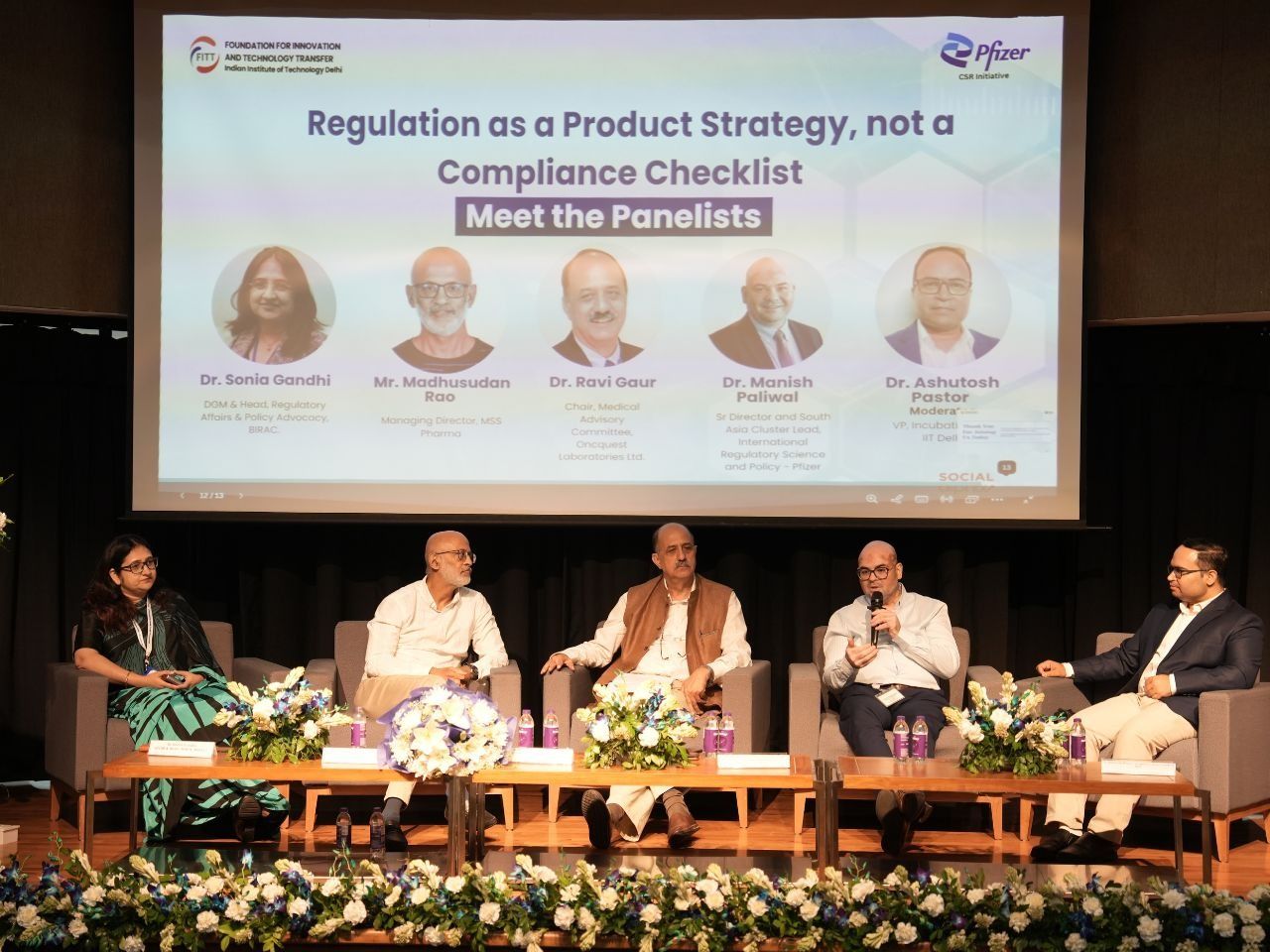
The selected cohort was officially unveiled during an event titled “Translating What’s Next: Securing the Future of Innovation” held at the Research and Innovation Park, IIT Delhi.
The gathering brought together stakeholders from across India’s healthcare and innovation ecosystem, including policymakers, investors, venture capital leaders, academic experts, entrepreneurs, and healthcare professionals.
A key theme that emerged throughout the discussions was the growing importance of translating scientific breakthroughs into scalable, commercially viable innovations—while ensuring that intellectual property remains protected throughout the journey.
Delivering the keynote address, Dr. M. Srinivas, Former Director of AIIMS New Delhi and Full-Time Member, NITI Aayog, highlighted the transformative role of India’s emerging digital health infrastructure.
“The Ayushman Bharat Digital Mission is not merely a government scheme; it is the digital spine of a new India. Interoperable health infrastructure, data-driven systems, and technology-enabled access will fundamentally rewrite who gets care, when they get it, and how.”
His remarks underscored the broader policy environment that is enabling healthcare innovation to flourish across the country.
Pfizer’s Long-Term View on Healthcare Innovation
The programme also reflects Pfizer India’s growing focus on strengthening innovation ecosystems through strategic collaborations.
Rather than concentrating solely on product development, the initiative acknowledges that scientific innovation and intellectual property protection must evolve together to create sustainable impact.
According to Sharad Goswami, Senior Director, Global Policy and International Public Affairs, Pfizer, healthcare transformation requires coordinated efforts across multiple stakeholders.
“Sustainable healthcare transformation cannot happen in silos. It demands innovation-driven policy, cross-sector collaboration, and ecosystem partnerships that help innovators build and protect solutions capable of addressing healthcare challenges at scale.”
Through the programme, Pfizer is directing CSR resources toward helping healthcare entrepreneurs strengthen one of the most critical yet often overlooked aspects of innovation—the ability to safeguard and manage intellectual property effectively.
FITT IIT Delhi’s Role in Technology Translation
A major strength of the initiative lies in the expertise brought by FITT IIT Delhi.
Over the years, FITT has emerged as one of India’s leading technology transfer and innovation organisations. The institution has facilitated hundreds of industry-academia collaborations, supported more than 1,600 patents, and contributed to the launch of over 300 startups across sectors.
Its involvement ensures that participating startups gain access not only to IP filing support but also to deep expertise in technology commercialization and innovation management.
Together with Social Alpha, which has built a strong reputation for supporting science and technology-led ventures, the collaboration creates a powerful support system for founders operating in highly specialized healthcare domains.
From Legal Requirement to Strategic Asset
One of the most significant discussions at the event revolved around changing how founders perceive intellectual property.
Experts argued that IP should no longer be viewed merely as a legal necessity or compliance requirement.
Instead, it should be treated as a strategic business asset—one that can strengthen technology ownership, improve competitive differentiation, attract investors and partners, and create long-term enterprise value.
For healthcare startups in particular, where research and innovation often require years of investment and validation, robust IP protection can become a defining factor in determining commercial success.
The INDovation programme has been designed specifically to bridge this gap between innovation and protection.
As Tarun Chaturvedi, COO, FITT IIT Delhi, noted:
“The gap between innovation and impact often lies in how effectively intellectual property is identified, protected, and managed. Through initiatives like INDovation, we aim to empower healthcare innovators with the tools and expertise needed to safeguard their innovations and create long-term value.”
The Startups Selected for the Programme
The 20 startups selected under the Pfizer INDovation IP Support Programme 2025–26 are:
Greenathon Technologies Pvt Ltd, Prakriti AI Technologies Pvt Ltd, Adsys Medtech Pvt Ltd, MedKern Pvt Ltd, B Cell Biologics India Pvt Ltd, Physiomize Pvt Ltd, Hiclousia Innovation and Technical Solution Pvt Ltd, In-Self Pvt Ltd, Medvolt Tech Pvt Ltd, DRomics Labs Pvt Ltd, Ripple Healthcare Pvt Ltd, Deepmouli Innovations Pvt Ltd, BabyCue Pvt Ltd, Anirveda Engineering Pvt Ltd, Avalg Bionics Pvt Ltd, Pragmatech Healthcare Solutions Pvt Ltd, Renu MedTech Pvt Ltd, RNT Health Insights Pvt Ltd, Immunyfit Healthtech Pvt Ltd, and Nexstem India Pvt Ltd.
A New Chapter for India’s Healthcare Startup Ecosystem
As India aspires to become a global hub for healthcare innovation, programmes such as INDovation highlight an important shift in thinking—from merely encouraging innovation to ensuring that innovation is protected, scalable, and capable of creating lasting impact.
The initiative signals growing recognition across industry, academia, and policy circles that intellectual property is no longer a secondary consideration. It is becoming a foundational element of innovation strategy itself.
For the 20 startups selected this year, the programme offers more than financial support. It provides access to the expertise, guidance, and frameworks needed to secure ownership of their innovations and strengthen their path toward sustainable growth.
In the long run, initiatives like these could play a critical role in helping Indian healthcare technologies compete not only in domestic markets, but on the global stage as well.