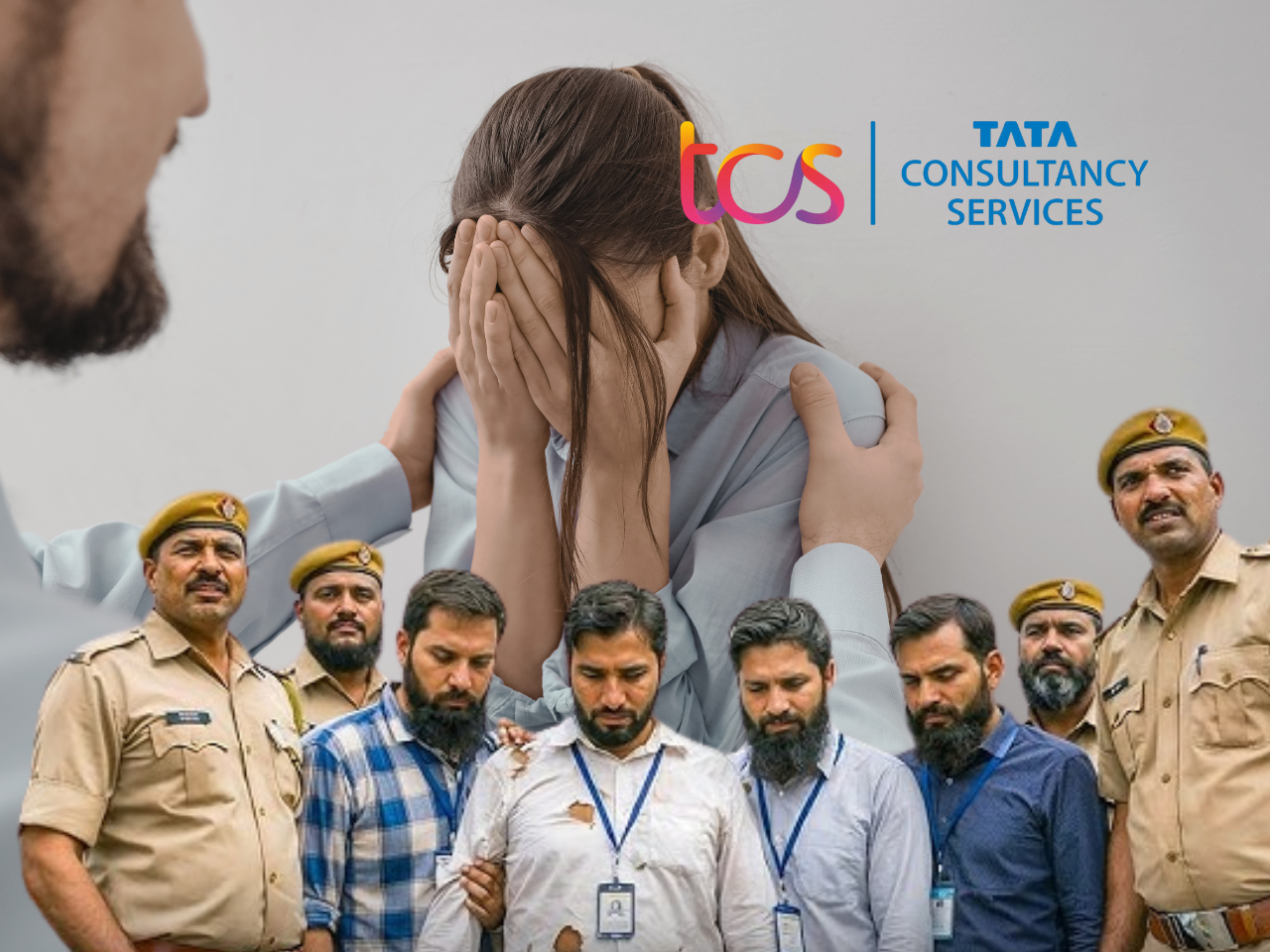

What began as a set of internal complaints at a Nashik BPO unit of Tata Consultancy Services has now emerged into one of the most consequential corporate investigations in India.
Multiple First Information Reports (FIRs), arrests of senior personnel—including team leaders and an HR manager—and the formation of a Special Investigation Team (SIT) have pushed the case far beyond the boundaries of a workplace dispute. Maharashtra’s Deputy Chief Minister Devendra Fadnavis has already described the matter as “very serious,” a phrase that, in India’s political lexicon, signals both urgency and scrutiny.
But the facts on record, while serious, are no longer the most unsettling part of this story.
What now commands attention is the possibility—still unproven, but increasingly debated—that the system designed to respond may have hesitated, or worse, failed. Because in corporate crises, what is delayed is often more revealing than what is disclosed.
/fit-in/580x348/filters:format(webp)/tice-news-prod/media/media_files/2026/04/13/tcs-nashik-case-2026-04-13-19-57-07.png)
TCS Nashik Case: The Allegations at the Core
According to police complaints and FIRs, several employees—primarily women—have alleged a pattern of misconduct between 2022 and 2026 involving sexual harassment, coercion, and abuse of authority by senior team leaders. The complaints describe instances of inappropriate physical conduct, stalking, and manipulation, including allegations of relationships maintained under false promises of marriage.
Among those arrested are individuals identified in early reports as Mohammad Danish Sheikh and Tausif Attar, both described as senior team leaders at the Nashik BPO unit of Tata Consultancy Services. An HR manager and other employees have also been taken into custody, bringing the total number of arrests to at least seven individuals, according to initial reports.
Some complaints further allege elements of religious coercion and possible coordination among accused individuals, claims that investigators are currently examining through digital evidence and testimonies.
All allegations remain under investigation, and the accused are yet to be proven guilty in a court of law.
The case—now widely referred to as the TCS Nashik case—has triggered a national debate on workplace safety, corporate governance, and HR accountability in India.
Spoke to sources in Nashik police & senior officials in Mumbai also a source in TCS.
1
Without mincing words the situation was quite alarming and the company a blue chip biggie fought hard at all levels – political, official and media to ensure that the story never came out.
2…— Swati Chaturvedi (@bainjal) April 13, 2026
The Timeline That Raises More Questions Than Answers
The complaints that triggered the investigation reportedly span nearly four years, from 2022 to 2026. Employees—primarily women—have described patterns of harassment, coercion, and misuse of authority within workplace hierarchies.
That timeline is critical.
Because in any corporate system, the first complaint is a test of process. The second is a test of intent.
If allegations persisted over years before reaching law enforcement, it raises a question that sits at the heart of corporate governance:
What happened when the issue was first reported internally?
The gap between incident and action is where institutions reveal their true character—not in policy documents, but in decisions.
Allegations of Silence—and What They Imply
The narrative took a sharper turn after Swati Chaturvedi, a senior journalist, alleged that early complaints may not have been acted upon effectively and that there could have been attempts to contain reputational fallout.
These claims, based on unnamed sources, remain unverified.
Because they echo a familiar pattern in large institutions worldwide: the instinct to manage crises before confronting them.
If substantiated, such behavior would not merely indicate operational failure. It would point to a deeper governance dilemma—one where brand protection competes with ethical responsibility.
/fit-in/580x348/filters:format(webp)/tice-news-prod/media/media_files/2026/04/13/tcs-ceo-2026-04-13-19-39-17.png)
TCS HR at the Center of the Storm
At the core of this case is a function that rarely attracts public scrutiny until it fails: Human Resources.
An HR manager is among those arrested. That detail alone reframes the issue.
HR, in theory, exists to safeguard employees and ensure compliance. In practice, it operates within structures that prioritize organizational stability. When those priorities collide, outcomes can become ambiguous—and, at times, deeply problematic.
If complaints were delayed, diluted, or dismissed, it suggests a breakdown not just in procedure, but in purpose.
Because when employees lose faith in internal systems, they do not escalate—they exit, or they endure.
The Limits of Compliance
Modern corporations are built on frameworks—policies, committees, escalation matrices. India’s POSH (Prevention of Sexual Harassment) law mandates structured responses to workplace complaints.
Yet cases like Nashik expose a persistent truth:
Compliance can exist without accountability.
A company can have every required mechanism in place and still fail if those mechanisms are not exercised with independence and urgency. Governance, in that sense, is not defined by what exists on paper, but by what is activated in moments of discomfort.
Reputation, Risk, and the Cost of Delay
For companies of global scale, reputation is both asset and vulnerability. The instinct to contain negative exposure is neither new nor unique.
But in an era of rapid information flow and heightened public scrutiny, containment carries its own risks.
Silence does not eliminate a problem. It defers it—often at a higher cost.
If the Nashik case ultimately reveals delayed action or narrative management, it will underscore a lesson that corporations continue to relearn: short-term reputational control can lead to long-term credibility erosion.
Beyond TCS: A Systemic Reflection
It would be convenient to view this as an isolated episode within one company. It would also be incomplete.
The tensions exposed here—between transparency and control, employee safety and institutional risk—are embedded across corporate ecosystems, not just in India but globally.
The Nashik case resonates because it reflects a broader structural question:
Are corporate governance systems designed to surface uncomfortable truths—or to absorb them?
/fit-in/580x348/filters:format(webp)/tice-news-prod/media/media_files/2026/04/13/tcs-hr-head-2026-04-13-19-44-37.png)
What Happens Next Will Matter More Than What Has Happened
Tata Consultancy Services has reiterated its zero-tolerance policy and stated that it is cooperating fully with authorities. Investigators are examining digital records, internal documentation, and testimonies to determine the extent and nature of the alleged misconduct.
Notably, as the case has unfolded, the company has maintained a limited public communication footprint on the issue, with no visible acknowledgement on its official social media channels at the time of writing. In an era where corporations are expected to respond with speed, transparency, and accountability, such silence—whether strategic, procedural, or cautious—inevitably becomes part of the story. Because in moments of crisis, what a company chooses not to say can carry as much weight as what it does.
The legal process will take its course. It will establish facts, assign responsibility, and deliver outcomes.
But outside the courtroom, another process is already underway—a reassessment of trust.
Because in cases like this, credibility is not shaped by initial statements. It is shaped by subsequent action: transparency, accountability, and the willingness to confront systemic gaps, if they exist.
The Real Verdict
The Nashik case is still unfolding. The allegations remain under investigation. The facts are not yet fully established.
But one conclusion is already difficult to avoid.
Institutions are not defined by the absence of crisis. They are defined by how they respond to it—and how early.
And in that sense, the most important question this case raises is not about what happened inside one office in Nashik.
It is about something far more fundamental:
When the first complaint came, who chose to listen—and who chose to look away?