
A decade ago, India’s startup story was still finding its footing. Entrepreneurship was often seen as a risky path, funding was limited, and building a globally scalable company from India felt like an uphill battle for many founders. Today, that narrative has dramatically changed.
From deep-tech ventures and space startups to AI-driven platforms and manufacturing innovators, India’s startup ecosystem has evolved into one of the world’s fastest-growing innovation economies. Behind this transformation lies a powerful mix of policy support, institutional financing, incubator networks, and a new generation of ambitious entrepreneurs determined to solve real-world problems at scale.
This growing momentum took center stage during the latest SIDBI MSME Samvaad, where industry leaders, innovation experts, and startup ecosystem stakeholders came together to discuss how India’s entrepreneurial landscape is undergoing what many now describe as a structural transformation.
At the heart of the conversation was a larger message — India’s startup boom is no longer just about creating new businesses. It is about building globally competitive enterprises capable of driving economic growth, technological leadership, employment generation, and long-term innovation.
Speaking during the session, Dr. Nikhil Agarwal, Managing Director of Foundation for Innovation and Technology Transfer at Indian Institute of Technology Delhi, described the country’s startup growth story as a shift powered by innovation, entrepreneurship, and technology-led disruption.
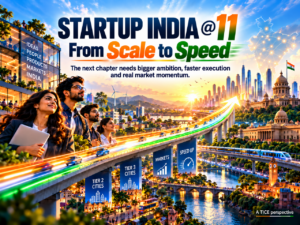
The timing of the discussion was significant. Coming in the backdrop of National Startup Day 2026, the numbers themselves reveal how rapidly India’s startup ecosystem has expanded over the last decade.
Ten years ago, India had only around 400 startups. Today, the country is home to more than 2 lakh registered startups, making it one of the largest startup ecosystems globally. In 2025 alone, nearly 44,000 new startups were added, reflecting the accelerating pace of entrepreneurial activity across sectors.
What is equally noteworthy is the changing face of entrepreneurship in India. Nearly 45 per cent of startups now have women in active leadership roles, highlighting how the ecosystem is gradually becoming more inclusive and representative.
From Startup Recognition to Global Scalability
According to Dr. Agarwal, startups today cannot be viewed merely as small businesses operating in niche markets. Instead, they are increasingly becoming technology-driven enterprises designed for rapid scalability and global impact.
A major factor enabling this shift has been the growing institutional support framework around startups. During the discussion, Dr. Agarwal emphasized the importance of DPIIT recognition, calling it a critical “seal of trust” for founders. Recognition by the Department for Promotion of Industry and Internal Trade not only enhances credibility but also unlocks access to tax benefits, government procurement opportunities, mentorship ecosystems, and funding channels.
The Samvaad session also mapped the structured journey of how startups evolve in India’s ecosystem today. What begins as an innovative idea gradually progresses through proof-of-concept development, creation of a minimum viable product, market validation, and eventually large-scale funding support.
This evolution has also been supported by the emergence of a far more mature funding ecosystem.
India’s startup financing landscape, once heavily dependent on personal savings and informal capital, has now expanded into a sophisticated network that includes angel investors, venture capital firms, institutional lenders, venture debt providers, and government-backed initiatives.
Among the biggest catalysts in this transformation has been the government-backed ₹10,000 crore Fund of Funds initiative, which has played a crucial role in supporting innovation-led enterprises and strengthening venture capital participation in Indian startups.
One of the most compelling examples highlighted during the session was Hyderabad-based SpaceTech startup Dhruva Space — a company whose journey reflects the growing confidence and maturity of India’s deep-tech ecosystem.
Founded in 2012 with the vision of democratizing and privatizing India’s space sector, Dhruva Space steadily built its capabilities through institutional support, startup recognition, and diversified funding mechanisms. Instead of relying solely on traditional equity financing, the company strategically adopted venture debt financing after progressing through seed and Series A funding stages.
This approach allowed the founders to retain greater ownership while simultaneously scaling operations and strengthening manufacturing capabilities — an increasingly important lesson for startups navigating growth without excessive dilution.
Dhruva Space reached a defining milestone in August 2025 with the successful launch of its “Leap-1” mission aboard a SpaceX launch vehicle. The achievement not only underscored the startup’s technological capabilities but also symbolized the growing global ambitions of Indian startups operating in highly advanced sectors.
India’s “Innovation Decade” Is Taking Shape
Beyond funding and innovation, the session also focused strongly on sustainability and financial discipline — an area becoming increasingly important amid changing global investment trends.
Dr. Agarwal highlighted that metrics such as “cash burn” and “runway” remain among the most critical indicators for startup survival. While innovation and aggressive scaling often dominate startup conversations, he stressed that long-term success ultimately depends on prudent capital management and sustainable revenue generation.
This marks a subtle but important shift in India’s startup narrative.
For years, valuations and fundraising headlines dominated conversations around entrepreneurship. Today, however, ecosystem leaders are increasingly advocating for sustainable growth models, disciplined execution, operational efficiency, and resilient business fundamentals.
Industry observers believe institutions like SIDBI are playing a vital role in shaping this next phase of India’s startup journey. Through financing support, ecosystem development, policy facilitation, and startup engagement initiatives, SIDBI is helping strengthen the foundational infrastructure needed to create globally competitive Indian enterprises.
The broader ecosystem is also expanding rapidly.
India now has more than 1,500 incubators operating across the country, helping founders access mentorship, infrastructure, technical support, and investor networks. Meanwhile, government initiatives such as the Startup India Seed Fund Scheme are offering grants of up to ₹50 lakh, helping early-stage startups move from ideation to commercialization.
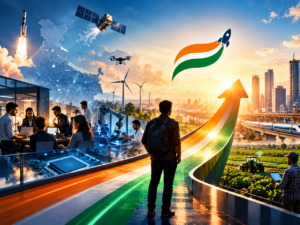
Together, these developments are creating what many experts are now calling India’s “Innovation Decade.”
The message emerging from the SIDBI MSME Samvaad was both optimistic and pragmatic. India’s startup ecosystem has undoubtedly entered a new era of scale and opportunity, but the future will likely belong to companies that combine innovation with disciplined execution and strategic financing.
As India positions itself as a global innovation powerhouse, the next chapter of its startup story may no longer be defined simply by billion-dollar valuations, but by sustainable businesses capable of creating lasting economic and technological impact on a global stage.