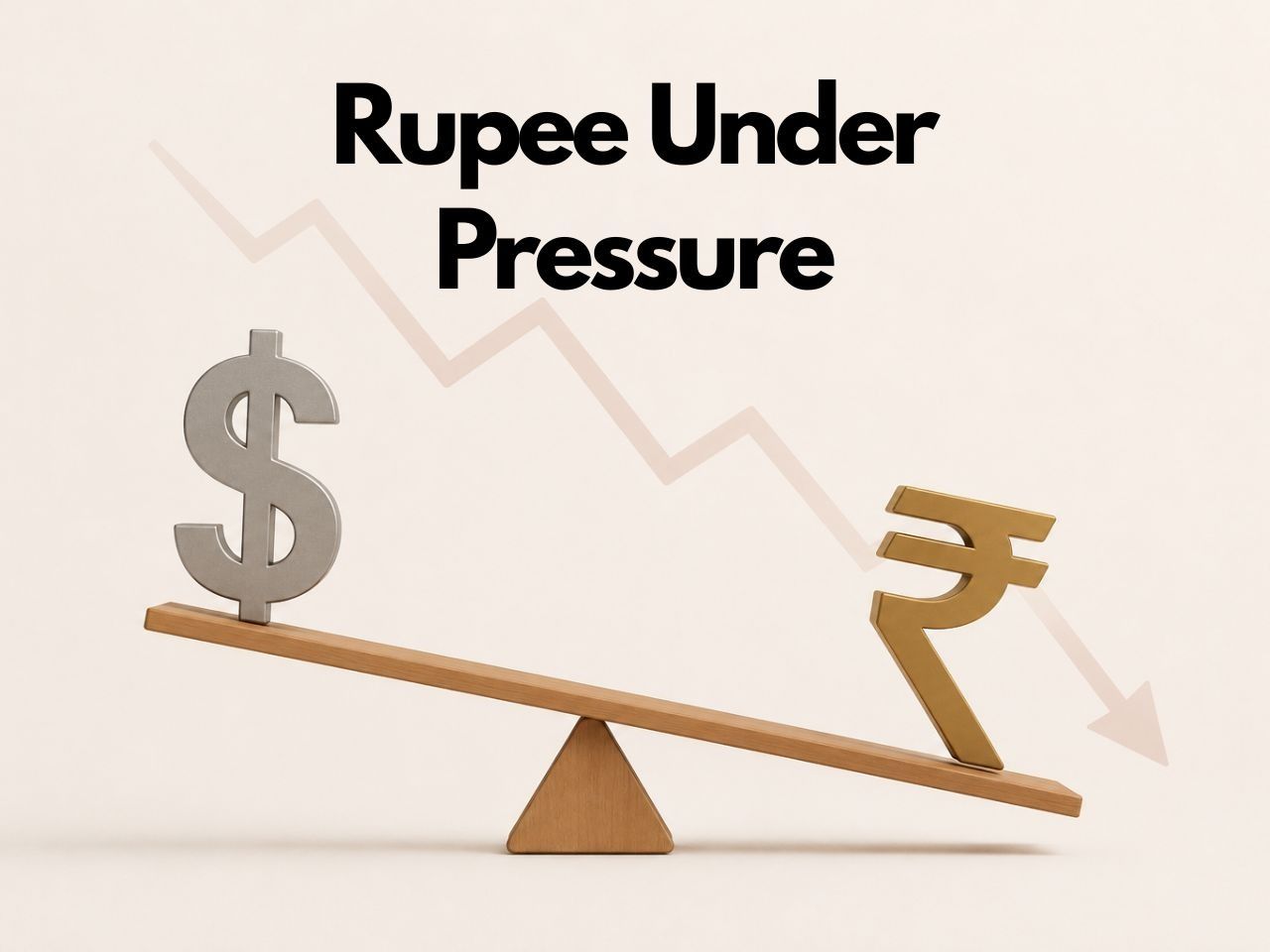

India’s startup ecosystem has spent the last few years battling funding slowdowns, cautious investors, rising operational costs and an increasingly uncertain global economy. Now, another pressure point is beginning to emerge — the falling rupee.
On Wednesday morning, the Indian rupee slipped to an all-time low of 96.90 against the US dollar, sending fresh concerns across financial markets, businesses, startups and MSMEs that are already navigating a volatile economic environment.
While currency fluctuations are not unusual in global markets, the pace and consistency of the rupee’s recent decline have started raising alarm bells. The depreciation comes at a time when crude oil prices remain sharply elevated, geopolitical tensions continue to intensify globally, and investors across emerging markets are becoming increasingly cautious.
For India’s startup and MSME ecosystem, the impact could stretch far beyond currency charts.
Rupee Falls for Eighth Straight Session
The rupee depreciated by 20 paise in early trade on Wednesday to hit a record low of 96.90 against the US dollar.
At the interbank foreign exchange market, the domestic currency opened at 96.89 before weakening further to touch the historic low. The fall follows Tuesday’s sharp decline, when the rupee had already weakened by 50 paise to close at 96.70 against the dollar, marking its eighth consecutive losing session.
Currency market analysts attributed the continued weakness to a combination of global macroeconomic pressures.
The US dollar has strengthened considerably amid rising US bond yields and investor preference for safer assets during uncertain times. Persistent demand for dollars from importers, especially oil companies, has also added pressure on the rupee. At the same time, escalating geopolitical tensions involving Iran and the United States have increased nervousness across global markets, pushing investors toward dollar-denominated assets.
The result is a widening strain on emerging market currencies, including the Indian rupee.
Crude Oil Prices Add to India’s Economic Pressure
One of the biggest concerns driving the rupee’s fall is the sustained rise in crude oil prices.
Brent crude oil prices remained above $110.8 per barrel, significantly increasing concerns around India’s import bill, inflation outlook and current account deficit.
For India, which imports a large portion of its crude oil requirements, expensive oil creates a direct economic challenge. Higher oil prices mean larger dollar outflows from the country, increasing demand for the US currency and putting additional downward pressure on the rupee.
But the impact doesn’t stop there.
Rising crude oil prices eventually filter through almost every layer of the economy — transport, logistics, manufacturing, packaging, raw materials, electricity and consumer goods. As costs rise across supply chains, businesses are forced to either absorb the pressure or pass it on to consumers.
For startups and MSMEs operating with tight margins, that becomes a serious challenge.
Why India’s Startups Could Feel the Pressure Quickly
The weakening rupee is expected to significantly affect startups that rely heavily on imported technology infrastructure, overseas software services, foreign hardware components and international operational dependencies.
Many Indian startups today run on global infrastructure.
Cloud computing subscriptions, AI tools, SaaS platforms, cybersecurity systems, software licenses, semiconductor components, imported electronics and international APIs are largely billed in dollars. As the rupee weakens, these services automatically become more expensive for Indian companies.
For early-stage startups already trying to manage burn rates carefully, even a moderate rise in dollar-linked expenses can create additional financial pressure.
Sectors such as electric mobility, electronics manufacturing, SaaS, fintech, deep-tech and health-tech are particularly vulnerable because many businesses in these categories depend on imported hardware, precision components or international technology ecosystems.
For example, EV startups importing battery-related components or electronics manufacturers sourcing semiconductors globally could see input costs rise substantially if the rupee continues weakening.
Deep-tech startups, many of which depend on advanced imported systems, research infrastructure and specialised equipment, may also experience margin stress.
Even software-first startups are not entirely protected.
While SaaS companies may earn revenue globally, many still spend heavily on international cloud infrastructure, AI computing resources and global productivity tools priced in dollars. The cost of scaling operations could therefore increase at a time when many startups are already prioritising profitability over aggressive expansion.
MSMEs Face a Mixed Situation
For India’s MSME sector, the weakening rupee presents both opportunities and risks.
Export-oriented businesses could benefit because a weaker rupee makes Indian goods and services more competitive in international markets. Exporters earning in dollars may see improved realisations when converting foreign earnings back into rupees.
However, the situation becomes difficult for MSMEs dependent on imported raw materials, industrial chemicals, machinery, fuel or manufacturing inputs.
Production costs for such businesses could rise sharply if the rupee continues to weaken alongside elevated global commodity prices.
Manufacturing MSMEs operating in sectors like chemicals, electronics, engineering goods, automotive components and industrial machinery may face increasing cost pressures in the coming months.
For many smaller businesses already dealing with financing constraints and working capital challenges, higher import costs could place additional strain on profitability and cash flows.
Investor Sentiment May Also Turn More Cautious
Industry experts believe prolonged currency volatility may also impact startup fundraising conditions.
Global investors generally become more cautious during periods of macroeconomic uncertainty, especially when currency markets remain unstable. Foreign venture capital firms and institutional investors closely monitor exchange rate risks while evaluating investments in emerging markets.
A weakening rupee can reduce dollar-adjusted returns for international investors, making them more selective about capital deployment.
At the same time, rising global interest rates and geopolitical uncertainty are already tightening liquidity conditions worldwide. If volatility continues, fundraising for growth-stage startups could become more challenging, particularly for companies still prioritising expansion over profitability.
Several startups may also reassess hiring plans, international expansion strategies and operational budgets as they attempt to manage rising expenditure amid uncertain market conditions.
Equity Markets Also Reflect Growing Concerns
The pressure was visible across domestic equity markets as well.
The Nifty 50 opened at 23,457.25, falling by 160.75 points or 0.68 per cent, while the BSE Sensex opened at 74,806.49, down by 394.36 points or 0.52 per cent.
Although markets later recovered partially during trading hours, the broader sentiment remained cautious as investors tracked global developments, crude oil prices and currency movements.
The Sensex later traded at 75,167.80, down by 33.05 points, while the Nifty traded at 23,617.45.
The Bigger Concern Is Inflation and Business Confidence
Economists believe the bigger risk lies in how long the current pressures persist.
If crude oil prices remain elevated and geopolitical tensions continue, India could face renewed inflationary pressure across sectors. Higher inflation typically affects consumer demand, increases business costs and weakens overall investment sentiment.
For startups and MSMEs, this creates a difficult balancing act.
Businesses may need to continue investing for growth while simultaneously controlling operational expenditure, managing rising costs and preparing for slower demand conditions.
The coming months could therefore become a crucial test for India’s startup and MSME ecosystem.
After navigating funding winters, market corrections and global uncertainty over the past two years, founders and small businesses are now entering another phase where macroeconomic factors — currency volatility, crude oil prices and global geopolitical risks — may begin shaping business decisions more aggressively than ever before.
And while India’s entrepreneurial ecosystem has repeatedly shown resilience through difficult cycles, the record fall in the rupee serves as a reminder that global economic shocks are no longer distant events.
They are now directly influencing the everyday cost of building and scaling businesses in India.