
India’s investing culture is changing rapidly — and the biggest shift is not happening inside trading rooms or among seasoned market veterans. It is happening on smartphones, inside college campuses, among first-job earners, and within a generation that grew up watching finance creators on Instagram and YouTube instead of reading brokerage reports.
A growing number of young Indians are entering the stock market earlier than ever before. For many of them, investing is no longer seen as a distant, intimidating activity reserved for experts in suits. It is becoming part of everyday life — discussed in friend circles, explored through apps, and increasingly shaped by technology-led experiences.
This generational shift has opened up a massive opportunity for startups building modern investment platforms tailored for young users. And now, one such startup is drawing investor attention.
Investment and stock broking platform Trackk has raised $3.7 million (around ₹35.7 crore) in a seed funding round led by Lightspeed, with participation from Info Edge Ventures.
The round also saw backing from several well-known angel investors including Tanmay Bhatt, Varun Mayya, Gaurav Munjal, Roman Saini, and television actor Gaurav Kapoor.
The funding comes at a time when India’s wealthtech and retail investing ecosystem is witnessing intense activity. Despite market volatility, regulatory tightening around futures and options (F&O), and pressure on broader equities markets in recent months, investor appetite for platforms targeting retail participation remains strong.
Building a Stock Market Platform for Gen Z
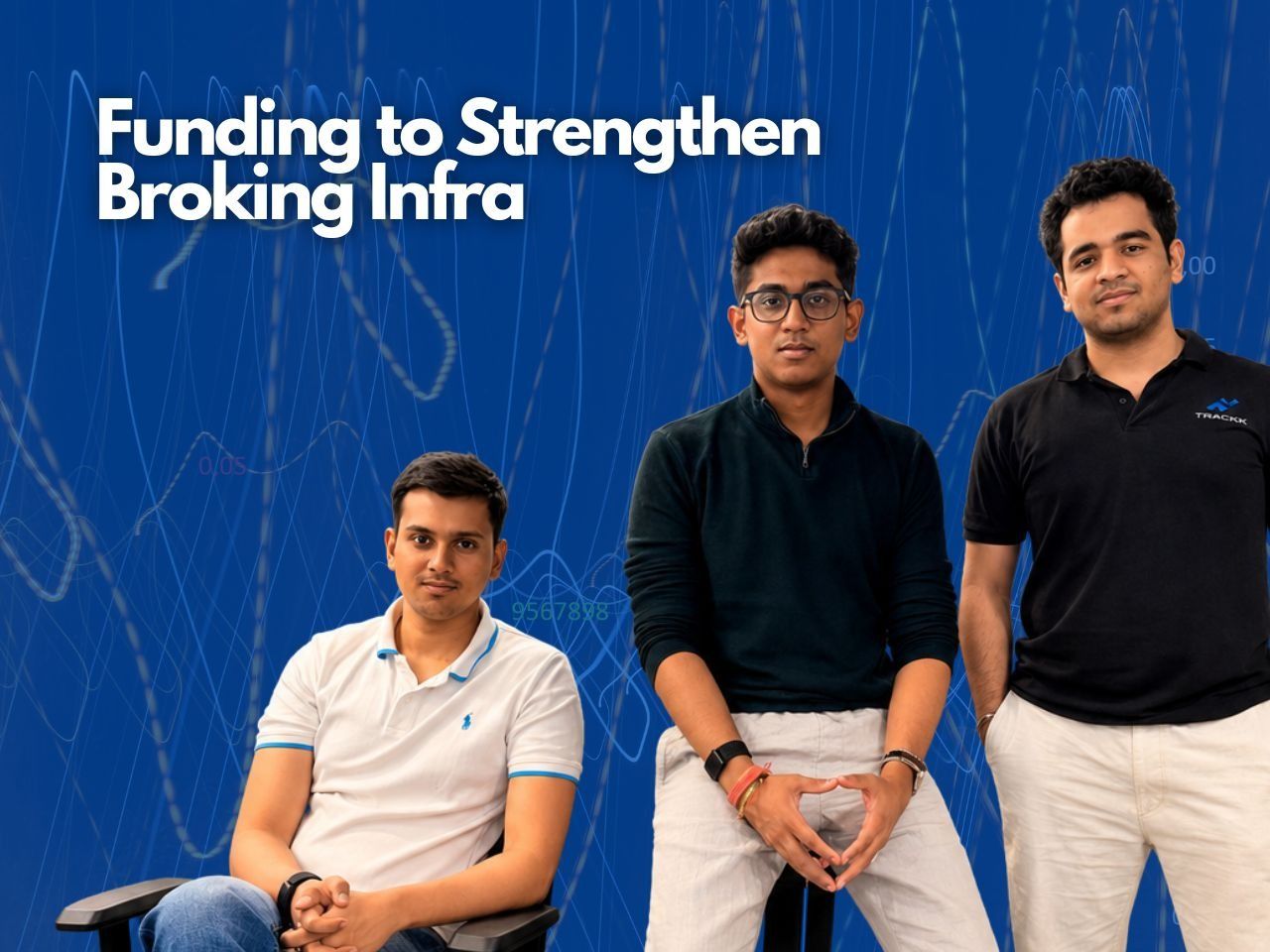
Founded in 2021 by Vedant Gupte, Siddharth Thakkar, and Aryan Jain, Trackk positions itself as an investment platform built specifically for Gen Z investors.
The startup is attempting to simplify investing for first-time users through AI-led stock discovery, personalised investing experiences, and easier execution tools designed for younger audiences who may be entering financial markets for the first time.
In many ways, the company reflects a broader transformation underway in India’s financial ecosystem. Traditional investing platforms were largely designed around experienced traders and financially literate users. But today’s younger investors expect experiences that feel intuitive, personalised, and mobile-first.
Trackk appears to be leaning heavily into that behavioural shift.
The platform currently offers services including stock broking, futures and options trading, IPO investing, portfolio tracking, and portfolio rebalancing tools.
According to the company, user adoption among younger demographics has been particularly strong. Nearly 90% of its user base reportedly falls within the 20–24 age group — a statistic that highlights how aggressively India’s younger generation is embracing financial markets.
That trend itself says a lot about where India’s investing ecosystem is headed.
A few years ago, investing among younger Indians was often limited to mutual funds through SIPs or occasional stock purchases influenced by family advice. Today, a far more digitally native generation is actively exploring equities, IPOs, trading products, and wealth-building tools independently.
This behavioural evolution has created room for startups that are not merely offering trading infrastructure, but are rethinking how investing is experienced altogether.
Speaking about the company’s vision, cofounder Vedant Gupte said Trackk aims to make participation in financial markets more intuitive and accessible for young Indians.
“With Trackk, we are building a platform that simplifies participation in financial markets for young Indians while making the overall investing journey far more intuitive and accessible,” he said.
India’s Retail Investing Boom Is Creating New Winners
Trackk’s funding also reflects the larger momentum building across India’s wealthtech and stock broking ecosystem.
Over the past few years, retail participation in Indian markets has surged significantly, driven by rising internet penetration, simplified onboarding processes, financial awareness content, and easy-to-use investing platforms.
The result is a rapidly expanding ecosystem where broking apps are no longer just transaction platforms — they are becoming financial engagement products.
Naturally, competition in the segment is intense.
Trackk enters a market already dominated by major players such as Groww, Zerodha, and Angel One. But newer startups continue to emerge by focusing on niche user behaviour, community-driven investing, simplified user experiences, or AI-powered tools.
The sector has also seen increasing participation from large internet and fintech companies looking to tap into India’s next wave of retail investors.
Recently, Dream Sports, the parent company of Dream11, launched stock broking platform ‘Dream Street’ as it expanded beyond fantasy sports into financial services.
Earlier this month, PB Fintech subsidiary PB Marketing and Consulting secured a stock broking licence to offer services on NSE’s debt segment.
Investor confidence in the space also remains visible through continued funding activity.
Last month, trading platform Sahi raised $33 million in a funding round led by Accel, with participation from Elevation Capital.
Where Trackk Wants to Go From Here
Trackk plans to use the fresh capital to strengthen its broking infrastructure, expand product capabilities, accelerate user acquisition, develop new financial products, and hire talent.
That roadmap suggests the startup is preparing for a much larger play in India’s fast-evolving retail investing ecosystem.
For now, the company’s biggest advantage may lie in understanding a generation that consumes finance differently from any generation before it.
Today’s young investors want speed, simplicity, discovery, and experiences that feel less intimidating. They are comfortable learning through creators, experimenting with financial tools digitally, and making independent investment decisions much earlier in life.
Platforms like Trackk are emerging directly from that cultural and technological shift.
And as India’s Gen Z population increasingly steps into the world of investing, startups building for this audience are likely to become one of the most closely watched segments within the country’s broader fintech landscape.