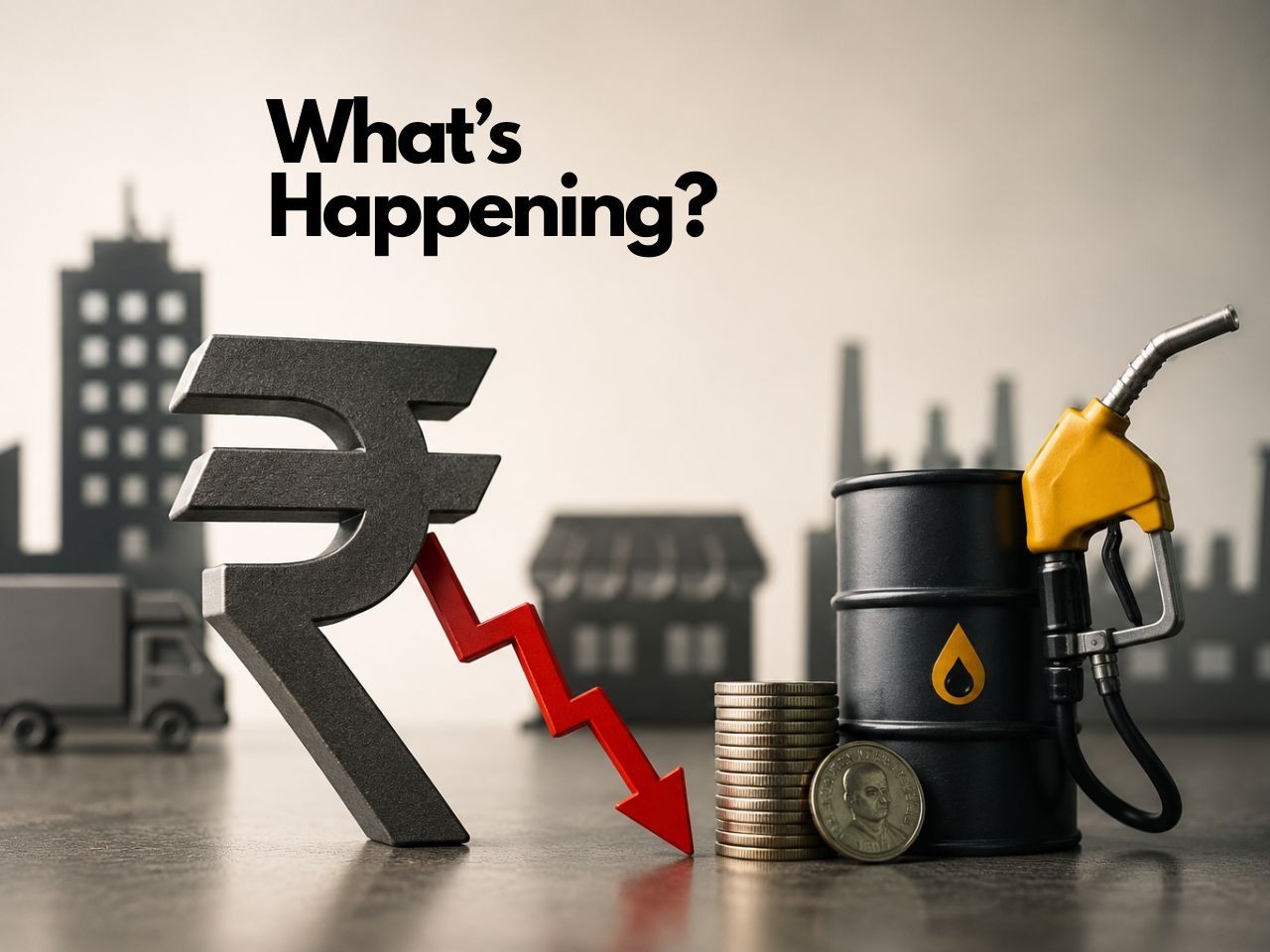

India’s startup and MSME ecosystem may be heading into another phase of financial pressure as two major economic triggers — a historic fall in the rupee and a sharp rise in fuel prices — begin pushing operational costs higher across sectors.
On Friday, the Indian rupee breached the Rs 96 mark against the US dollar for the first time in history, touching an intraday low of 96.14 before settling at 95.97. The fall came just a day after the currency had already recorded its previous all-time low of 95.64, signalling growing pressure on India’s external trade and import bill.
At the same time, fuel prices were increased sharply across the country after global crude oil prices surged above USD 105 per barrel, adding another layer of stress for businesses already operating in a cautious funding and high-cost environment.
For India’s startups and Micro, Small and Medium Enterprises (MSMEs), the combined impact could be significant.
From logistics and manufacturing to SaaS, e-commerce and D2C brands, businesses across the ecosystem are expected to feel the effects of rising import costs, higher transportation expenses and shrinking margins in the weeks ahead.
Rupee Weakness Is Increasing Import and Technology Costs
The weakening rupee directly impacts companies that depend on imported goods, global technology infrastructure or overseas vendor payments.
For many Indian startups, especially those operating in technology-heavy sectors, a large part of their operational stack is linked to dollar-denominated expenses. Cloud subscriptions, international software tools, servers, semiconductors, digital advertising platforms and imported hardware all become more expensive when the rupee weakens.
A few months of currency depreciation may appear manageable for larger firms with stronger reserves, but for early-stage startups and smaller MSMEs operating on thin margins, even a small rise in recurring costs can significantly impact cash flow planning.
The impact is expected to be particularly visible in sectors such as electronics, SaaS infrastructure, AI startups dependent on foreign computing systems, mobility businesses and manufacturing-led ventures that rely on imported components.
Industry observers say the pressure becomes even harder when combined with already elevated customer acquisition costs and slowing investor deployment across the startup ecosystem.
Fuel Price Hike Adds Fresh Pressure on Logistics and Supply Chains
Adding to business concerns, oil marketing companies increased prices of non-branded petrol and diesel by an average of Rs 3 per litre across fuel stations nationwide.
In Delhi, petrol prices rose to Rs 97.77 per litre, while diesel climbed to Rs 90.67 per litre. In Mumbai, petrol prices touched Rs 106.68 per litre and diesel reached Rs 93.14 per litre. Similar increases were also recorded in Kolkata and Chennai.
While fuel price hikes affect consumers directly, the ripple effect on businesses is often much larger.
For e-commerce firms, quick commerce platforms, food delivery startups, mobility companies and D2C brands, fuel expenses play a major role in last-mile delivery economics and overall logistics operations.
Higher diesel prices also increase freight and transportation costs across supply chains, impacting warehousing, shipping and distribution expenses for businesses across categories.
As transportation becomes costlier, many startups may eventually be forced to either absorb the additional expenses — hurting profitability — or pass some of the burden to consumers through higher pricing.
For companies already struggling to achieve sustainable unit economics, that balance could become increasingly difficult.
MSMEs May Face Working Capital Stress
India’s MSME sector, which forms the backbone of the country’s manufacturing and employment ecosystem, is also expected to face renewed stress.
Small manufacturers and export-oriented businesses are likely to witness rising raw material prices, higher freight costs and increasing working capital requirements as imported inputs become more expensive.
While a weaker rupee can theoretically benefit exporters by making Indian goods cheaper globally, economists caution that the advantage may be limited if energy prices and production costs continue rising simultaneously.
For smaller businesses with limited financial buffers, volatility in currency and fuel prices often creates uncertainty around pricing, procurement and inventory management.
Many MSMEs are still recovering from earlier phases of inflationary pressure, tighter credit conditions and fluctuating demand patterns. The latest developments could further stretch operational resilience for businesses already navigating a difficult environment.
Investor Sentiment and Startup Funding Could Also Be Affected
Economists and market experts believe prolonged pressure on the rupee and crude oil prices could also influence investor sentiment within India’s startup ecosystem.
Over the last few years, Indian startups have remained deeply connected to global capital flows, foreign venture funding and international technology partnerships. A weakening domestic currency, rising inflation concerns and increasing import costs may create a more cautious investment environment, especially for capital-intensive businesses.
Global investors typically monitor macroeconomic stability closely, and sustained currency volatility can influence risk perception around emerging markets.
For startups currently raising capital, particularly growth-stage companies with high burn rates, the environment may become more challenging if investors shift focus toward profitability and financial discipline over aggressive expansion.
India’s Startup Economy Faces Another Test of Resilience
The latest developments come at a time when India’s startup ecosystem has already been adjusting to slower funding cycles, tighter consumer spending and increasing pressure to build sustainable businesses.
Over the past two years, founders have increasingly focused on reducing burn, improving margins and achieving profitability. However, external macroeconomic shocks such as currency depreciation and rising energy prices create fresh challenges that are often outside operational control.
For many startups and MSMEs, the coming months may require sharper financial planning, tighter cost management and stronger operational efficiency to protect margins.
While the long-term outlook for India’s entrepreneurial economy remains strong, the current combination of a weakening rupee and rising fuel prices is likely to test how resilient businesses truly are in an increasingly volatile global environment.