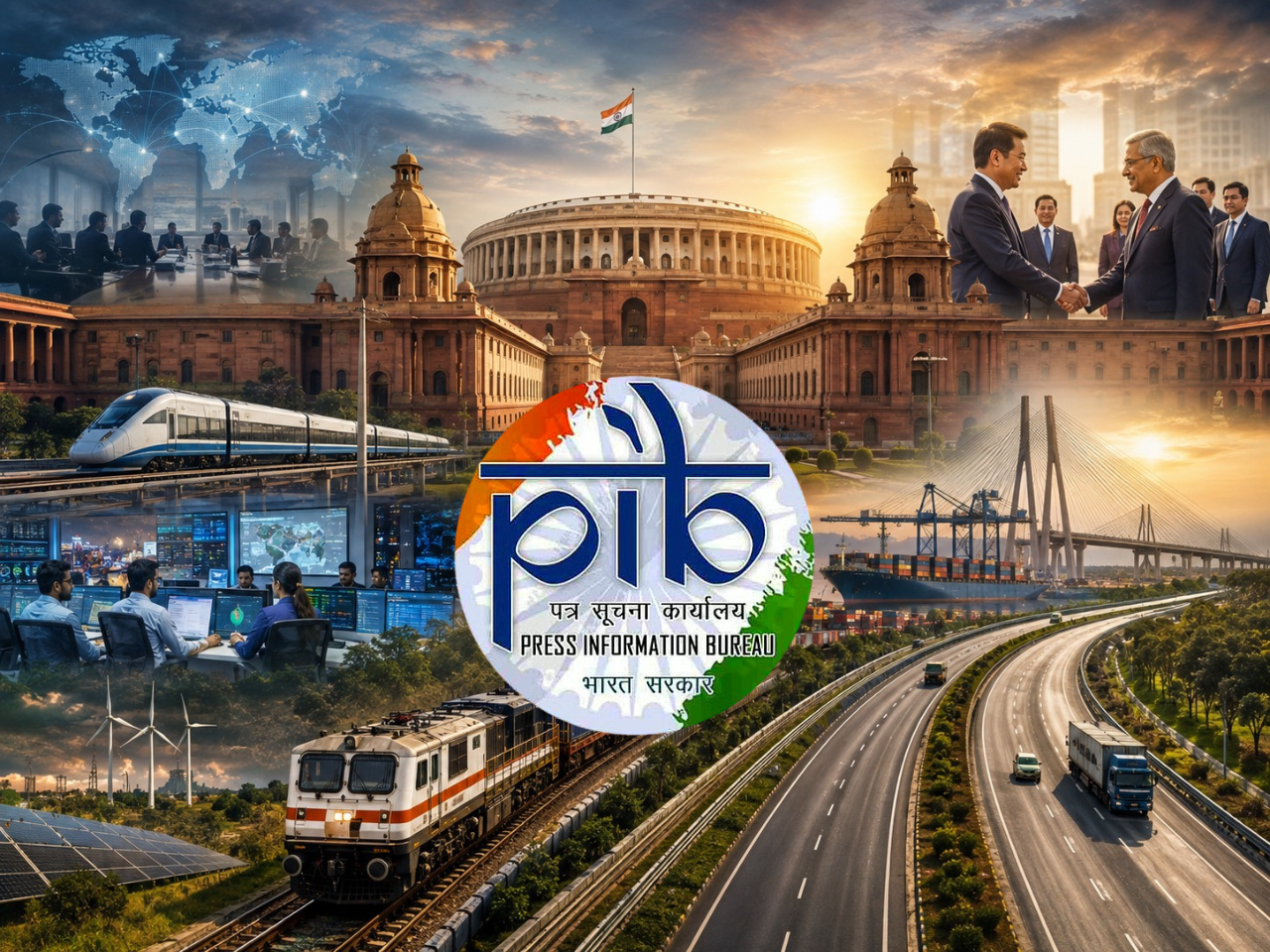

India’s policy agenda on August 19 was dominated by a familiar theme: build more, connect faster and deepen strategic partnerships.
Within a few hours, the Union Cabinet cleared a ₹3,590.73-crore highway project in Bihar, approved four railway multitracking projects covering 410 km across four states, dispatched Commerce Minister Piyush Goyal to Singapore for a high-level economic dialogue, scheduled fresh India-Japan defence talks in New Delhi, and expanded discussions on governance reforms, energy cooperation and Centre-state coordination.
Individually, these are routine government announcements.
Collectively, they offer a clearer picture of how New Delhi is approaching economic management in 2026.
Infrastructure, diplomacy, logistics, defence and governance are increasingly being treated as parts of the same development architecture rather than separate policy domains.
A ₹3,590-Crore Highway Project Signals That Infrastructure Spending Is Still Central to Growth
The biggest announcement of the day came from the Cabinet Committee on Economic Affairs, which approved the upgradation of the Muzaffarpur-Sitamarhi-Sonbarsa section of NH-22 in Bihar into a four-lane highway under the Hybrid Annuity Model (HAM).
The project, estimated to cost ₹3,590.73 crore, will strengthen one of north Bihar’s most important transport corridors and improve connectivity with the India-Nepal border.
Border infrastructure has traditionally been viewed through a strategic lens. Increasingly, however, it is also being seen as an economic asset.
Improved roads reduce logistics costs, shorten travel time, facilitate trade and improve market access for agricultural and industrial products.
The government’s continued preference for the Hybrid Annuity Model is equally significant. The model distributes project risk between the public and private sectors, allowing infrastructure projects to move ahead without placing the entire financial burden on the government.
That approach has become increasingly important as India attempts to maintain a high level of capital expenditure while keeping fiscal discipline intact.
The Railway Expansion Is About Freight as Much as Passenger Travel
The Cabinet also approved four multitracking railway projects spanning West Bengal, Odisha, Andhra Pradesh and Tamil Nadu, adding approximately 410 km to the network.
Unlike flagship railway announcements that focus on high-speed trains or premium passenger services, multitracking projects are designed to solve a more fundamental problem: congestion.
India’s railway network continues to carry both passengers and freight on the same corridors. Capacity constraints often slow cargo movement, increase turnaround time and create bottlenecks for industry.
Additional tracks may not generate the same public attention as a new Vande Bharat train, but they can significantly improve freight movement.
That matters because railways remain one of the cheapest ways to transport goods across long distances.
For an economy trying to expand manufacturing and exports simultaneously, improving railway capacity is not simply a transportation decision. It is an industrial policy decision.
Singapore and Japan Reflect India’s Expanding Strategic Playbook
Two other announcements highlighted how economic and strategic diplomacy are evolving.
Commerce and Industry Minister Piyush Goyal left for Singapore to participate in the Fourth India-Singapore Ministerial Roundtable and the Fourth India-Singapore Business Roundtable.
Singapore remains one of India’s largest sources of foreign investment and a critical partner in sectors such as finance, digital services, logistics and advanced manufacturing.
At the same time, Defence Minister Rajnath Singh is scheduled to hold bilateral talks with his Japanese counterpart in New Delhi.
The two developments are connected.
India’s international partnerships are becoming increasingly sector-specific.
Economic engagement now extends far beyond traditional trade agreements. Countries are negotiating investments in semiconductors, supply chains, clean energy, digital infrastructure and advanced manufacturing.
Similarly, defence partnerships are expanding beyond military exercises to include technology transfers, industrial cooperation and maritime security.
Diplomacy is becoming more transactional and more integrated with economic priorities.
Governance Reforms Are No Longer Confined Within National Borders
Another development that received relatively little attention was the India-Malaysia Joint Working Group meeting on public administration and governance reforms.
For decades, governance reforms were considered a domestic administrative issue.
That is changing.
Digital public infrastructure, direct benefit transfers, administrative digitisation and service delivery reforms have become areas of international collaboration.
India is no longer participating only as a recipient of governance models developed elsewhere. It is increasingly positioning itself as a country willing to share administrative practices and digital governance frameworks with other nations.
Meanwhile, Union Home Minister Amit Shah will chair the 31st Southern Zonal Council meeting in Mahabalipuram on August 20.
Such meetings rarely dominate headlines, but they remain one of the most important mechanisms for cooperative federalism.
In a country where development responsibilities are divided between the Centre and the states, coordination is often as important as policymaking itself.
The Government’s Development Strategy Is Becoming Easier to Read
Today’s announcements may not produce dramatic headlines.
But they reveal a pattern.
Roads are being expanded to improve logistics.
Railway capacity is being increased to support manufacturing.
Trade partnerships are being used to attract investment.
Defence cooperation is being linked to broader strategic interests.
Governance reforms are being shared across borders.
None of these decisions operates independently anymore.
That may be the most important takeaway from August 19.
India’s growth strategy is increasingly being built through interconnected policies rather than standalone schemes. And if execution keeps pace with ambition, these seemingly routine decisions may prove far more consequential than they appear today.
Editorial Disclaimer: This article is based on official press releases and information released by the Press Information Bureau (PIB), Government of India, on August 19, 2026. The story has been independently curated, analysed and edited by the TICE editorial team to provide additional context and insights for readers.