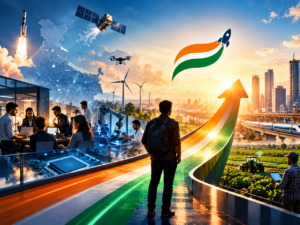

India won political independence in 1947. Eight decades later, it is pursuing a different kind of sovereignty—one built on semiconductors, artificial intelligence, computing infrastructure, and indigenous innovation.
For three decades, a contradiction defined India’s technology journey. The country wrote the software that powered the global digital economy while importing the chips that made that software possible.
India became an IT powerhouse, exported digital talent to the world, and built one of the planet’s most sophisticated digital public infrastructures. Yet the microprocessors powering smartphones, automobiles, satellites, telecommunications networks, and increasingly, AI systems, continued to come from outside its borders.
Today, that equation is changing.
As India prepares to celebrate its 80th Independence Day, semiconductors and artificial intelligence have emerged as the two technologies at the center of its next national mission: technological sovereignty.
From Political Independence to Technological Sovereignty
Every generation defines independence differently.
The first generation fought for political freedom. The next focused on economic liberalization. Today’s challenge is technological self-reliance.
The world has changed dramatically over the past decade. Supply chains have become geopolitical instruments. Technology has become a strategic asset. Data has become an economic resource. And semiconductors have become the foundation of nearly every modern industry.
The numbers tell the story.
A smartphone contains hundreds of semiconductor components. An electric vehicle requires thousands of chips. AI systems depend on specialized processors and massive computing infrastructure. Even sectors such as healthcare, defense, renewable energy, telecommunications, and space technology now rely on advanced semiconductor ecosystems.
In this environment, technological dependence is no longer viewed as a simple trade issue. It is increasingly seen as a strategic vulnerability.
That realization has reshaped policymaking across the world—and India is no exception.
/fit-in/580x348/filters:format(webp)/tice-news-prod/media/media_files/2026/08/14/ai-is-driving-india-chip-dream-2026-08-14-09-52-11.png)
The Global Chip Crisis Changed India’s Thinking
The pandemic exposed a weakness that many countries had overlooked.
When global semiconductor supplies tightened, automobile production slowed, electronics manufacturers struggled, and supply chains across industries came under pressure.
A technology hidden inside everyday devices suddenly became front-page news.
The crisis transformed semiconductors from an invisible component into a national priority.
India responded by launching the Semicon India programme with an initial outlay of ₹76,000 crore. In July 2026, the government significantly expanded that commitment by approving Semicon 2.0, backed by an investment outlay of ₹1,27,500 crore.
But the new strategy goes far beyond building manufacturing plants.
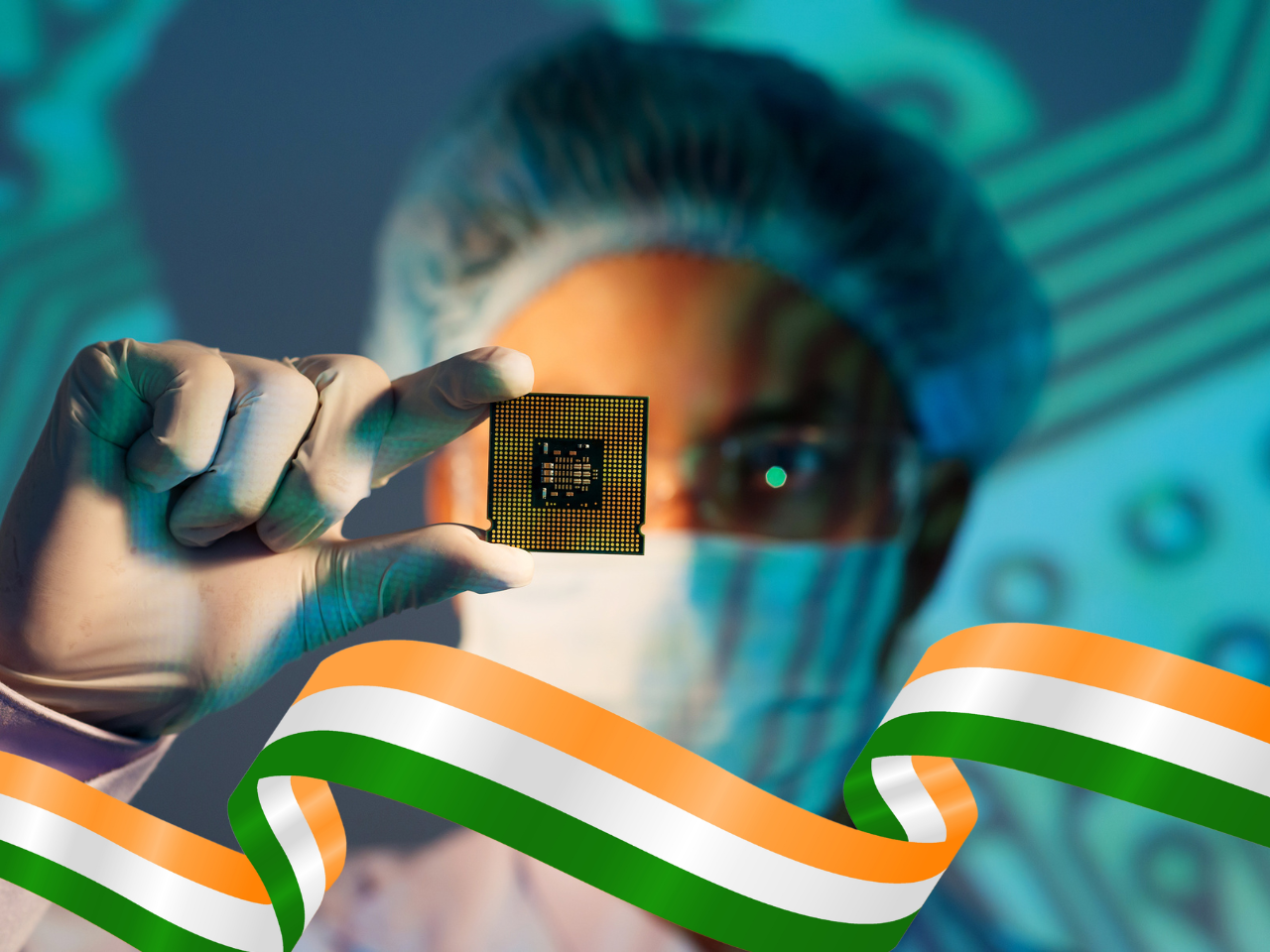
Unlike traditional industries, semiconductor ecosystems cannot be created through factories alone. They require research institutions, design capabilities, specialized equipment, packaging facilities, raw material suppliers, intellectual property, and a highly skilled workforce.
Semicon 2.0 attempts to address all six of those pillars simultaneously.
That may ultimately become its biggest strength.
India Wants to Build Chips, Not Just Design Them
For years, India’s semiconductor ambitions existed largely on paper.
That phase appears to be ending.
The government has approved 12 semiconductor projects across six states, with investment commitments exceeding ₹1.64 lakh crore. More importantly, three facilities have already entered commercial production, marking an important shift from policy announcements to manufacturing activity.
The approved projects include silicon fabs, compound semiconductor facilities, display fabrication units, and advanced packaging plants.
Their impact will extend far beyond the semiconductor industry itself.
These facilities are expected to support critical sectors including automobiles, telecommunications, aerospace, power electronics, and consumer electronics.
Yet India’s biggest advantage may not be manufacturing.
It may be design.
For decades, Indian engineers have played a significant role in designing chips for some of the world’s largest technology companies. The challenge has always been converting that engineering talent into domestic intellectual property.
The government is now attempting to bridge that gap through initiatives such as Chips to Startup (C2S) and the Design Linked Incentive (DLI) scheme.
Electronic Design Automation tools have been deployed across 320 academic institutions, while more than 68,000 students have received semiconductor training.
By April 2026, 211 chips had been taped out by 75 institutions, and seven chips had already been fabricated, including designs built on advanced 12-nanometer process nodes.
Those numbers may appear modest compared with global leaders.
But they represent a fundamental shift—from supplying engineering talent to creating semiconductor intellectual property.
/fit-in/580x348/filters:format(webp)/tice-news-prod/media/media_files/2026/08/14/india-at-80-and-chip-dream-2026-08-14-09-53-17.png)
AI Has Changed the Economics of the Technology Race
If semiconductors are the foundation of the digital economy, artificial intelligence is rapidly becoming its most powerful growth engine.
And the two technologies are now inseparable.
Every breakthrough in AI increases demand for advanced processors, graphics units, high-bandwidth memory, and large-scale computing infrastructure.
Recognizing this convergence, the government expanded the IndiaAI Mission’s shared computing infrastructure to more than 45,000 GPUs.
By August 2026, 237 projects had already consumed more than 93 lakh GPU hours through subsidized access.
This is more significant than it may initially appear.
Access to computing power has become one of the biggest barriers for researchers, startups, and universities developing AI applications. By creating a shared computing framework, India is attempting to lower the cost of innovation and democratize access to AI infrastructure.
The government has also selected 20 indigenous foundation model proposals, including 12 large multimodal models and eight small language models.
At the same time, AI Kosh now hosts more than 14,000 datasets and 331 AI models, while 58 AI Centers of Excellence have been approved across states and union territories.
The objective is clear.
India doesn’t simply want to use AI developed elsewhere. It wants to build AI systems trained on Indian languages, Indian datasets, and Indian realities.
The Race to 2047 Has Already Begun
India’s ambitions are attracting global attention.
The Stanford Global AI Vibrancy Report 2025 ranked India third globally in AI competitiveness, while the country’s developer ecosystem became the second-largest contributor to GitHub AI projects.
Partnerships with the United States, Japan, Germany, Singapore, the Netherlands, and the European Union are also strengthening India’s integration into global technology supply chains.
But ambition alone won’t determine the outcome.
Semiconductor manufacturing remains one of the world’s most demanding industries. It requires ultra-pure chemicals, uninterrupted power supplies, specialized equipment, advanced manufacturing processes, and years of operational refinement.
The competition is equally intense.
The United States dominates semiconductor design. Taiwan remains the world’s manufacturing powerhouse. China continues to invest aggressively in chip self-sufficiency. Meanwhile, companies such as Nvidia have become synonymous with the AI revolution.
India is entering this race later than many of its competitors.
That makes execution more important than investment announcements.
Still, there is one reason for optimism.
Unlike many previous industrial policies, India’s semiconductor and AI strategies are designed to reinforce one another. Domestic fabs can supply the hardware. Indian data centers can provide the computing infrastructure. Indian engineers can build the algorithms. Indian startups can transform them into products.
Political independence gave India a nation.
Economic liberalization integrated it into the global economy.
The next chapter may be written differently.
Because 80 years after Independence, India’s biggest freedom battle is no longer being fought on the streets or in the corridors of power.
It is being fought in silicon.