
How GSFF can turn cinema into a platform for tourism, culture, exports, investment, enterprise and employment
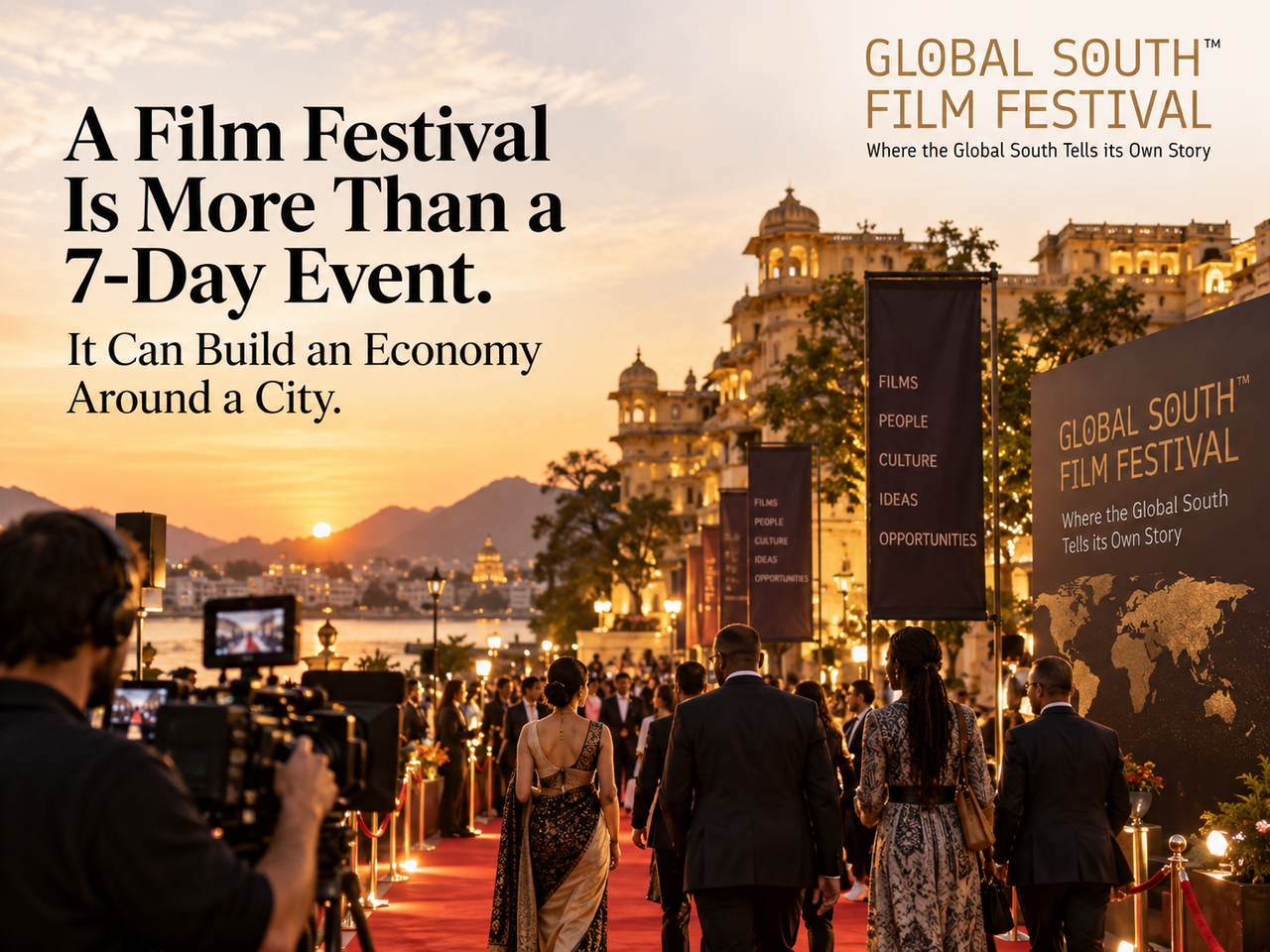
A film festival is not just a few days event of awards and red carpets. It could become an economic engine for the city that hosts it
I have always looked at large cultural events through this lens. When I worked on bringing the International Indian Film Academy Awards (IIFA) to Jaipur, Rajasthan, the conversation was not simply about an awards night. The larger proposition was what an international entertainment platform could do for tourism, destination branding, hospitality, events, local businesses and the creative ecosystem.
What followed was interesting. Jaipur’s live-entertainment and concert ecosystem expanded and the city is now investing in dedicated infrastructure such as the Jaipur Dome for large-scale concerts and events.
That experience shapes how I look at the Global South Film Festival (GSFF). A festival should not simply be something a city spends money to host. It can be a platform through which a city creates economic activity.
The festival is the front door
When an international film festival arrives, filmmakers travel. So do producers, investors, distributors, journalists, students, artists, technology companies and audiences. They need hotels, restaurants, transport, venues and local services. They visit attractions, shop, look for experiences and increasingly, look for business opportunities.
India’s media and entertainment sector reached ₹2.78 trillion in 2025, while organised live events grew 44% during the year, according to FICCI-EY. Tourism is another enormous economic engine, with India recording 20.22 million international tourist arrivals and 4.29 billion domestic tourist visits in 2025.
So the question for a host city should not simply be how many people attended. It should be: what did they spend, whom did they meet, what businesses did they discover, and what did they leave behind?
/fit-in/580x348/filters:format(webp)/tice-news-prod/media/media_files/2026/09/19/gsff-tourism-culture-heritage-2026-09-19-17-13-09.png)
– Tourism, culture and heritage: Imagine the multiplier
Imagine GSFF brings atleast 5,000 visitors to a host city, with each spending an average ₹100,000 on hotels, food, transport, shopping and experiences. That is ₹50 crore of direct visitor expenditure.
These 5,000 festival visitors each brings average 5 more visitors to the host city in due course that becomes 25,000 visitors annually, the same assumption becomes ₹250 crore. These are illustrative scenarios, not GSFF forecasts, but they show why visitor spending matters before even accounting for the wider multiplier through suppliers, local businesses and employment.
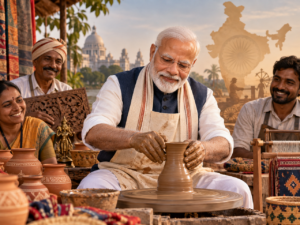
A visitor coming for GSFF may discover a heritage monument, local cuisine, handicrafts, music, architecture or another destination nearby. A filmmaker may discover a location for a future production, while a travel company may create a new package around the destination. And ofcourse the posts, reels of the location on social media will compound the reach of the destination bringing in more visitors.
For a Tier-2 city, the festival can become an international window into assets that already exist.
The opportunity is particularly interesting because culture and heritage can move from being simply attractions to becoming part of a sustainable economic value chain.
/fit-in/580x348/filters:format(webp)/tice-news-prod/media/media_files/2026/09/19/gsff-business-opportunities-2026-09-19-17-14-42.png)
– A new market for Indian business
There is another strategic opportunity: the Global South is not simply an audience. It is a market. The UN’s 2025 Global Report on South-South and Triangular Cooperation describes the Global South as home to more than 80% of humanity.
For India, that represents an enormous network of potential consumers, buyers, partners, tourists and investors across Africa, Asia, Latin America, the Middle East and other emerging markets.
Imagine 500 individuals/ventures/projects using GSFF-related business platforms to meet just 10 potential partners each. That creates 5,000 business connections. Even if only 2% eventually became meaningful commercial relationships, that would mean 100 new partnerships. These partnerships can collectively bring ₹10,000 crores as revenues when you sell your products, services, solutions to market comprising of 80% of humanity.
These are illustrative numbers, not projections. But they demonstrate the scale of the opportunity: GSFF can work in two directions: bringing the Global South to India and taking India to the Global South.
– From handicrafts to creative exports: imagine the multiplier
A film festival can create a marketplace around local culture. Imagine 200 artisans and creative enterprises/professionals, each generating an additional ₹20 lakh in festival-linked business or employment thereafter. That represents ₹40 crore of incremental business flowing to local enterprises.
The larger opportunity is what happens next distributors, retailers, designers, exporters and international buyers who discover these businesses during the festival.
The same principle applies to cinema. Around a film sits an ecosystem of IP, music, animation, VFX, technology, fashion, design, locations, talent and production services.
An Indian producer can meet a Brazilian collaborator. A Thai company can discover an Indian technology partner. An Indian creative enterprise can find a new distribution market.
The film becomes the starting point. The creative economy becomes the larger opportunity. The potential is to reach ₹100 crore of incremental business annually plus 1000 direct/indirect jobs.
/fit-in/580x348/filters:format(webp)/tice-news-prod/media/media_files/2026/09/19/gsff-creative-economy-2026-09-19-17-16-36.png)
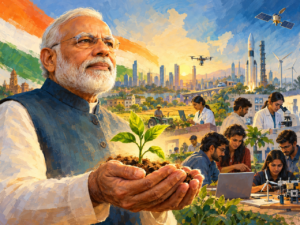
– Investment and employment: imagine the multiplier
Some of the most important outcomes may happen long after the festival closes.
Imagine 100 serious investor and industry meetings generating 50 follow-up opportunities, with twenty five eventually resulting in investments averaging ₹10 crore. That represents ₹250 crore of potential new investment linked to relationships initiated around the platform.
Again, this is an illustrative scenario, not a GSFF forecast. The employment multiplier is broader. Hotels, restaurants, transport, event production, security, catering, design, digital content, tourism, technical production, retail and handicrafts all participate. Not less than 2500 direct and 10,000 indirect jobs can be created.
That is the difference between an event economy and an ecosystem economy.
BRICS has already articulated the larger vision
There is also a larger international context to this proposition. The 2026 BRICS New Delhi Declaration reaffirms the importance of people-to-people exchanges in building mutual understanding, friendship and cooperation, while calling for greater respect for cultural diversity and stronger international cultural exchange. It recognises the role of innovation, creativity and cultural and creative industries, including exchanges among artists and cultural practitioners and joint creative projects.
Importantly, the Declaration welcomes the BRICS Film Festival and other cultural platforms as vehicles for circulating cultural and creative works and encourages their expansion to create greater opportunities for cultural exchange and collaboration.
For GSFF, this is significant. Its proposition is to take that people-to-people and cultural exchange beyond the screening room – into tourism, creative enterprise, investment, trade and new markets across the Global South.
The cultural conversation can become an economic conversation.
This is the GSFF proposition
GSFF is being conceived as a travelling Global South platform, where every host city brings its stories, culture, heritage, tourism assets, creative talent and businesses into an international network.
The proposition is to connect tourism, culture, cinema, creative industries, investment, trade and employment in one platform.
And there is a second multiplier: Market Access.
A host city gets visibility across the Global South. Indian businesses get access to new markets. Global South businesses discover India. Filmmakers find collaborators. Investors discover IP and enterprises. Tourism operators find new visitors.
That is why GSFF is not simply looking for a city willing to host another international film festival.
We are looking for cities that want to build an economic ecosystem around their stories and creative industries.
Governments and destination authorities can use the platform to develop tourism, investment and creative-economy opportunities. Businesses can find new markets. Investors can discover enterprises and IP. Filmmakers can find collaborators, capital, locations and audiences.
The invitation is deliberately bigger than cinema: Don’t just host GSFF. Build with GSFF.
This has been the value proposition we have placed before the 4 host City/States with whom we have been discussing GSFF, not simply to host a film festival, but to use it as a platform to build visibility, partnerships and economic opportunity around the city.
Bring your city’s stories, culture, entrepreneurs, artisans, destinations and creative talent to the Global South network, and let the world discover what your city can create.
My experience with Jaipur showed me that the legacy of an international entertainment platform can extend well beyond the event itself. That is the opportunity I see for GSFF: a platform that can leave behind relationships, businesses, investment, employment, tourism and new reasons for people to return.
The ultimate question for a host city is therefore not simply, “How much will the festival cost?”
It is: “What economic ecosystem can this festival help us build?”
Not just a festival. Not just a celebration. A platform connecting the Global South’s stories, people and economies. Because ultimately, a film festival is not only about what happens on the screen. It is about everything that happens around the screen. And that is where the economy begins.
A film festival may last seven days. The economy it helps create can last for years.
-Mr Rajesh Joshi
Member of the GSFF Consortium.