
India is preparing for something monumental—an exercise so vast that it touches every home, every individual, and ultimately, the future of the nation itself. But this time, it’s not just about counting people. It’s about redefining how a country of over a billion tells its own story.
In the 133rd episode of Mann Ki Baat aired on April 26, 2026, Prime Minister Narendra Modi brought the spotlight onto Census 2027, calling it a transformative moment in India’s governance journey. Describing it as the “world’s largest census,” he framed it not merely as a statistical exercise, but as a collective nation-building effort—one that now carries a distinctly digital edge.
From Paper Trails to Digital Precision
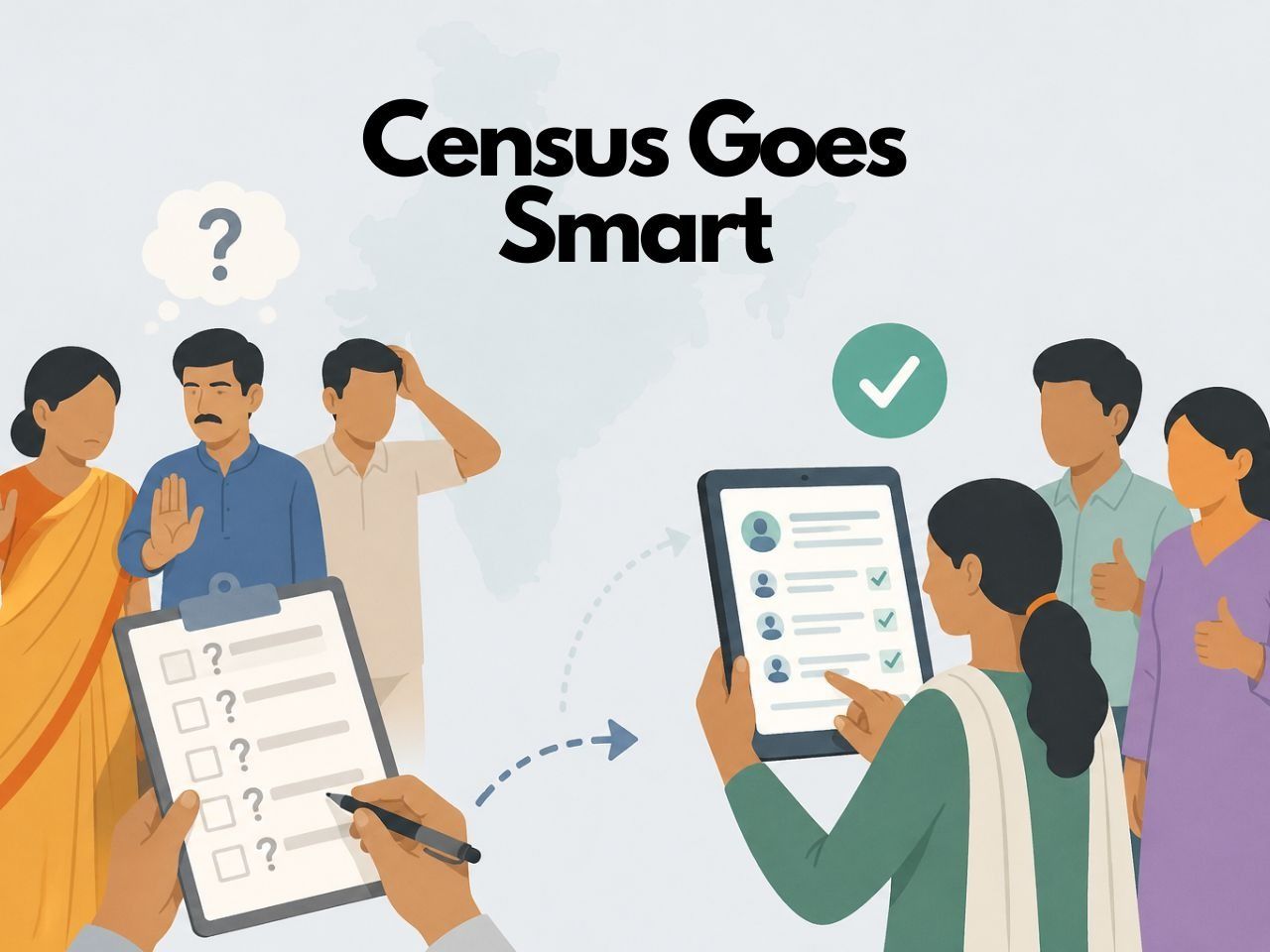
For decades, India’s census has relied on paper-based data collection—labor-intensive, time-consuming, and prone to delays. Census 2027 marks a clear departure from that legacy.
This time, enumerators stepping into households will carry mobile applications instead of paper forms, recording responses in real time. The shift promises not only speed but also significantly improved accuracy and faster data processing—something critical for a country of India’s scale.
The digitization of the census signals a broader transformation: governance that is faster, smarter, and more responsive.
Self-Enumeration: Citizens Take the Lead
One of the most notable innovations in Census 2027 is the introduction of self-enumeration—a feature that puts citizens directly in control of their data.
For the first time, individuals can log in and submit their details online up to 15 days before an enumerator visits their home. Once completed, they receive a unique identification number via mobile or email. This ID can then be presented during the enumerator’s visit, simplifying verification, preventing duplication, and saving valuable time for both citizens and officials.
It’s a small but powerful shift—from being counted to actively participating in being counted.
The Census Is Already Underway
While much of the attention is on 2027, the groundwork has already begun.
The first phase—house listing and housing data collection—kicked off in April 2026. Early progress has been significant, with enumeration already completed for approximately 1.2 crore households.
The second phase, which will capture detailed population data, is scheduled to begin in February 2027, marking the next critical step in this nationwide effort.
A Long Delay, A Bigger Leap
Originally scheduled for 2021, the census had to be postponed due to the COVID-19 pandemic in India. What could have been a routine delay has instead turned into an opportunity for reinvention.
The 2026–27 census is not just a resumption—it is a reinvention of the process itself, blending scale with technology in ways India has not attempted before.
A Historic Inclusion: Caste Data Returns
Census 2027 will also stand out for another significant reason—it will include caste-based data collection for the first time since 1931.
This addition is expected to provide deeper insights into India’s socio-economic fabric, enabling more informed decision-making across welfare policies, resource allocation, and social equity initiatives.
Data That Will Shape India’s Political Future
Beyond governance and welfare, the census will play a pivotal role in India’s democratic structure.
The data collected is expected to serve as the foundation for future electoral delimitation under the Delimitation Act, 2002—a process that determines the redistribution of seats in the Lok Sabha. It will also influence the implementation of women’s reservation provisions following recent legislative developments.
In essence, the numbers gathered today will help define how India is represented tomorrow.
Security, Inclusion, and Reach
With digitization comes concern—and the government has addressed this head-on.
Officials have emphasized that all collected data will be protected through robust digital safeguards and strict confidentiality protocols. The census is also being conducted in multiple languages, ensuring accessibility across India’s diverse population.
Special efforts are already underway to cover remote and snow-bound regions, ensuring that no community is left uncounted.
A Call to Participate
At its core, the message from the Prime Minister was simple yet powerful: the census is not just a government exercise—it is a shared national responsibility.
Accurate data, he stressed, is the backbone of effective governance. It determines how resources are allocated, how policies are designed, and how inclusive growth is achieved.
As India moves toward Census 2027, the call is clear—this is not just about numbers. It is about every citizen contributing to the blueprint of India’s future.