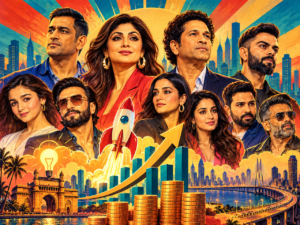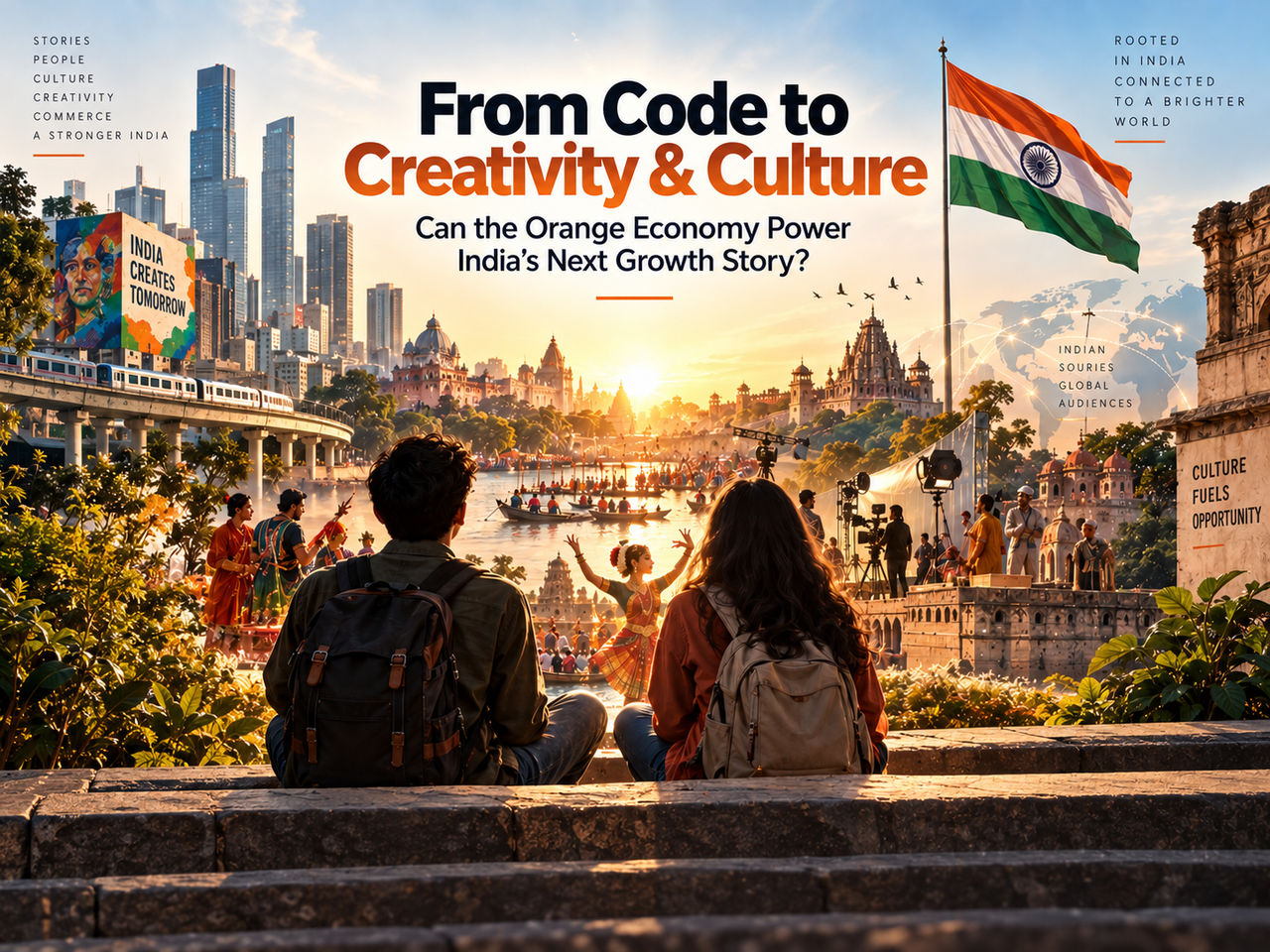

India’s middle class grew alongside the rise of IT and IT enabled services. As AI reshapes the economics of Information Technology, the next growth opportunity may lie in an asset India already possesses in abundance: its culture, creativity, heritage, stories and experiences.
What Happens When Code Is No Longer Enough?
For more than two decades, India’s technology and services economy transformed the aspirations of its middle class. It created careers, businesses and a generation that could sell Indian talent to the world.
AI is changing productivity, skills and the economics of digital work. That raises a bigger question: what could become the next broad-based engine of opportunity?
Perhaps the answer lies in something uniquely Indian.
What If India’s Biggest Untapped Resource Isn’t Underground?
Look around India.
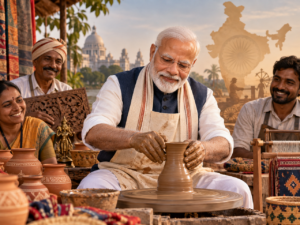
Folk artists. Music, Dance and theatre. Handicrafts and handlooms. Regional cuisines. Fashion. Festivals. Spiritual traditions. Architecture. Stories, folklore and mythology. Kumbh. Pilgrimage centres. Ancient temples. Forts and historic cities. We tend to think of these as culture. Perhaps we should also think of them as economic assets.
Not because everything sacred or traditional needs to be commercialised, but because cultural capital can generate economic activity when connected thoughtfully to content, experiences, tourism, design, technology, hospitality, education, media and global markets.
Can Culture Become an Economic Asset Without Losing Its Soul?
The economic mechanism is simple.
A cultural asset becomes a story or experience. The story attracts an audience. The audience creates demand. Demand creates businesses, employment, investment and exports.
A pilgrimage destination supports hotels, transport, food, retail and experiences. A traditional textile technique can become contemporary fashion. A folk artist can reach global audiences through digital platforms. A story can become a film, series, animation, game, book or tourism experience.
One cultural asset can therefore create multiple economic streams. We should stop thinking of culture as one industry. Culture can be the raw material for many industries.
India’s media and entertainment sector reached about ₹2.78 trillion in 2025, with organised live events growing 44%, according to the FICCI-EY Media & Entertainment Report 2026.
What If One Cultural Asset Could Power Ten Industries?
Imagine a major event or cultural festival. Visitors arrive. Hotels fill. Restaurants benefit. Transport operators earn. Local retailers sell more. Artists perform. Artisans find customers. Digital creators tell stories about the destination. Businesses discover the city. Investors see opportunities.
The same event can touch tourism, hospitality, transport, entertainment, retail, crafts, fashion, media, technology and investment. That is the multiplier effect of the cultural economy.
India’s tourism ecosystem shows the scale. According to the World Travel & Tourism Council’s India research, Travel & Tourism generated $263.6 billion for India’s economy and supported 46.2 million jobs in 2025.
The event becomes the catalyst. The city becomes the product.
Could Culture Become India’s Next Global Competitive Advantage?
Nations have competed for technology, capital, manufacturing capacity, natural resources and talent. India has participated in all these races. But perhaps we can define another race.
Our rare resource may not always be a rare metal. It may be culture.
Technology can be the enabler. Culture can be the foundation. Creativity can become the enterprise. Global markets can become the destination.
Can AI Scale Culture Without Replacing What Makes It Human?
AI can translate a story into multiple languages, restore archives, create new forms of visual storytelling and take local creators to audiences they could never reach before.
The Indian Institute of Creative Technologies is part of the emerging infrastructure connecting creativity and technology, with a focus on areas including AVGC-XR, talent, innovation and industry development.
But AI cannot manufacture centuries of lived history.
It can generate an image of an ancient temple. It cannot create the centuries of memory attached to that temple. It can simulate music. It cannot replace the community that has carried that tradition across generations.
Technology can scale cultural capital. It cannot replace it.
What If Soft Power Could Also Become Hard Economics?
A film can introduce someone to a place. The place can introduce them to its food. The food can lead them to its history. The history can lead them to its music, crafts, architecture and traditions.
Suddenly, a cultural story has become a tourism opportunity, a hospitality opportunity, an export opportunity and potentially an investment opportunity.
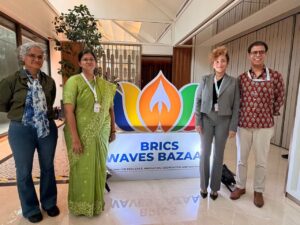
I experienced a small example of this recently while speaking with members of the Global South Film Festival consortium across different countries. During Raksha Bandhan and Janmashtami, two international members were independently watching what was happening in India online and commenting on how fascinating India’s culture was.
It made me pause.We often underestimate what is familiar to us.
What we casually call culture can be an extraordinary global proposition.
The Government Has Seen the Opportunity. Has Industry?
The Government of India is increasingly building an ecosystem around this opportunity. In his WAVES address, Prime Minister Narendra Modi highlighted content, creativity and culture as pillars of India’s emerging Orange Economy.
The Ministry of Culture’s Creative Economy initiative and the Ministry of Information & Broadcasting are part of a wider ecosystem around culture, media, technology, skills and creative industries.
But the opportunity is too large to remain primarily policy-led.
It needs entrepreneurs, investors, creators, cities, brands and industry bodies to build businesses around it. The CII Media & Entertainment ecosystem is also increasingly focused on investment, market access and global creative partnerships. This year FICCI FRAMES theme is: India’s Media Moment: Creating Value in an Age of Infinite Content
The next phase of the Orange Economy will be created when cultural value becomes investable, scalable and exportable.
Who Will Be the Next Billion Customers for Indian Creativity, Culture?
India should also look beyond traditional markets. The Global South represents a vast network of audiences, businesses, creators, investors and cultural ecosystems. Countries across Asia, Africa, Latin America and the Middle East are not simply destinations for Indian exports. 80% of Humanity lives in Global South.
They can become partners, markets and co-creators.
India can take its stories, films, music, design, fashion, crafts, technology and creative services to these markets and bring their creative economies back into India.
Can Cinema Become India’s Gateway to the Global South?
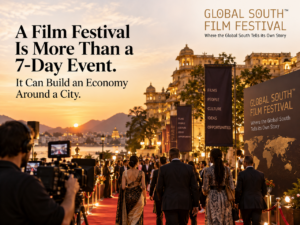
This is one of the ideas behind the Global South Film Festival (GSFF).
Cinema provides a natural entry point because a film can travel across borders before people do. A story creates curiosity. Curiosity creates conversation. Conversation creates relationships.
GSFF is being conceived not simply as a film festival, but as a platform connecting cinema with culture, tourism, creative enterprise, markets, investment and international collaboration.
Its travelling format is designed to connect host cities with the wider Global South network through film markets, B2B meetings, workshops, masterclasses, AI filmmaking, cultural programming and co-production opportunities.
The idea is not to build another gate. It is to open more doors.
What If India’s Next Growth Story Is Something We Already Own?
India’s first great services boom helped take its talent to the world. The next one could take something else with it: its creativity, its culture and its stories.
Technology as enabler. Culture as foundation. Creativity as enterprise. Global South as market.
Perhaps the question is no longer whether culture can contribute to economic growth. The more interesting question is how deliberately we build the ecosystem around it.
India taught the world how to code. Perhaps the next opportunity is to show the world what India can create, preserve, experience and share.
And perhaps that is where the Orange Economy stops being a policy phrase and starts becoming a growth story.
– Rajesh Joshi
Consortium Member of the Global South Film Festival