
As entrepreneurs navigate an increasingly complex global economic landscape, stability can often be as valuable as stimulus.
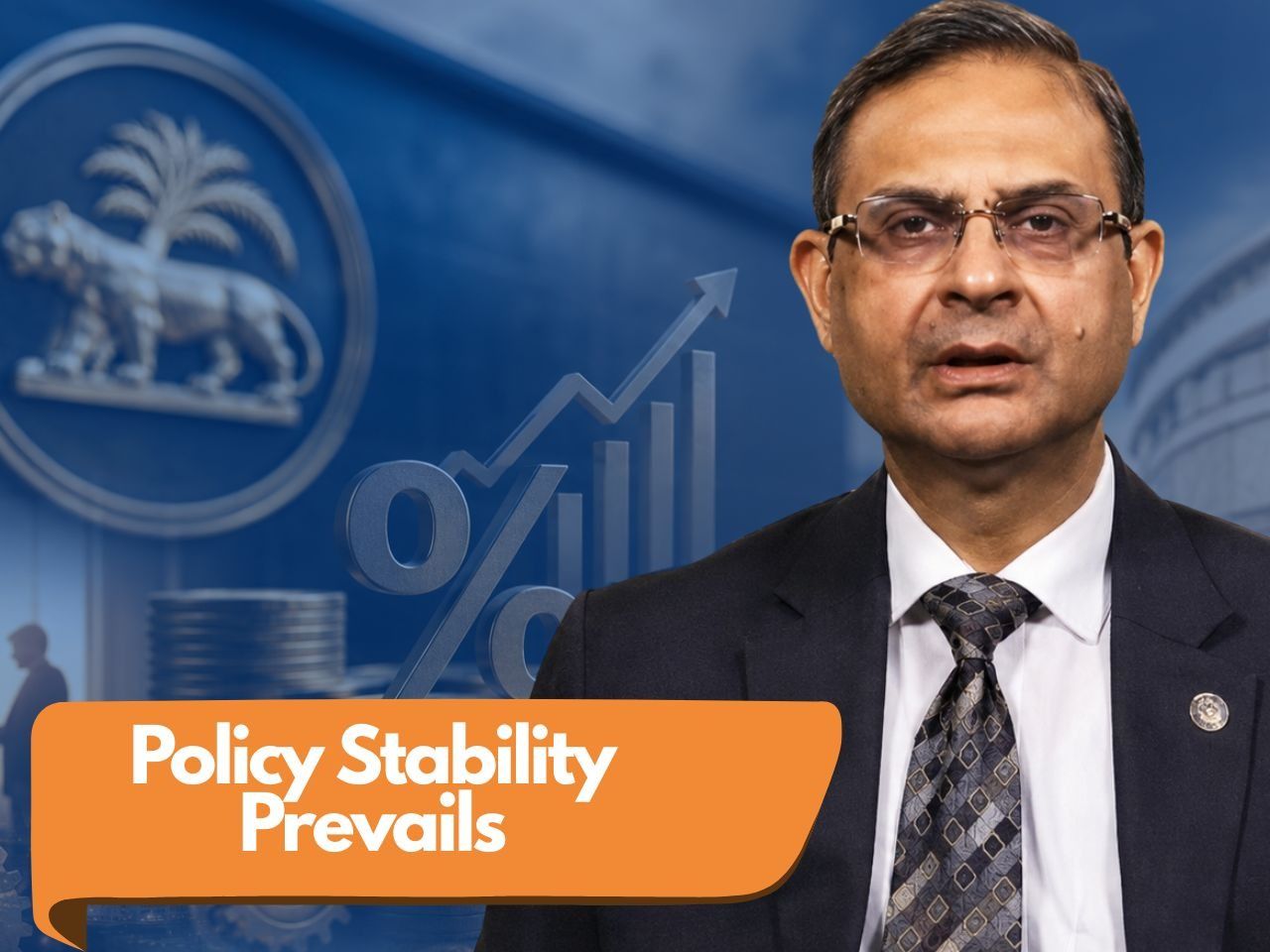
That sense of stability arrived on Friday when the Reserve Bank of India (RBI) decided to keep the repo rate unchanged at 5.25%, offering relief to startups, MSMEs, businesses and millions of borrowers across the country. The decision, announced by RBI Governor Sanjay Malhotra after the three-day meeting of the Monetary Policy Committee (MPC) held from June 3 to June 5, signals a measured and cautious approach as India balances growth ambitions with inflation concerns.
At a time when global markets continue to grapple with geopolitical tensions, supply chain disruptions and uncertainty surrounding energy prices, the RBI’s decision sends a reassuring message: India’s central bank remains focused on preserving economic momentum without compromising macroeconomic stability.
For the country’s startup ecosystem, which thrives on access to capital, investor confidence and predictable financial conditions, the decision could not have come at a better time.
Stability Over Surprises
The six-member MPC unanimously opted to maintain the policy repo rate at 5.25% while retaining its ‘neutral’ stance. Alongside this, the Standing Deposit Facility (SDF) rate remains at 5%, while the Marginal Standing Facility (MSF) rate and the Bank Rate continue at 5.5%.
While the decision may not have delivered another rate cut, it provides something equally important for businesses—certainty.
In recent years, startups and MSMEs have faced multiple challenges ranging from funding slowdowns and rising operational costs to global economic volatility. In such an environment, sudden increases in borrowing costs can place additional pressure on businesses that rely heavily on external financing for growth.
By maintaining the current rate structure, the RBI has ensured that lending costs are unlikely to rise in the immediate future, enabling businesses to plan expansion, invest in innovation and manage working capital requirements with greater confidence.
For founders building businesses in capital-intensive sectors such as manufacturing, logistics, mobility, clean technology and infrastructure, predictable interest rates provide a stronger foundation for long-term decision-making.
A Positive Signal for India’s Startup Ecosystem
India’s startup ecosystem continues to be one of the world’s most dynamic innovation engines. From fintech and artificial intelligence to climate technology and deep-tech ventures, entrepreneurs across sectors are increasingly looking to scale solutions that address both domestic and global markets.
In this context, the RBI’s decision offers a supportive backdrop.
Affordable credit remains a crucial factor for young businesses. Stable borrowing conditions not only improve access to capital but also strengthen investor sentiment by reducing uncertainty around financing costs. For startups at various stages of growth—from early-stage ventures seeking working capital to growth-stage companies planning expansion—the continuation of the current rate environment is expected to support business confidence.
The policy decision also aligns with broader efforts to sustain economic activity while nurturing entrepreneurship and innovation-led growth.
Industry observers believe that maintaining policy stability can encourage business formation, support investment decisions and help preserve momentum across India’s rapidly evolving startup landscape.
MSMEs Stand to Benefit
The country’s micro, small and medium enterprises (MSMEs), often described as the backbone of India’s economy, are also likely to benefit from the RBI’s calibrated approach.
MSMEs account for a significant share of employment generation, exports and industrial output. However, access to affordable financing remains one of the sector’s biggest challenges.
With interest rates remaining stable, MSMEs can continue accessing credit without facing additional repayment burdens. This becomes particularly important for businesses seeking funds for inventory management, capacity expansion, technology upgrades and operational growth.
For many entrepreneurs operating in smaller cities and emerging industrial clusters, predictable financing costs can make the difference between delaying an investment decision and moving forward with expansion plans.
Relief for Borrowers and Consumers
The impact of the RBI’s decision extends well beyond businesses.
For millions of households across India, the status quo means that home loan, vehicle loan and personal loan EMIs are expected to remain largely unchanged. Borrowers who have benefited from cumulative rate reductions over the past year can continue enjoying lower repayment obligations.
Stable EMIs also support consumer spending, which remains a key driver of economic growth. With household budgets facing pressures from inflation and rising living costs, the continuation of the current rate environment offers some much-needed financial predictability.
This, in turn, helps sustain demand across sectors ranging from housing and automobiles to consumer goods and services.
Growth Outlook Remains Strong
Alongside the policy announcement, RBI Governor Sanjay Malhotra expressed confidence in the resilience of the Indian economy.
The central bank has projected real GDP growth at 6.6% for FY27, underscoring expectations that India will remain among the world’s fastest-growing major economies despite ongoing global uncertainties.
Quarter-wise growth estimates indicate a steady trajectory:
- Q1 FY27: 6.6%
- Q2 FY27: 6.3%
- Q3 FY27: 6.5%
- Q4 FY27: 6.8%
The projections suggest that domestic demand, investment activity and economic fundamentals remain strong enough to support sustained growth momentum through the financial year.
For startups, investors and business leaders, these growth expectations provide additional confidence in the broader economic environment.
Inflation Remains Under Watch
While growth remains a priority, inflation management continues to be a key focus for the central bank.
The RBI has projected Consumer Price Index (CPI) inflation at 5.1% for FY27. Quarterly estimates stand at:
- Q1: 4.2%
- Q2: 5.1%
- Q3: 5.9%
- Q4: 5.4%
These projections indicate that inflationary pressures are expected to remain manageable, although risks persist due to evolving global developments.
Particularly concerning are geopolitical tensions in West Asia, which could influence energy prices, trade flows and overall inflation dynamics in the months ahead.
The central bank’s decision to maintain a neutral stance reflects its intention to remain flexible and responsive should economic conditions change.
Industry Welcomes the Move
Industry bodies have broadly welcomed the RBI’s decision, viewing it as a balanced response to current economic realities.
According to Saurabh Sanyal, Secretary General of ASSOCHAM, the decision to maintain the repo rate at 5.25% will significantly strengthen business sentiment and support economic growth.
“The calibrated step to keep the policy rate unchanged at 5.25% will give a big strength to business sentiments and strengthen economic growth,” Sanyal said.
He added that despite uncertainties in the global economic environment and geopolitical developments in West Asia, India’s growth trajectory is expected to remain strong during the current financial year.
Sanyal noted that the RBI’s approach reflects a balance between supporting economic growth and ensuring inflation remains within the targeted range.
He further highlighted that amid heightened global uncertainties, including geopolitical tensions in West Asia and their potential impact on energy prices, trade flows and inflation, the central bank has wisely chosen to preserve policy flexibility.
According to him, the decision demonstrates confidence in India’s domestic economic fundamentals while retaining the ability to respond swiftly to changing macroeconomic and financial conditions.
Why the Repo Rate Matters
The repo rate is one of the most closely watched indicators in the economy because it directly influences borrowing costs.
It represents the rate at which the RBI lends money to commercial banks. When the repo rate falls, borrowing generally becomes cheaper for banks, which can pass on the benefit to businesses and consumers through lower lending rates. Conversely, higher rates increase borrowing costs and are often used to control inflation.
By maintaining the repo rate at 5.25%, the RBI has chosen continuity over disruption—supporting growth while keeping inflation risks under close watch.
The Bigger Picture
The latest monetary policy decision reflects a central bank that is carefully navigating a world marked by uncertainty.
India’s economy continues to demonstrate resilience, but external risks remain. Geopolitical conflicts, fluctuating commodity prices and shifting global financial conditions all have the potential to influence the domestic outlook.
Against this backdrop, the RBI’s decision provides an important signal of confidence.
For startups looking to scale, MSMEs planning investments, investors assessing opportunities and consumers managing household finances, the unchanged repo rate offers something increasingly valuable in today’s world—predictability.
And in a growth-driven economy like India, predictability often becomes the foundation upon which the next phase of expansion is built.