
When the blockchain industry first entered mainstream conversations, the focus was almost entirely on cryptocurrencies.
Bitcoin promised an alternative financial system. Ethereum introduced smart contracts. Thousands of digital tokens followed. Yet, despite all the innovation, one question continued to linger:
What happens when blockchain technology moves beyond digital assets and begins transforming the ownership of real-world assets?
That question has given rise to one of the fastest-growing segments within the digital asset economy—tokenisation.
While cryptocurrencies captured headlines over the past decade, tokenisation is increasingly being viewed as the technology’s most practical and commercially viable application. Industry experts believe it could fundamentally reshape how assets are owned, traded, financed, and invested in.
But what exactly is tokenisation, and why are governments, institutions, startups, and investors suddenly paying attention?
Understanding Tokenisation in Simple Terms
At its core, tokenisation is the process of converting ownership rights of a real-world asset into digital tokens recorded on a blockchain.
These tokens act as digital representations of ownership and can be bought, sold, transferred, or managed electronically.
Imagine a commercial property worth ₹100 crore.
Traditionally, ownership of such an asset would be concentrated among a small group of investors due to the high capital required. Through tokenisation, the property can theoretically be divided into thousands of digital units, allowing investors to own a fraction of the asset rather than purchasing it outright.
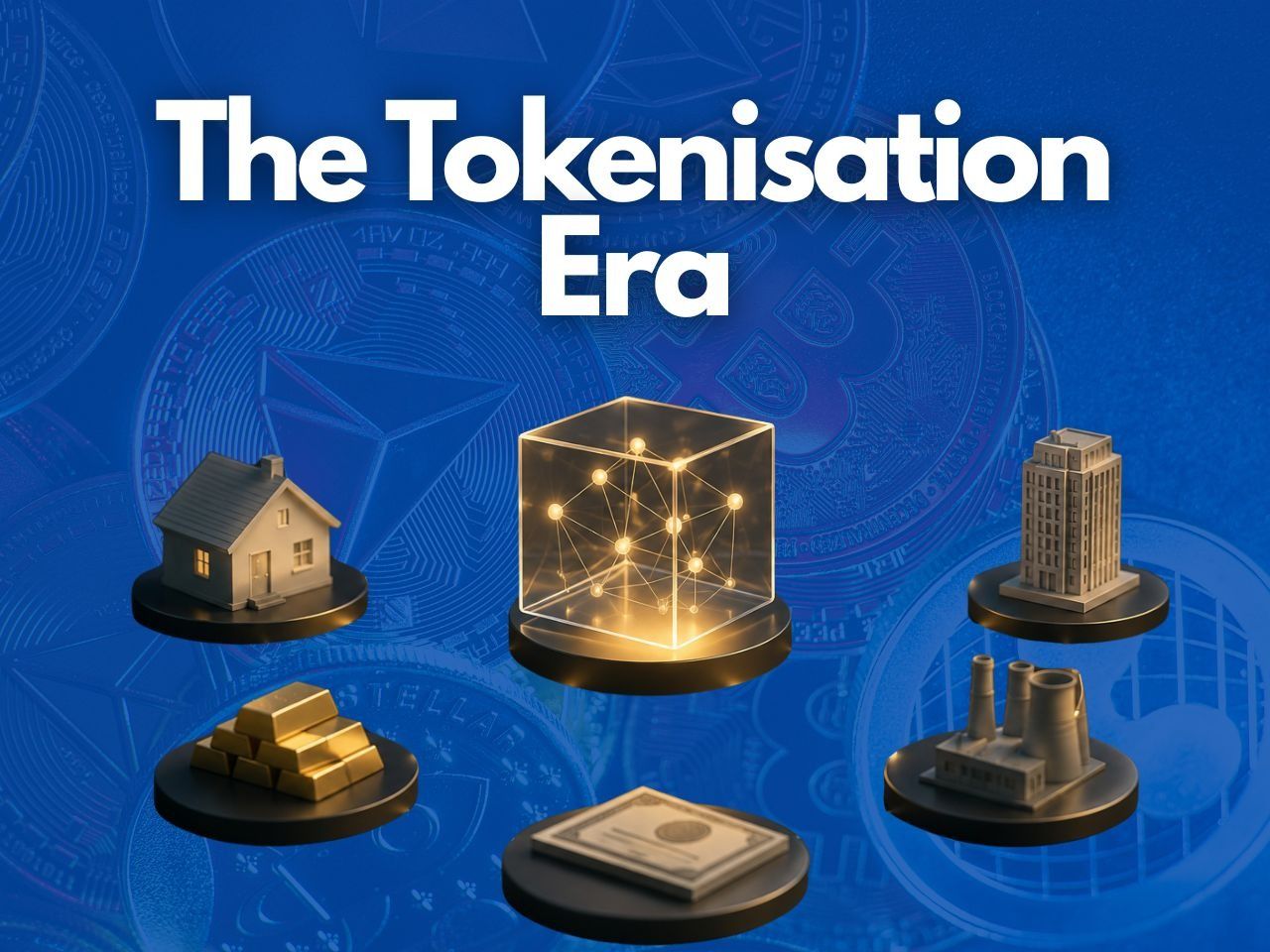
The same concept can be applied to:
- Real estate
- Gold and precious metals
- Government bonds
- Private credit
- Infrastructure projects
- Private equity investments
- Carbon credits
- Collectibles and luxury assets
Instead of ownership being represented by physical documents or traditional registries, it is represented digitally on a blockchain network.
Why Is Everyone Talking About Real-World Assets (RWAs)?
One of the biggest trends driving tokenisation today is the rise of Real-World Assets, commonly referred to as RWAs.
RWAs are physical or traditional financial assets that are brought onto blockchain-based infrastructure.
For years, blockchain was largely associated with crypto-native assets. Today, however, the conversation is shifting toward bringing tangible economic value onto digital networks.
This transition is important because it connects blockchain technology to industries worth trillions of dollars.
Rather than creating entirely new asset classes, tokenisation seeks to improve how existing assets are managed and exchanged.
The Problems Tokenisation Claims to Solve
Traditional financial systems often involve multiple intermediaries, extensive paperwork, settlement delays, and limited accessibility.
Tokenisation aims to address several of these inefficiencies.
Fractional Ownership
Many high-value assets remain inaccessible to retail investors.
Tokenisation allows assets to be divided into smaller ownership units, potentially lowering entry barriers and broadening participation.
Improved Liquidity
Certain assets, such as commercial real estate or private equity investments, can be difficult to sell quickly.
A tokenised structure could enable easier transfers and secondary market activity.
Faster Settlement
Traditional transactions often require days to settle.
Blockchain-based systems can significantly reduce settlement timelines through automated execution mechanisms.
Enhanced Transparency
Every transaction recorded on a blockchain creates an auditable trail, improving visibility into ownership and transfer history.
Lower Administrative Costs
Smart contracts can automate processes that traditionally require extensive manual intervention, reducing operational overhead.
Why Startups Are Excited About Tokenisation
For startups, tokenisation is not simply another blockchain trend.
It represents an opportunity to build entirely new layers of financial infrastructure.
Just as fintech startups transformed payments, lending, and wealth management over the past decade, a new generation of companies is exploring how tokenisation can modernise capital markets and asset ownership.
Emerging startups globally are working on:
- Tokenised real estate platforms
- Digital securities infrastructure
- Asset-backed lending ecosystems
- Institutional blockchain networks
- Compliance and regulatory technology
- Token issuance platforms
- Digital custody solutions
The opportunity lies not only in creating tokenised assets but also in building the tools, compliance frameworks, marketplaces, and infrastructure required to support them.
Where Does India Fit Into This Picture?
India’s digital transformation over the past decade has demonstrated how technology can reshape large-scale systems.
From UPI to Aadhaar and Digital Public Infrastructure, the country has repeatedly shown its ability to adopt technology-driven solutions at scale.
As tokenisation gains global momentum, India is increasingly becoming part of the conversation.
Factors contributing to this interest include:
- A rapidly growing startup ecosystem
- Expanding fintech innovation
- Strong digital infrastructure
- Growing investor participation
- Increasing focus on financial inclusion
- The emergence of global financial hubs such as GIFT City
While regulatory clarity around several aspects of digital assets continues to evolve, industry stakeholders believe India has the ingredients necessary to become a significant participant in the tokenisation economy.
The Challenges Ahead
Despite the enthusiasm, tokenisation remains an evolving industry.
Several critical questions still need answers.
How should tokenised assets be regulated?
What investor protection mechanisms will be required?
How will compliance and identity verification be handled?
What standards should govern cross-border transactions?
How can regulators balance innovation with financial stability?
The answers to these questions will likely determine the pace and scale of adoption in the coming years.
Beyond Crypto: A New Chapter for Blockchain
For much of the past decade, blockchain’s identity was closely tied to cryptocurrency markets.
Today, that narrative is beginning to change.
The industry’s focus is increasingly shifting from speculative digital assets to practical applications that connect blockchain technology with real economic activity.
Tokenisation sits at the centre of that transition.
Whether it ultimately transforms global finance at scale remains to be seen. What is clear, however, is that the conversation has moved far beyond cryptocurrency.
The next phase of blockchain innovation may not be about creating new digital assets.
It may be about reinventing how the world’s existing assets are owned, traded, and accessed.