
In an era where social media influence is often measured in followers, likes and viral trends, a growing number of young digital creators are beginning to ask a bigger question — can online popularity translate into real-world impact?
For Gen Z content creator Subhashree Sahu, the answer appears to be yes.
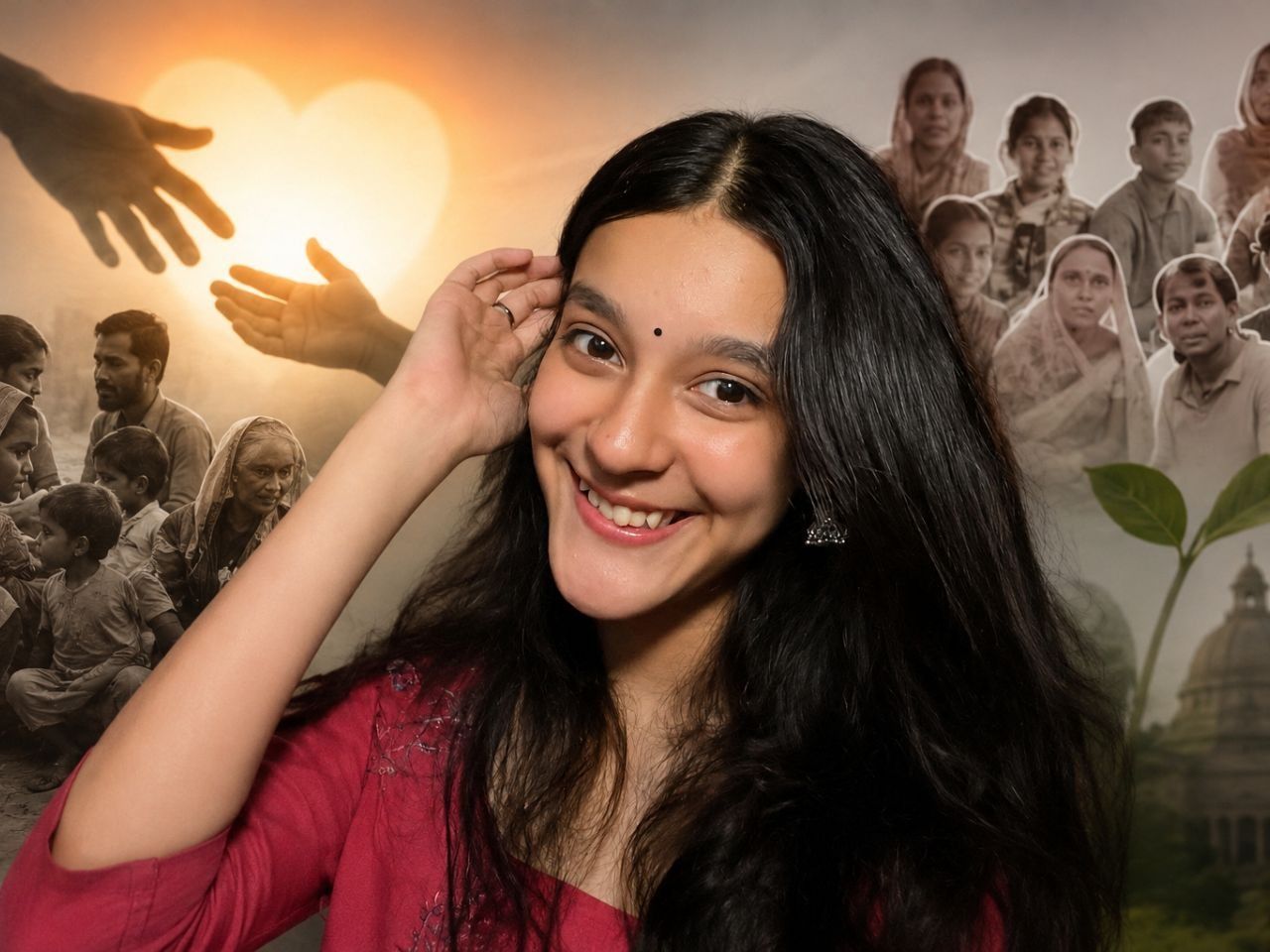
The young influencer, who has rapidly built a strong digital presence through lifestyle content, vlogs and youth-focused storytelling, has now stepped into a much larger conversation — poverty, dignity and social reform. In a move that marks a shift from entertainment-driven influence to purpose-led advocacy, Sahu has formally volunteered to become a Youth Ambassador for the “Begging-Free India” movement.
The initiative, aligned with the United Nations Sustainable Development Goals of No Poverty (SDG-1) and Zero Hunger (SDG-2), aims to create awareness around rehabilitation, social protection and sustainable alternatives for people forced into begging. What makes Sahu’s involvement noteworthy is not just her digital reach, but the timing of it — at a moment when India’s young internet generation is increasingly being viewed as a force capable of shaping social discourse beyond screens.
A Digital Creator Looking Beyond Content
Subhashree Sahu belongs to a new generation of internet personalities who have grown their audience organically through relatability and constant engagement. Still a student, she has already amassed a sizable online following in a remarkably short span of time.
Her Instagram account currently has over 8.57 lakh followers, while her YouTube channel has crossed 1.2 lakh subscribers. Together, her content ecosystem has generated more than one crore views in just two years.
For many creators, such numbers become a destination in themselves. But Sahu now appears keen on redirecting that influence toward social causes.
The creator, often described by followers as a “Digital Dreamweaver” and “Vibe Architect,” says she wants younger audiences to become more sensitive toward people living on the margins of society.
“Poverty is the worst curse on humanity and civilization which forces people to beg for food,” Subhashree Sahu said while announcing her support for the movement. “I want the future generation to care about these deprived and destitute fellow citizens.”
Her statement reflects a growing trend among younger creators who are increasingly blending digital culture with social responsibility — an evolution that brands, governments and civil society groups are all beginning to notice.
The Movement Behind the Mission
The “Begging-Free India” initiative is being led by Citizens for Begging-Free India (CBFI), a social movement working alongside the guidelines issued by the National Human Rights Commission (NHRC) and the Ministry of Social Justice and Empowerment’s SMILE-Beggary project.
Unlike traditional anti-begging approaches that largely focused on criminalisation, the movement advocates rehabilitation-centric solutions. Its larger mission revolves around decriminalising begging while simultaneously enabling access to education, skill development, rehabilitation and sustainable livelihood opportunities for vulnerable communities.
The campaign is being driven by a diverse network of economists, former bureaucrats, corporate leaders and social changemakers. Germany-based NRI doctor Dr. Parth Chopra serves as the Convener of the initiative, while Chennai-based engineer Gayathribai Ravindher is associated as Director.
For Sahu, the movement’s rehabilitation-first philosophy appears to be a key reason behind her association.
She has publicly praised the NHRC’s recent social protection guidelines for people engaged in begging and has also highlighted the Government of India’s SMILE scheme — short for Support for Marginalized Individuals for Livelihood and Enterprise — as a significant intervention aimed at restoring dignity and creating sustainable opportunities.
Why Gen Z Matters in Social Change
What makes this development particularly interesting is the demographic Sahu represents.
India today has one of the world’s largest Gen Z populations — digitally connected, socially vocal and highly responsive to internet-led narratives. Movements that once relied on institutional outreach are increasingly leveraging influencers and creators to build emotional resonance with younger audiences.
Sahu’s involvement signals an attempt to bridge that gap.
According to the announcement, she is willing to collaborate with institutions including the NHRC, the Ministry of Social Justice and Empowerment and Citizens for Begging-Free India to spread awareness and encourage youth participation in building a more equitable society.
The messaging is clear: the campaign does not want Gen Z to remain passive consumers of content. Instead, it wants young audiences to engage with issues of poverty, rehabilitation and human dignity in a more meaningful way.
That shift is becoming increasingly visible across India’s creator economy.
Influencers are no longer confined to fashion, entertainment or lifestyle niches. Many are gradually entering conversations around mental health, sustainability, education, gender equality and public welfare. In many ways, Sahu’s transition mirrors a broader global pattern where creators are evolving into social communicators with the ability to influence public attitudes at scale.
Following the Path of Cause-Driven Public Figures
The move also places Sahu within a growing ecosystem of public personalities who are using popularity to amplify developmental and humanitarian causes.
The announcement draws parallels with personalities such as Priyanka Chopra Jonas, Dia Mirza and Prajakta Koli — figures who have balanced entertainment visibility with advocacy-led public engagement.
While Sahu is still at an early stage in her public journey, her association with a cause-driven campaign suggests that India’s influencer ecosystem may be entering a more socially conscious phase.
And perhaps that is the larger story here.
At a time when internet fame can disappear overnight, creators who align themselves with meaningful social issues may ultimately build something more enduring than virality — credibility, responsibility and impact.
For the “Begging-Free India” movement, partnering with young creators could help the campaign reach millions of digitally active Indians who may otherwise remain disconnected from conversations around poverty and rehabilitation.
For Subhashree Sahu, meanwhile, this marks an attempt to redefine influence itself — from generating views to generating awareness.
And in a country where social media increasingly shapes public opinion, that transition could matter far more than follower counts alone.