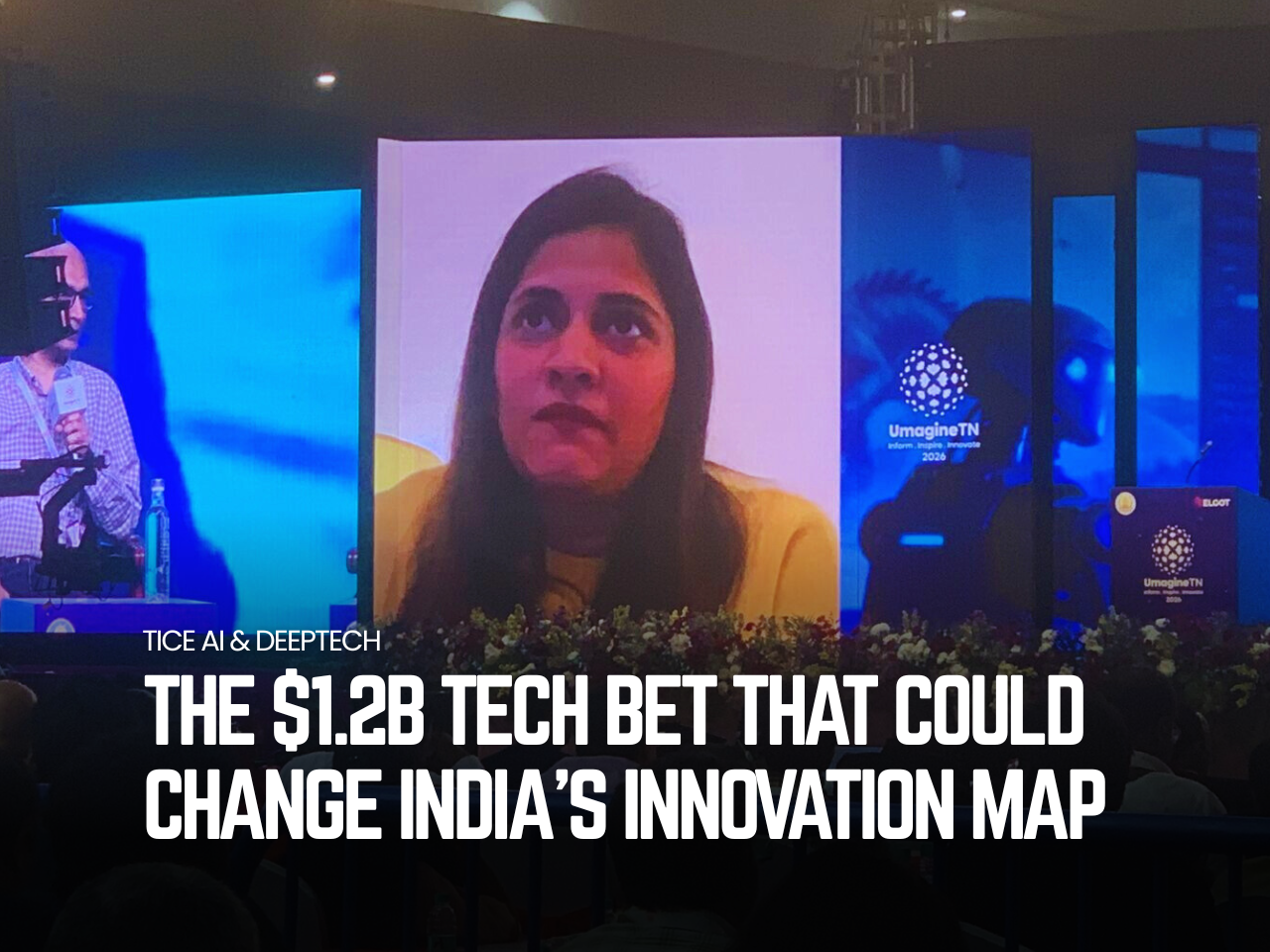
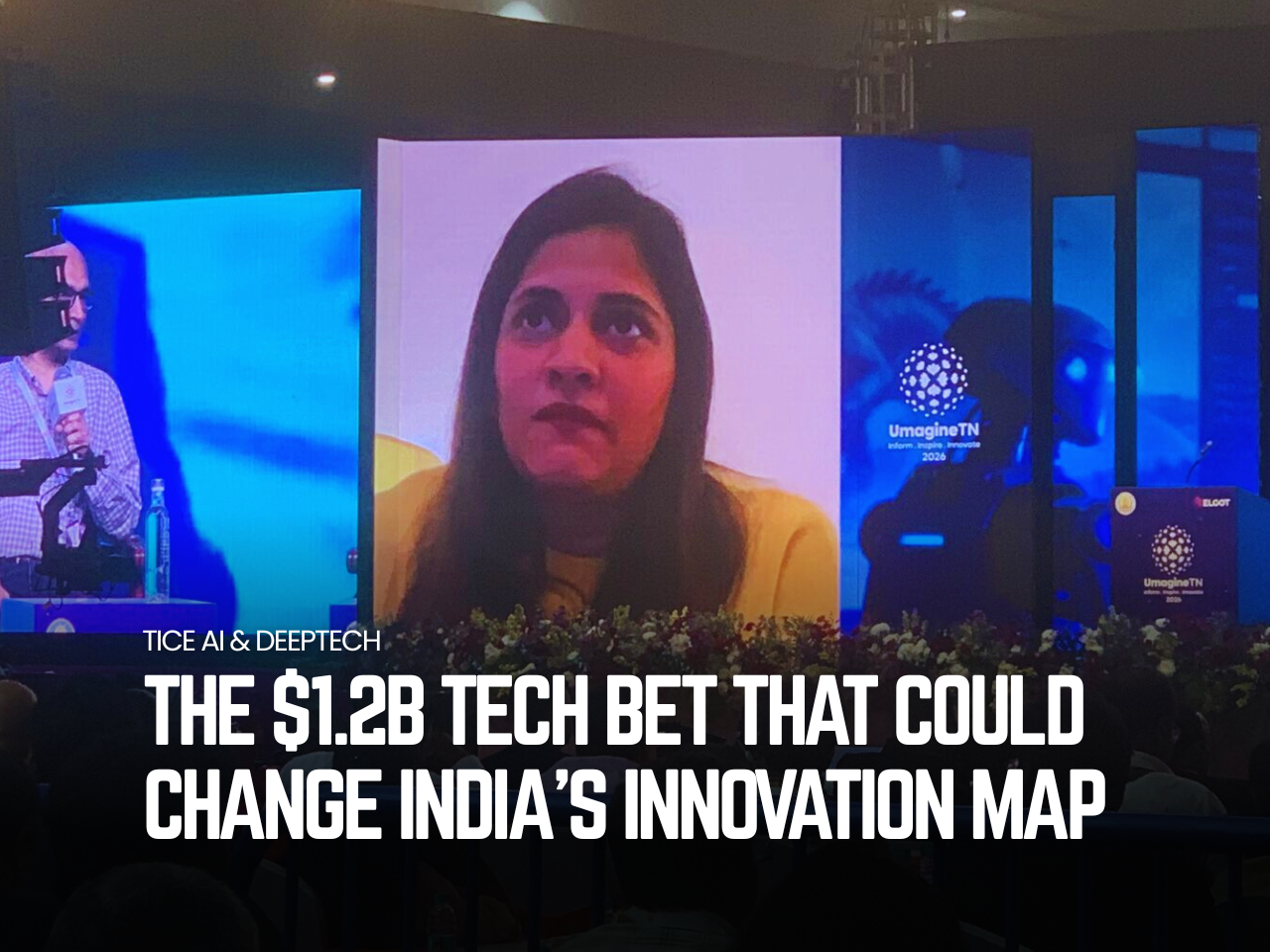
Tamil Nadu’s flagship technology summit UmagineTN 2026 concluded with a wave of optimism and bold shifts in strategy as the state secured $1.2 billion in investment commitments and unveiled India’s first Deep-Tech Startup Policy (2025–26) — setting the stage for a new era of AI, biotech, robotics, and frontier technology entrepreneurship in South India.
The commitments, projected to create over 4,200 new jobs, signal how Tamil Nadu is not only competing in the national innovation landscape but positioning itself on the global deep-tech map.
/fit-in/580x348/filters:format(webp)/tice-news-prod/media/media_files/2026/01/12/umaginetn-2026-5-2026-01-12-17-05-11.png)
When Policy Meets Possibility
The 2026 edition of the summit arrived at a pivotal moment. Nations and states worldwide are recalibrating their technology agendas, driven by AI disruption, semiconductor nationalism, biotech breakthroughs, and talent wars. Amid that competition, Tamil Nadu chose not just to attract capital — but to shape a strategy.
Organised jointly by ELCOT, CII, NASSCOM, iTNT & StartupTN under the Ministry of Information Technology, UmagineTN gathered global investors, founders, universities, digital enterprises, and policymakers — not merely as spectators, but as co-architects of the digital future.
The headline, however, was unmistakable: the launch of the Deep-Tech Startup Policy, designed to nurture India’s highest-complexity startups — the ones that demand science, hardware, patents, long gestation cycles, and specialist talent.
Tamil Nadu committed to training 10,000 students and professionals, backing early-stage R&D, and enabling the commercialisation of innovations that rarely find market pathways in developing economies.
/fit-in/580x348/filters:format(webp)/tice-news-prod/media/media_files/2026/01/12/umaginetn-2026-4-2026-01-12-17-03-58.png)
Solving the Hard Problem of Deep Tech
Deep-tech is not venture-friendly by default. It requires capital, patience, labs, compute, patents, mentors, and geopolitical partnerships. These are not the ingredients that typically attract angel investors or traditional accelerators.
Tamil Nadu confronted that bottleneck head-on.
By directing policy muscle toward AI, biotech, quantum, robotics, advanced materials, and space technologies, the state sought to tackle the “lab-to-market gap” — the very chasm that keeps deep-tech locked inside universities instead of scaling into unicorns.
And investment followed policy.
The $1.2 billion committed at UmagineTN targeted job creation, ecosystem acceleration, and technology exports — demonstrating how governance, academia, and industry can align around a shared thesis: deep tech is the next big economic frontier.
/fit-in/580x348/filters:format(webp)/tice-news-prod/media/media_files/2026/01/12/umaginetn-2026-3-2026-01-12-17-04-26.png)
A New Future for Tamil Nadu’s Tech Identity
The resolution did not end at announcements. It manifested in collaboration and community.
Entrepreneurs, investors, speakers, and ecosystem partners described UmagineTN as more than a summit — calling it a collective movement. As one participant reflected, “UmagineTN is always close to my heart and our fellow entrepreneurs hailing from Tamil Nadu. We played multiple roles — organiser, ecosystem partner, exhibitor and more. It was inspiring to meet peers and builders who shared their expertise on panels and workshops.”
This sentiment mattered because deep-tech ecosystems rarely thrive on policy alone. They require a cultural enginepowered by founders, students, mentors, and risk capital — something Tamil Nadu appears intent on cultivating.
/fit-in/580x348/filters:format(webp)/tice-news-prod/media/media_files/2026/01/12/umaginetn-2026-2-2026-01-12-17-04-46.png)
Positioning Tamil Nadu in the Global Deep-Tech Economy
With UmagineTN 2026 now closed, a larger strategic question looms: Can Tamil Nadu build a long-cycle innovation economy — not just a software services sector?
If it executes on talent training, investment deployment, startup support, and global partnerships, the answer could redefine the region’s competitiveness for decades.
In a world where countries compete for quantum researchers, semiconductor fabs, biomanufacturing clusters, and AI compute — Tamil Nadu chose to enter the race. Not cautiously, but assertively.
And the tech community, both local and global, is watching.