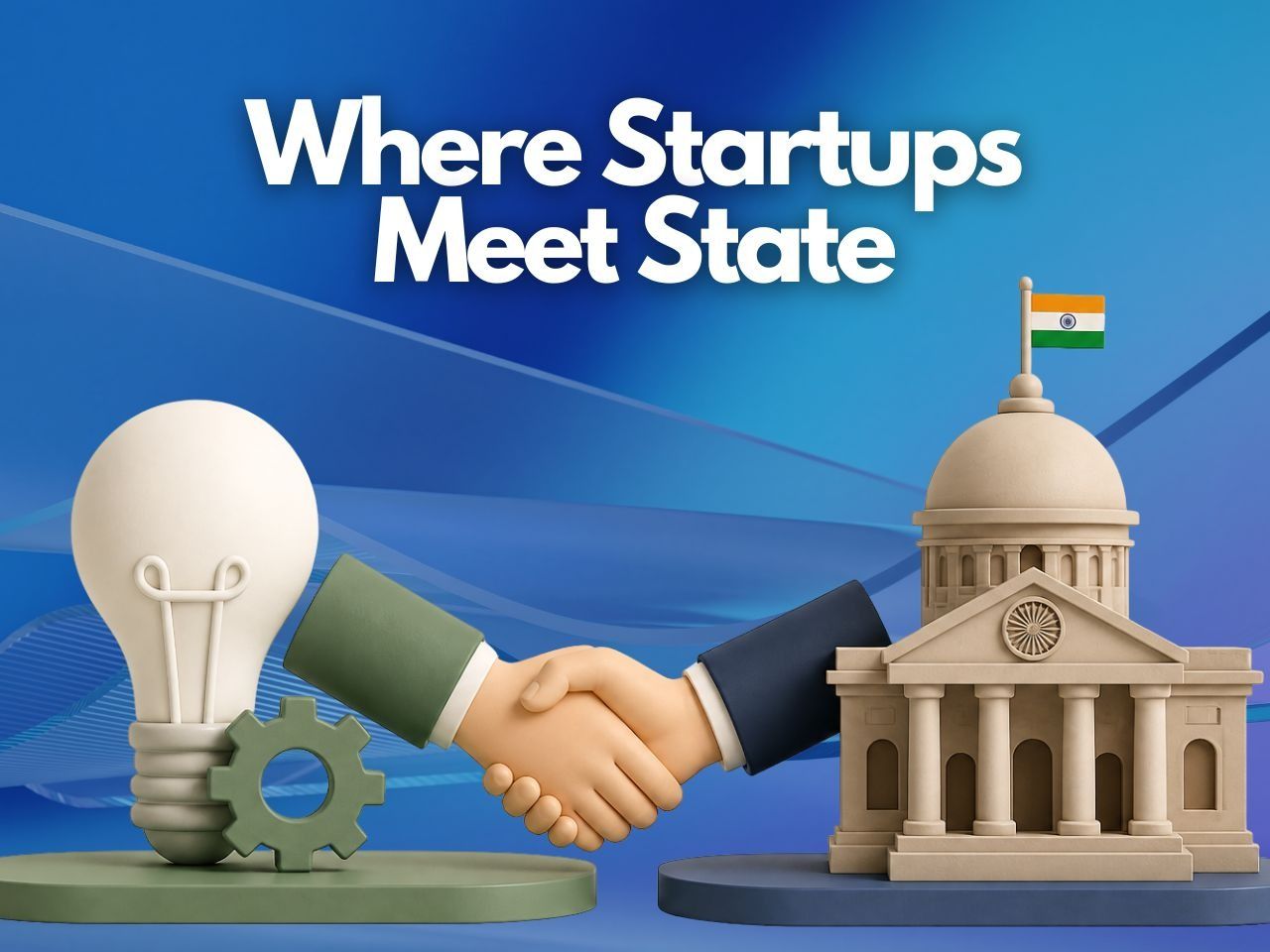

For years, many entrepreneurs have treated government as something to comply with, avoid or engage only when a tender appears. That mindset is no longer enough. In today’s India, government is not just a regulator. It is also an investor, customer and enabler. GEMS is being built to help startups, SMEs, incubators and investors engage that reality in a more structured, credible and outcome-oriented way.
Too many startups think government business begins with a tender. It does not. It begins much earlier – with readiness.
“If a founder waits to think about government only when a tender appears, they are already late.”
I say that not only as Program Champion of GEMS, but as a serial entrepreneur who has built ventures across different phases of business and the startup ecosystem. Looking back, one of the mistakes I made in my own journey was this: I kept away from engaging deeply with the government ecosystem. In doing so, I missed not just relationships and learning, but real revenue-building opportunity.
Like many entrepreneurs, I once saw government mostly as a regulator – something to comply with, work around or avoid unless absolutely necessary. That was a narrow view.
Because government today is not just a regulator. For entrepreneurs, innovators, startups and SMEs, government is RICE:
R – Regulator
I – Investor
C – Customer
E – Enabler
And perhaps that acronym stays with us for another reason.
“Government today is RICE: Regulator, Investor, Customer, Enabler. Rice is our staple food. In the same way, government engagement can no longer be distant, occasional or optional for entrepreneurs.”
In today’s India, it has to become a more stable part of strategic thinking – especially for innovators, startups and SMEs building for scale. That is what GEMS seeks to enable in a cohesive way.
Not by pushing founders toward government in an opportunistic manner, but by helping them understand government as a full ecosystem actor – one that shapes markets, supports innovation, creates access and in many sectors can become a meaningful customer.
Because if a founder waits to think about government only when a tender appears, they are already late.
The real work starts much earlier:
-understanding public-sector use cases,
-learning procurement logic,
-building documentation discipline,
-packaging solutions clearly,
-preparing for compliance,
-and being ready to move from pilot to procurement.
That is not just about selling to government. It is about becoming capable of serving larger systems with seriousness and accountability. This is where GEMS becomes relevant.
One of the strongest design choices behind GEMS is that Year 1 is being built as a partner-funded, ecosystem-led model, not as an institution-funded program. That matters because it grounds the platform in real value creation from day one. The logic is simple: the first direct beneficiaries are those who want stronger commercial outcomes from startup portfolios = incubators, accelerators, investors, funds, startups, SMEs and selected ecosystem partners.
That is not a weakness. It is a strength. Because it means GEMS has to earn its place in the ecosystem.
Take incubators.
Today, incubators cannot be satisfied with only hosting startups, running sessions or preparing founders for demo day. They are increasingly expected to support measurable commercialisation outcomes. Yet one major gap remains underbuilt: government-readiness.
A startup may be incubated well and still know very little about how public-sector opportunity actually works. It may not know how to interpret a government problem statement, how to present itself in a procurement-friendly format, how to package pricing, how to think through implementation and support or how to move beyond pilot conversations into actual transaction pathways.
GEMS gives incubators a way to add that missing layer. It helps them support startups not just in becoming market-ready, but in becoming government-ready and transaction-ready.
Now look at investors.
For years, investors have added value through capital, introductions, GTM advice and follow-on support. But there is another kind of value-add that is becoming increasingly important for the right sectors: government revenue readiness.
If a portfolio company can build a credible path into public-sector demand, that can materially strengthen its revenue profile, validation narrative and scale potential. But that does not happen by chance. It requires preparation, structure and a very different go-to-market discipline from selling only to private customers.
That is why the GEMS model includes offerings for portfolio readiness, sector-fit analysis, government GTM readiness sprints and structured support programmes.
And then there are the startups and SMEs themselves.
Many founders still think government engagement is too slow, too complicated, too political or something to think about later. I understand that instinct because I, too, once saw the state from a distance. But I believe that mindset needs to change.
If government is regulator, investor, customer and enabler, then it is not something entrepreneurs should simply avoid. It is something they should understand.
Not only for revenue.
Not only for growth.
But also because entrepreneurs, innovators and SMEs are not separate from the nation-building journey. They are part of it.
India will not solve its large public challenges only through policy. It will solve them through policy plus execution. Through institutions plus innovators. Through office-bearers plus entrepreneurs.
That is why government engagement should not be seen only as a business tactic. It should also be seen as a contribution.
When startups and SMEs engage seriously with public systems, they do more than build their own ventures. They help improve delivery, efficiency, access, services and problem-solving in the country itself. They participate in nation-building alongside government and its office bearers.
That is a much bigger idea than simply “winning a contract.” And yet, none of this happens well if startups are not ready.
That is why GEMS has been designed as more than a concept. Its stack includes readiness assessment, GEMS-Ready certification, solution-pack building, innovation procurement briefs, conversion clinics and an intelligence layer. This is an attempt to build the missing conversion infrastructure between startup capability and public-sector opportunity.
What gives me confidence is that the model is not built on fragile assumptions. It does not depend on Year 1 revenue sharing, large institutional grants or success fees linked to contract awards. It is built on paying incubators, paying investors, premium startup participation, sponsor-supported activations and repeatable enablement products. That makes it commercially grounded and institutionally safer.
To me, that is the larger point.
India has already built startup supply.
The next need is not just more ambition.
The next need is conversion infrastructure.
And conversion begins with a mindset shift.
From seeing government only as compliance to seeing government as a full ecosystem actor.
From seeing public systems only as slow to seeing them as scale opportunity.
From seeing public-sector engagement only as revenue to seeing it as both revenue and responsibility.
That is why I believe incubators, investors, startups and SMEs should care about GEMS before government does in a formal institutional sense. Because the early movers here will not only access opportunity sooner. They will help define the pathways themselves.
And perhaps that is the real opportunity before us:
-to build ventures that grow,
-to build institutions that trust innovation,
-and to build a country where entrepreneurship and public purpose work more closely together.
If you run an incubator, back founders, manage a startup portfolio or are building a startup or SME that could serve public systems, this is the right time to join the first GEMS cohort-building conversations. The businesses that engage early with government-readiness will be better placed not only to grow revenue, but to contribute to nation-building in more tangible ways. Email me on rajeshjoshi@tice.news.
About the author: Rajesh Inderkumar Joshi is Program Champion, GEMS and works at the intersection of startup ecosystems, market access and public-sector enablement.