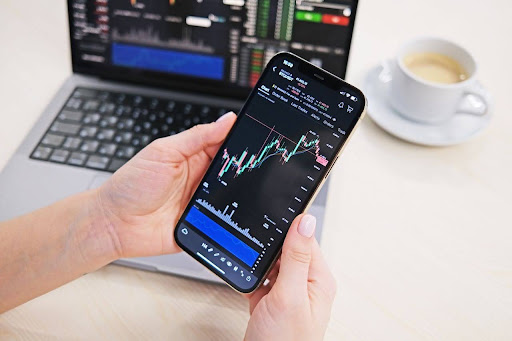
If you’ve bought crypto recently, you’ve probably noticed something odd: the actual blockchain transaction often isn’t the slowest part of the process. The issue usually sits earlier in the chain: it’s the movement of money from your bank account or card into a crypto platform.
Hence today’s blog post: payment rails. And in 2026, the quality of those rails often determines whether you get exposure to a market move in seconds or miss it entirely.
Most crypto content out there focuses on tokens, exchanges, or trading strategies, which is understandable. The problem is, very few explain the infrastructure underneath the purchase itself. But that’s where many of the biggest changes have happened over the last two years.
So, here’s the short version: faster crypto purchases now depend less on blockchain innovation and more on advances in traditional payment systems, open banking networks, instant settlement schemes, and increasingly, regulated stablecoins acting as liquidity bridges. The longer version—the more useful one—is down below.
What Are Payment Rails?

Source: Pexels
First, let’s cover the basics: payment rails are the networks that move money between financial institutions. Simple as that.
When you tap a card, send a bank transfer, or use an instant payment service, you’re using a payment rail. Now, crypto platforms don’t create these systems. They do, however, plug into them.
Today, the most important rails for crypto purchases include:
- Card networks such as Visa and Mastercard
- Open banking infrastructure
- SEPA Instant in Europe
- Faster Payments in the UK
- FedNow and RTP in the United States
- PIX in Brazil
- Stablecoin settlement networks
Fastest crypto platforms are often the ones with the smartest payment integrations, not necessarily the fastest matching engines.
Card Networks Still Dominate First-Time Purchases
Cards are still the easiest on-ramp for many retail users. A debit or credit card transaction can be authorized almost instantly, allowing a platform to credit funds and complete a crypto purchase within minutes.
However, it’s important to know that card payments come with trade-offs.
Card networks were built around consumer protection; chargebacks exist for a reason. From a crypto platform’s perspective, though, reversibility creates risk. A user could buy crypto, transfer it away, and later dispute the card transaction.
That’s why card purchases typically carry:
- Higher fees
- Lower transaction limits
- Additional fraud checks
- Stronger identity verification requirements
Many providers now rely heavily on EMV 3-D Secure 2 (3DS2) authentication. Why? Because 3DS2 analyzes device data, behavioral signals, and transaction patterns to reduce fraud while maintaining a relatively smooth checkout experience.
For legitimate users, that means fewer declined transactions. For platforms, it means lower fraud losses. Win-win.
Open Banking Has Become a Serious Competitor
Open banking has become one of the most important developments in crypto payments. With it, there’s no need to enter card details. You simply authorize a payment directly from your bank account, and the platform can often begin processing the purchase much faster than with traditional bank transfers.
In Europe and the UK, open banking adoption continues to grow because it offers several advantages:
- Lower processing costs
- Reduced fraud exposure
- No card interchange fees
- Direct account-to-account transfers
Instant Bank Rails Are Changing Expectations
Several national payment systems now support near-real-time settlement.
SEPA Instant
For European users, SEPA Instant has become very important. The scheme allows euro transfers to settle within seconds across participating institutions, which dramatically reduces funding delays. Recent EU initiatives have pushed broader adoption of instant euro payments across member states.
Faster Payments
In the UK, Faster Payments enables near-instant transfers between participating banks. Many crypto platforms use it to support rapid account funding and withdrawals.
FedNow and RTP
The United States has historically lagged behind Europe in retail payment speed (unfortunate, but true). However, this began to change with the rollout of FedNow alongside existing Real-Time Payments (RTP) infrastructure.
For crypto exchanges and brokers, this means faster deposit confirmation. Plus, reduced settlement uncertainty.
PIX
Brazil’s PIX system is one of the most successful instant payment networks globally. It has helped drive significant crypto adoption because moving funds into digital asset platforms is remarkably simple and fast.
What About Stablecoins?
Stablecoins now act as liquidity bridges between traditional finance and crypto markets. So, instead of moving fiat currency through multiple intermediaries, platforms can convert incoming funds into stablecoins and use those assets to access liquidity pools, trading venues, and settlement networks more efficiently.
Stablecoins have grown into a foundational part of digital asset infrastructure, with global market capitalization exceeding $230 billion by mid-2025. But their role extends beyond trading.
Many firms now use stablecoins for:
- Cross-border settlement
- Treasury operations
- Liquidity management
- Institutional transfers
That said, regulation is tightening.
PSD3 and MiCA Are Reshaping Crypto Payments
European regulators spent years trying to close the gap between traditional finance rules and crypto markets. The Markets in Crypto-Assets Regulation (MiCA) now provides a unified framework for crypto service providers operating within the European Union. It covers crypto-asset services, issuers, and specific requirements for stablecoins.
At the same time, PSD3 proposals aim to modernize payment regulation, strengthen fraud prevention, and improve consumer protections across digital payments. For traders, this matters because compliance increasingly affects payment speed.
A platform with strong onboarding processes, verified banking relationships, and regulatory approvals can often process transactions faster than one constantly dealing with compliance bottlenecks.
In other words, regulation and speed are no longer opposites. In many cases, they’re becoming linked.
A Real-World Example of a Fast Crypto Purchase
Theory is useful, but let’s get practical for a second, too. Let’s say you decide to gain exposure to Bitcoin after a major market announcement.
You log into a platform, complete identity verification, and choose an instant bank transfer. Then, your bank authorizes the payment through open banking.
Funds move over an instant payment rail such as SEPA Instant, and the platform receives confirmation within seconds. Liquidity providers then source the required crypto assets, often using stablecoin settlement infrastructure behind the scenes to keep execution fast.
From the user’s perspective, the process is typically straightforward: fund an account, complete the purchase, and manage your holdings through the same platform. For example, Axi’s all-in-one crypto platform is designed around this model, bringing funding, trading, and custody tools together in one place.
Ownership Matters
Fast payment rails solve the funding problem, but they don’t tell you what you’re actually buying.
Some platforms offer direct ownership of crypto assets, while others provide exposure through derivatives such as Contract for Differences (CFDs) or perpetual contracts. The payment experience may look nearly identical at checkout, but custody, regulatory treatment, leverage, and risk can differ substantially.
That’s why it pays to look beyond deposit speed. So, before funding an account, check whether you’re purchasing the underlying asset or accessing price exposure through a derivative product. The difference affects everything from how you store your position to how you manage risk.
What Changes Next?
A few years ago, instant deposits were a competitive advantage. Today, they’re table stakes.
The more interesting change is happening behind the scenes. As payment rails mature, traders are paying less attention to how money enters a platform and more attention to what happens after it arrives. Can the platform access deep liquidity during volatile market conditions? How quickly can funds be withdrawn? Will a transaction trigger additional compliance checks when markets are moving fast? That’s where the next round of competition is likely to play out.
For traders, the practical takeaway is simple: a fast crypto purchase depends on far more than blockchain technology. The quality of the payment rail still matters, but so do liquidity access, settlement infrastructure, custody arrangements, and regulatory compliance.
The post What Payment Rails Power Fast Crypto Purchases in 2026 appeared first on Ventureburn.