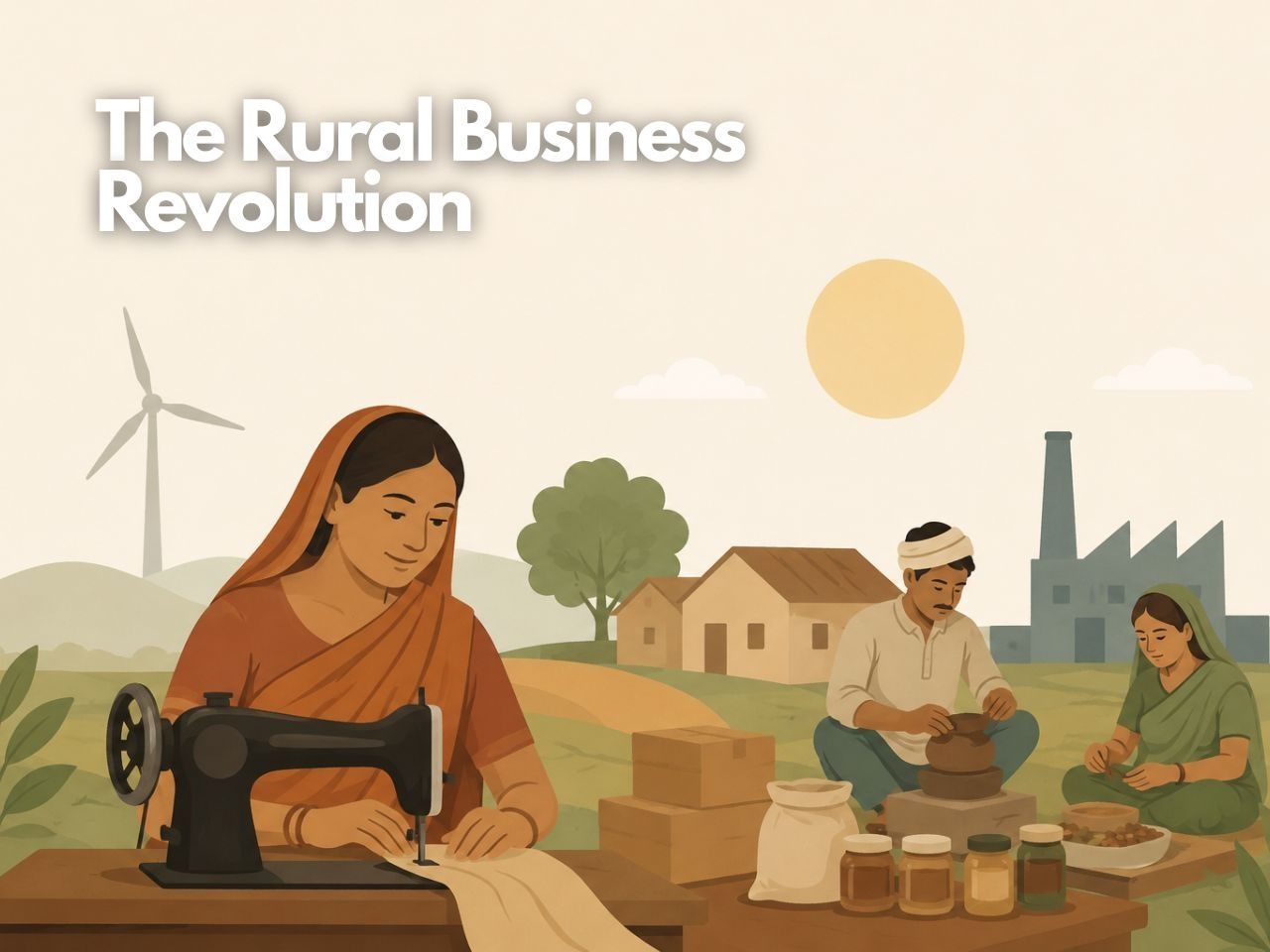

In thousands of villages and small towns across India, a quiet entrepreneurial shift is unfolding. Women are opening tailoring units from their homes, first-generation business owners are launching small manufacturing workshops, and rural youth are setting up service enterprises that were once unimaginable in their local communities.
At the heart of many of these stories is the Prime Minister’s Employment Generation Programme (PMEGP), a flagship initiative of the Ministry of MSME that is steadily becoming one of India’s most significant grassroots entrepreneurship programmes.
At a time when India is increasingly focusing on self-reliance, local manufacturing, and inclusive economic growth, PMEGP has emerged as a major driver of rural enterprise creation and women-led entrepreneurship. Implemented through the Khadi and Village Industries Commission (KVIC), the programme has generated over 36 lakh jobs while helping establish more than four lakh micro-enterprises during the 15th Finance Commission cycle.
More importantly, the scheme is reshaping the economic participation of women and socially disadvantaged communities in regions where formal employment opportunities and access to business financing have historically remained limited.
Designed to support first-generation entrepreneurs in the non-farm sector, PMEGP provides Margin Money subsidy on bank-linked loans, helping beneficiaries establish small businesses and sustainable livelihood ventures. Over the years, the programme has evolved beyond a traditional subsidy scheme into a large-scale economic inclusion initiative focused on entrepreneurship-driven development.
According to official data, PMEGP fully utilised its approved budgetary allocation of ₹13,554.42 crore during the 15th Finance Commission period spanning FY2021-22 to FY2025-26. During this period, the scheme facilitated the establishment of 4,03,706 micro-enterprises across India, slightly surpassing its original target of 4,02,000 units.
The achievement reflects the rising appetite for entrepreneurship at the grassroots level, particularly among women and rural youth seeking self-employment opportunities amid changing economic conditions.
Women Entrepreneurs Drive the Growth Story
One of the most striking aspects of PMEGP’s recent performance has been the growing participation of women entrepreneurs.
Nearly 40% of the enterprises established under the scheme were promoted by women beneficiaries, highlighting a major shift in rural and semi-urban entrepreneurship trends. From small manufacturing businesses to food processing units and service enterprises, women are increasingly using PMEGP support to build independent income streams and create local employment opportunities.
Financial inclusion has also played a central role in this transformation.
Around 45% of the total Margin Money subsidy disbursed under PMEGP during the period was allocated to women entrepreneurs, giving them access to institutional financial support that has traditionally remained difficult to secure in many parts of India.
For many women beneficiaries, the programme has not only enabled business ownership but also increased financial independence, decision-making power within households, and social mobility.
The scheme’s impact has been especially visible in rural India, where access to formal employment and entrepreneurship opportunities often remains limited. Nearly 80% of all enterprises established under PMEGP are located in rural areas, making the programme a significant contributor to rural industrialisation and balanced regional economic development.
By supporting village-based industries, small service businesses, and local manufacturing units, the initiative is helping create employment closer to home while reducing migration pressures from smaller towns and villages to urban centres.
Inclusive Growth Through Grassroots Enterprise Development
Beyond women-led entrepreneurship, PMEGP has also emerged as a major instrument for social inclusion.
According to official figures, around 54% of the beneficiaries under the scheme belong to SC, ST, and OBC communities. The high participation from socially disadvantaged groups reflects the government’s broader push towards creating more equitable access to entrepreneurship and institutional finance.
For many first-generation entrepreneurs from marginalised communities, the scheme has acted as an entry point into the formal economic system by enabling easier access to bank-linked credit and subsidies.
The employment impact of the programme has also been substantial.
During the 15th Finance Commission cycle, PMEGP generated sustainable employment opportunities for nearly 36.33 lakh individuals across India. The large-scale job creation has strengthened local economic activity, particularly in regions where employment generation remains a major developmental challenge.
Officials said the programme’s performance reaffirms its role as a key driver of micro-enterprise development and entrepreneurship-led growth in the country. By combining credit-linked financial support with enterprise promotion, PMEGP continues to encourage self-employment, local innovation, and small business development at the grassroots level.
The Ministry of MSME is now expected to further strengthen the programme in the upcoming cycle with a greater focus on scalability, innovation, and wider outreach.
The timing is significant.
As India increasingly positions MSMEs, local manufacturing, and women entrepreneurs at the centre of its economic growth strategy, programmes like PMEGP are becoming critical tools for translating policy goals into on-ground economic activity.
For rural India, especially women and first-time entrepreneurs, the scheme is doing more than simply funding businesses. It is helping create local economic ecosystems where small enterprises generate employment, boost household incomes, and gradually transform communities from within.
And as the country continues its push towards self-reliance and inclusive development, PMEGP’s expanding footprint suggests that India’s next wave of entrepreneurship may well emerge not from metropolitan startup hubs, but from the villages and small towns quietly building businesses across the country.