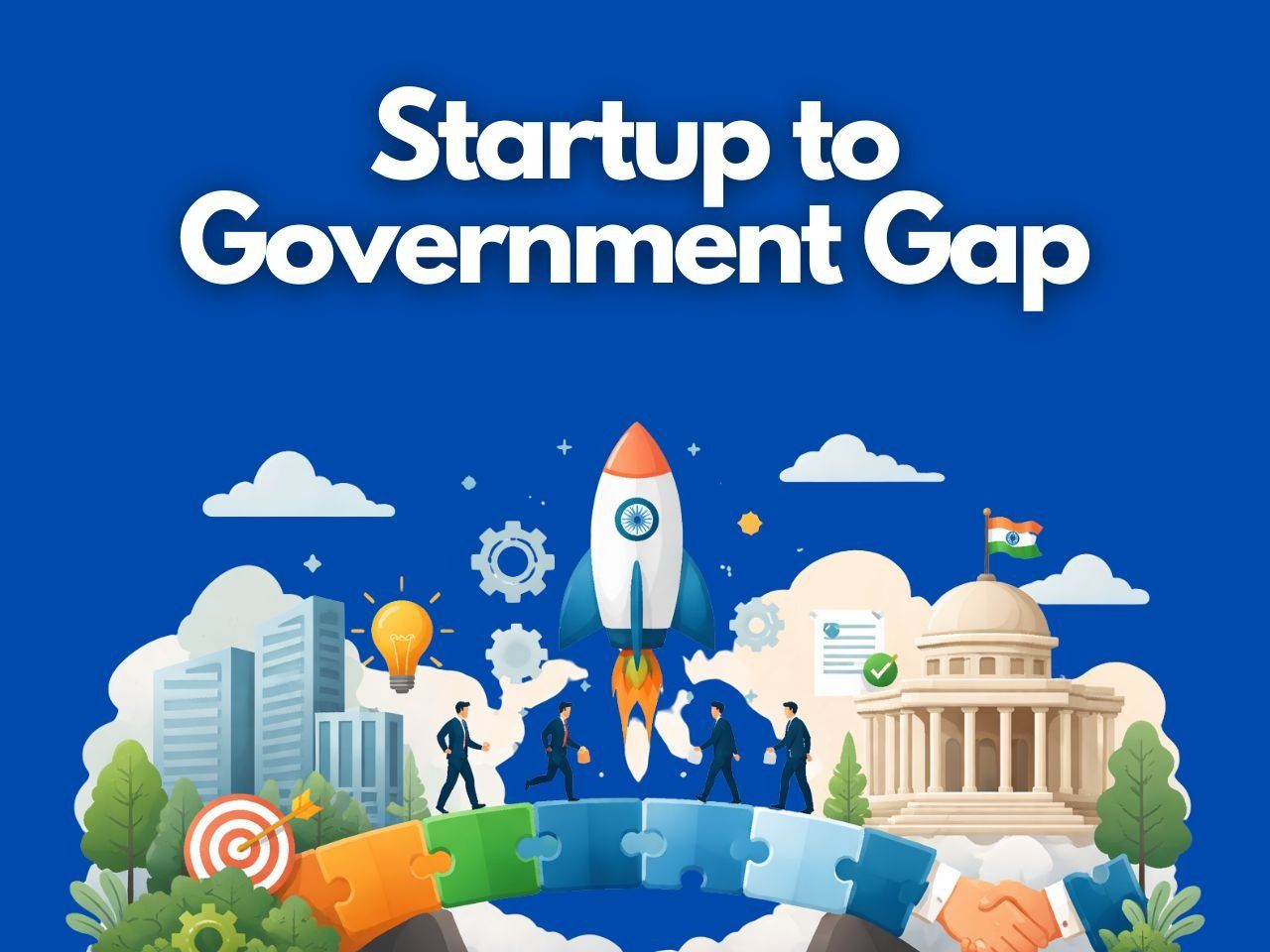

India’s startup ecosystem has reached a critical point of maturity. Over the past several years, national initiatives like Startup India, Atal Innovation Mission and NASSCOM CoE-alongside state ecosystems, incubators and investors-have propelled a generation of startups from ideation to product development and then into market ready.
The challenge is no longer building supply. India now boasts a robust pipeline of startups that are truly market-ready. Yet, a critical gap remains. Many startups that excel in the commercial market still struggle to succeed in government procurement. Interest from the public sector does not consistently translate into contracts or large-scale deployments. While challenges, hackathons, pilots and proof-of-concepts (PoCs) are common, scalable procurement remains elusive. The challenge is no longer discovery-it’s conversion.
That gap matters more than it appears.
Because government procurement is not just another sales channel. In many sectors, it is among the fastest and most scalable routes to public-sector commercialization. If India’s startup ecosystem has already produced market-ready companies, the next critical need is to help them become government-ready-and to support their journey from pilot, to procurement, to scale. This is precisely the gap we aim to close.
The issue is not a lack of innovation in India. Rather, innovation and procurement often speak different languages.
A startup may have a strong product, a credible founding team, early traction and even successful pilots. But public-sector procurement relies on accountability, structured evaluation, documented compliance, measurable outcomes and disciplined processes. Startups frequently hear they are “interesting,” “promising,” or “worth piloting,” yet this seldom results in a repeatable path to contracts.
This is exactly where a new enabling layer is needed.
- Not another showcase.
- Not another demo day.
- Not another ecosystem announcement.
India needs a procurement-enablement layer designed for conversion.
That is the logic behind our program “GEMS – Government Enablement for Market-ready Startups.” GEMS is a national platform to transform startup innovation into procurement-ready, audit-safe and scalable government solutions. Unlike a traditional marketplace, GEMS functions as a conversion engine: it enables procurement-ready briefs, startup solution packs, readiness certification, pathways from PoC to scale and governance across the journey-from intent to bid, to award, to closure. Simply put, GEMS guides startups through four key stages:
Market-Ready → Government-Ready → Pilot-to-Procure → Scaled Procurement
That is not just useful for startups. It benefits incubators seeking stronger commercialization outcomes, investors looking for portfolio value-add through government revenue readiness and public buyers wanting to adopt innovation with greater confidence, audit safety and structured accountability. The GEMS platform is best viewed not as “another showcase,” but as vital innovation procurement infrastructure designed to convert. This is also why TICE is a natural platform to launch this initiative along with Top Gun Venture Studio.
TICE is not just a media brand, but is a neutral convener – Top Gun Venture Studio a venture studio, founded by a successful serial enterepreneur and ecosystem builder both combine startup credibility, story telling, narrative building, policy alignment, case-study expertise and project management capability. TICE/Top Gun Venture Studio sit at the intersection of buyer trust, startup readiness and ecosystem legitimacy. This role is crucial when the challenge is not just attracting attention, but driving adoption.
There is also greater national relevance at stake.
India has spent years developing a robust innovation pipeline. The next leap is not simply to celebrate more startups, but to create tangible pathways for them to become real suppliers, partners and problem-solvers for the public sector. Achieving this demands structured briefs, improved readiness, stronger documentation, robust support for conversion and clearer post-pilot roadmaps.
In other words, it requires infrastructure. That is why GEMS matters.
The next chapter of India’s startup story may not be written solely in pitch competitions, funding rounds, or product launches. It will also be defined by how effectively Indian startups serve public systems at scale. That journey begins by asking a more meaningful question than “Is this startup innovative?”The better question is: Is it government-ready?
TICE is now inviting incubators, investors, startups, SMEs and public-sector stakeholders to help shape the first GEMS cohort and GATE pathways for startup participation in government opportunities. If you see yourself as part of this journey, now is the time to join the conversation.
You may reach out to TICE at editorial@tice.news.