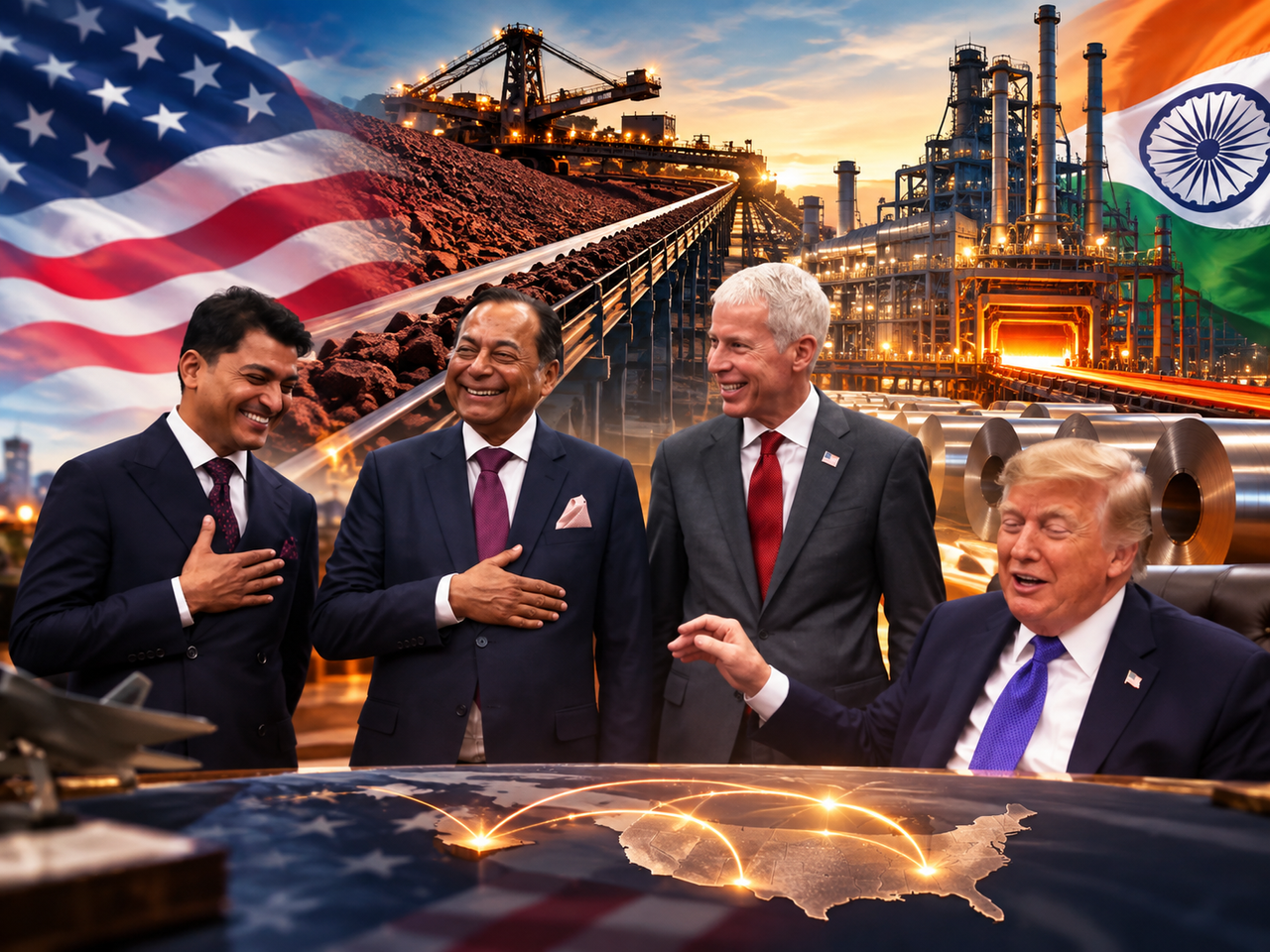

Almost a decade after Essar Steel entered insolvency proceedings in India, steel is back at the centre of the Ruia family’s global business strategy.
This time, the bet is in America.
Essar Group, through its US subsidiary Mesabi Metallics, plans to invest $18 billion across Minnesota and Iowa — about $3 billion in the Minnesota iron-ore operation and $15 billion in a new Iowa steel complex. The Iowa facility is planned to produce 7.5 million tonnes of steel a year initially, with capacity eventually rising to 10 million tonnes.
The headline is the size of the investment. The more interesting story is what sits underneath it.
Essar is attempting to connect an American iron-ore mine directly to an American steel plant, creating a mine-to-mill supply chain rather than simply adding another steelmaking facility.
And there is an important piece of history behind that strategy: Minnesota is not new territory for Essar.
/fit-in/580x348/filters:format(webp)/tice-news-prod/media/media_files/2026/09/29/essar-us-steel-investment-2026-09-29-20-33-09.webp)
From a Lost Steel Business to a New American Bet
Essar Steel’s history includes both aggressive expansion and periods of financial stress.
The company defaulted on $250 million of floating-rate notes in 1999 and entered a corporate debt restructuring programme in 2002. By 2017, its debt had risen to nearly ₹40,000 crore, and Essar Steel entered insolvency proceedings under India’s Insolvency and Bankruptcy Code.
After a prolonged legal process, the Supreme Court cleared ArcelorMittal’s acquisition of Essar Steel in 2019 under a resolution plan of about ₹42,000 crore.
That ended Essar’s first major steel chapter.
The group is now opening another one — but with a different geography and structure.
Ravi Ruia, Vice Chairman & Founder, Essar Group, described the investment as “a new chapter in Essar’s global journey”, saying it carries forward the vision of his brother, Shashi Ruia, to build world-class businesses with a global footprint.
“With over three decades of experience across the steel value chain, Essar is proud to bring that expertise to this landmark investment,” Ruia said.
The distinction is important. The company is not simply recreating its old Indian steel business in another country. The proposed American operation is being built around a resource base, technology and customers located largely within the US.
/fit-in/580x348/filters:format(webp)/tice-news-prod/media/media_files/2026/09/29/ravi-and-rewant-ruia-with-donald-trump-2026-09-29-20-34-16.png)
The Minnesota Chapter Makes This More Than an Iowa Plant
The most interesting part of the $18 billion plan may not actually be Iowa.
It is Minnesota.
Essar acquired Minnesota Steel in 2007 as part of its earlier international steel expansion. That project later ran into financial difficulties, with Essar Steel Minnesota filing for Chapter 11 bankruptcy protection in 2016.
Today, the broader Minnesota opportunity has returned as the raw-material foundation of the new strategy through Mesabi Metallics.
The company says nearly $3 billion has been invested in the Minnesota operation, which is designed to produce direct-reduction-grade iron-ore pellets.
Those pellets are intended to feed the Iowa steelmaking complex.
The chain is therefore relatively clear:
Minnesota iron ore → DR-grade pellets → direct reduced iron → electric arc furnaces in Iowa → finished US steel.
Rewant Ruia, Chairman, Mesabi Metallics, summed up the strategy in similar terms:
“We are building a fully integrated steel business from the ground up, connecting Minnesota’s world-class iron ore resources with steelmaking in Iowa to produce 100% American steel.”
That integration is the central business proposition.
Instead of depending entirely on external raw-material suppliers, the project is designed to control a larger part of the steel value chain — from ore to finished product.
/fit-in/580x348/filters:format(webp)/tice-news-prod/media/media_files/2026/09/29/rewant-ruia-chairman-mesabi-metallics-2026-09-29-20-38-21.png)
Why the Technology Matters
The Iowa facility is being designed around direct reduced iron and electric arc furnace technology, rather than simply reproducing the conventional blast-furnace model.
DRI converts iron ore into metallic iron without melting it first. The proposed plant will use hot DRI in electric arc furnaces alongside scrap steel.
For Essar, that creates a different production model from the steel operations associated with its earlier expansion.
It also fits into a US market where electric arc furnaces already play a major role in steelmaking.
The proposed Iowa complex is expected to supply industries including automobiles, defence, shipbuilding, energy and infrastructure.
The scale is substantial: initial production of 7.5 million tonnes, with a potential eventual capacity of 10 million tonnes.
The company expects the project to create more than 6,000 construction jobs and at least 1,750 permanent jobs in Iowa.
Tariffs Explain the Timing, But Not the Whole Strategy
The Trump administration has imposed a 50% tariff on imported steel, and US officials have directly linked the Essar investment to the push for domestic manufacturing.
President Donald Trump and Commerce Secretary Howard Lutnick have both argued that the tariff regime is encouraging companies to manufacture steel inside the US.
That policy backdrop clearly matters.
Steel produced domestically avoids the need to import the finished product into the American market. The project also fits Washington’s broader emphasis on domestic industrial capacity and supply-chain security.
But tariffs alone do not explain the investment.
The Minnesota iron-ore project predates the current announcement. What the new plan does is connect that resource to a major steelmaking facility in Iowa and, ultimately, to US industrial customers.
The proposition is therefore built around three elements: domestic raw materials, modern steelmaking technology and access to the US market.
/fit-in/580x348/filters:format(webp)/tice-news-prod/media/media_files/2026/09/29/essar-us-steel-investment-info-2026-09-29-20-46-29.png)
The Second Act Will Be Judged on Execution
The numbers make the announcement difficult to miss: $18 billion of combined investment, up to 10 million tonnes of steel capacity, thousands of construction jobs and a new mine-to-mill chain across two US states.
But the real test starts after the announcement.
First production is targeted around 2030. Between now and then, the company has to complete construction, ramp up the Minnesota operation, integrate the two ends of the supply chain and build a competitive customer base.
That makes the current Essar story less about returning to the past and more about whether the group can apply the lessons of its earlier steel journey to a different business model.
The first chapter was built around rapid expansion and high leverage and ultimately ended with Essar Steel entering India’s insolvency process.
The new chapter is being built around vertical integration, a domestic US supply chain and modern steelmaking technology.
That does not guarantee the outcome. But it makes the $18 billion investment more than a new steel plant.
Essar is betting that the next generation of steel businesses will be won not only by how much steel they can make, but by how much of the chain they can control.