
I came away from FICCI FRAMES 2026 with one thought that kept getting stronger through the two-day conversation: India does not just need to create more content. It needs to create more IP.
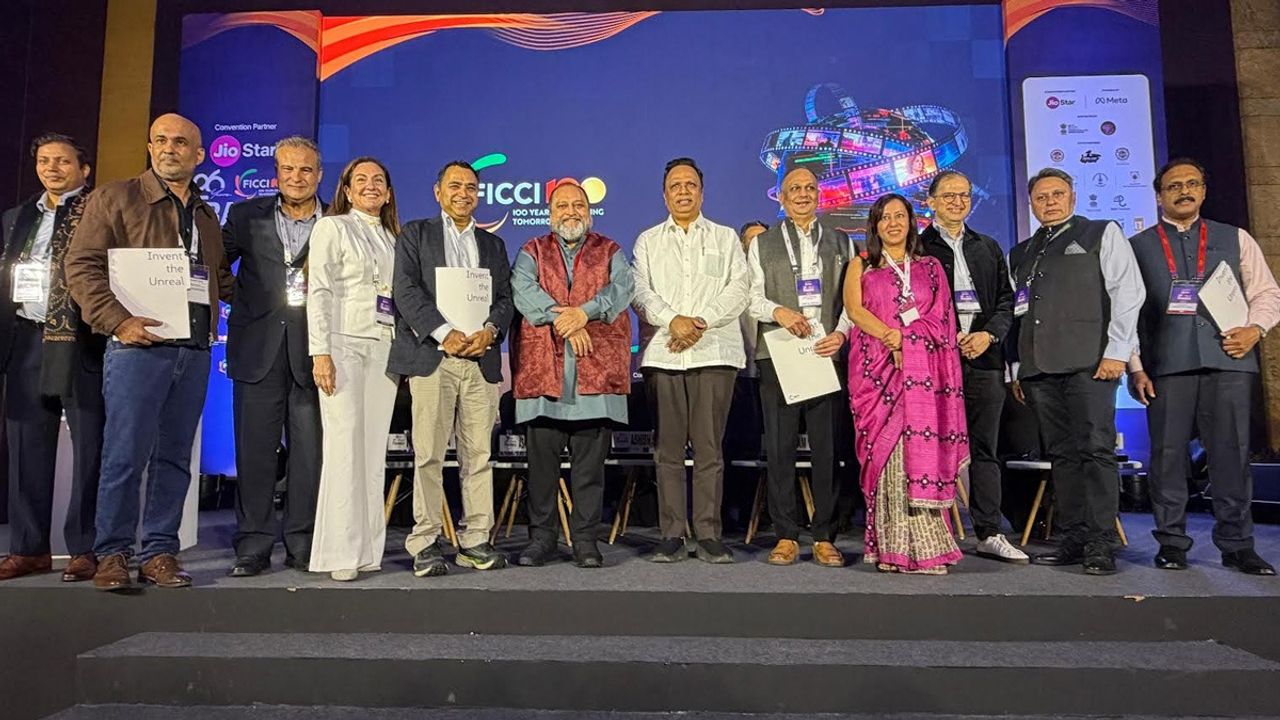
The 26th edition of FICCI FRAMES, held in Mumbai on September 29–30 around the theme “India’s Media Moment: Creating Value in an Age of Infinite Content,” brought together policymakers, media companies, creators, technology businesses, investors and entrepreneurs to discuss where India’s media and entertainment economy goes next.
Union Minister for Culture and Tourism Shri Gajendra Singh Shekhawat put the larger opportunity quite directly. India, he argued, needs to move beyond being a large content consumer and become a global leader in content creation and creativity. One phrase from his remarks stayed with me: “India has more than content, it has context.” He was referring to the diversity, traditions, heritage and lived experiences that give Indian storytelling a depth that technology alone cannot manufacture.
From consuming global IP to creating Indian content
India has spent decades learning how to consume global IP.
We grew up with global films, characters, television formats, music, gaming and entertainment franchises. At the same time, India built an extraordinary content-production engine across cinema, television, OTT, animation, music, gaming, live entertainment and regional storytelling.
The Indian media and entertainment sector reached ₹2.78 trillion in 2025, growing 9%, according to the FICCI-EY report. Digital media became the largest segment, while live events grew 44%. The scale is already significant. The bigger question is what kind of assets this enormous creative economy is building.
Because content and IP are not the same thing.
A film can be successful overseas. A story can be sold to another market. But an IP can travel much further – it can be licensed, adapted, franchised, merchandised, turned into games, reproduced as a format, experienced through live events and eventually become a platform in its own right.
India already has examples.
-Drishyam and 3 Idiots show how Indian stories can travel through adaptations.
-Chhota Bheem demonstrates the potential of character IP.
-Dance India Dance demonstrates that an Indian-origin television format can travel internationally.
-And properties such as Sunburn, IIFA and the Jaipur Literature Festival show that Indian-origin experiences can themselves travel.
The lesson is not that India has no IP.
The opportunity is to create many more Indian IPs that are designed from the beginning to travel.
What does IP actually mean?
One of the most interesting observations came from the live-events discussion at FICCI FRAMES.
Shri Prithul Kumar, Joint Secretary in the Ministry of Information & Broadcasting, Government of India spoke about the challenge of building sustainable live-event businesses rather than simply borrowing the audience of an artist. His point was striking:
“We have realised that we cannot survive by just renting the audience of an artist. Come for a concept. Come for the way you’re treated. I think all of this becomes an IP.”
Prithul Kumar’s thought was to build concepts and experiences that audiences return to.
That expands the definition of IP considerably. An IP does not have to begin as a film character or television format. It can be a concept, a festival, an experience, a community or a platform that develops its own identity and audience.
For India, that opens a much bigger creative economy opportunity.
From scale to ownership
FICCI President Shri Anant Goenka made another important point at the opening of FRAMES: India needs to convert its enormous scale into lasting value while retaining what makes Indian storytelling distinctive.
“We should give Indian storytellers the confidence, capital, technology and reach to go global, without removing what makes their work Indian,” he said.
He also emphasised the importance of building and monetising IP around Indian stories.
I could not agree more.
If India wants an Orange Economy, it cannot only be an economy of creators. It needs to become an economy of creators and entrepreneurs who own, build, scale and export IP.
And this is where I see an important role for the startup ecosystem.
At FICCI FRAMES, Warmup Ventures and the Indian Institute of Creative Technologies (IICT) signed an MoU to deepen collaboration around creative technology, entrepreneurship and startup support. The agreement was one of five IICT partnerships signed during the convention, aimed at strengthening links between academia, industry, technology and entrepreneurship across the AVGC-XR ecosystem.
For me, the significance goes beyond one MoU.
We need to help entrepreneurs move from creating content to building assets and from building assets to building companies around those assets.
Maharashtra Stae Cabinet Minister of Electronics, IT, AI & Cultural affairs, Shri Ashish Shelar captured the larger opportunity at the signing: “India is uniquely positioned to lead the next transformation in media and entertainment.” He said the real opportunity lies in building an ecosystem of professional talent, content creators, broadcasters, developers, technologists, innovators and entrepreneurs. He added that the future belongs not just to those who consume entertainment, but to those who build the intellectual, creative and technological ecosystem around it.
That is precisely the ecosystem we need to build around Indian IP.
Can Indian IP travel differently?
There is another question India should ask. When we talk about taking Indian Intellectual Property global, must the route always run through traditional Western markets?
The Global South offers enormous audiences, creative communities, emerging markets and cultural connections across Asia, Africa, the Middle East and Latin America.
India can create Intellectual Property for these markets and with these markets.
This is one reason I am personally associated with the Global South Film Festival.
GSFF is one such Indian-owned Intellectual Property being built with the intention of travelling. The ambition is not simply to organise a film festival in India and invite the world to attend. It is to create a travelling platform connecting cinema, culture, cities, creative businesses, markets and people across the Global South.
In that sense, GSFF is an experiment in the very idea that emerged repeatedly at FICCI FRAMES: can India build IP that creates value beyond its first screen, first audience or first geography?
India has spent decades learning how to consume global Intellectual Property and increasingly how to produce global content.
The next step is to build Indian IP that the world doesn’t just watch but wants to host, license, adapt, experience and return to.
The next Indian media success story may not be just a film the world watches. It may be an Indian Intellectual Property the world wants to be part of.
-Rajesh Joshi
Venture Partner, Warmup Ventures