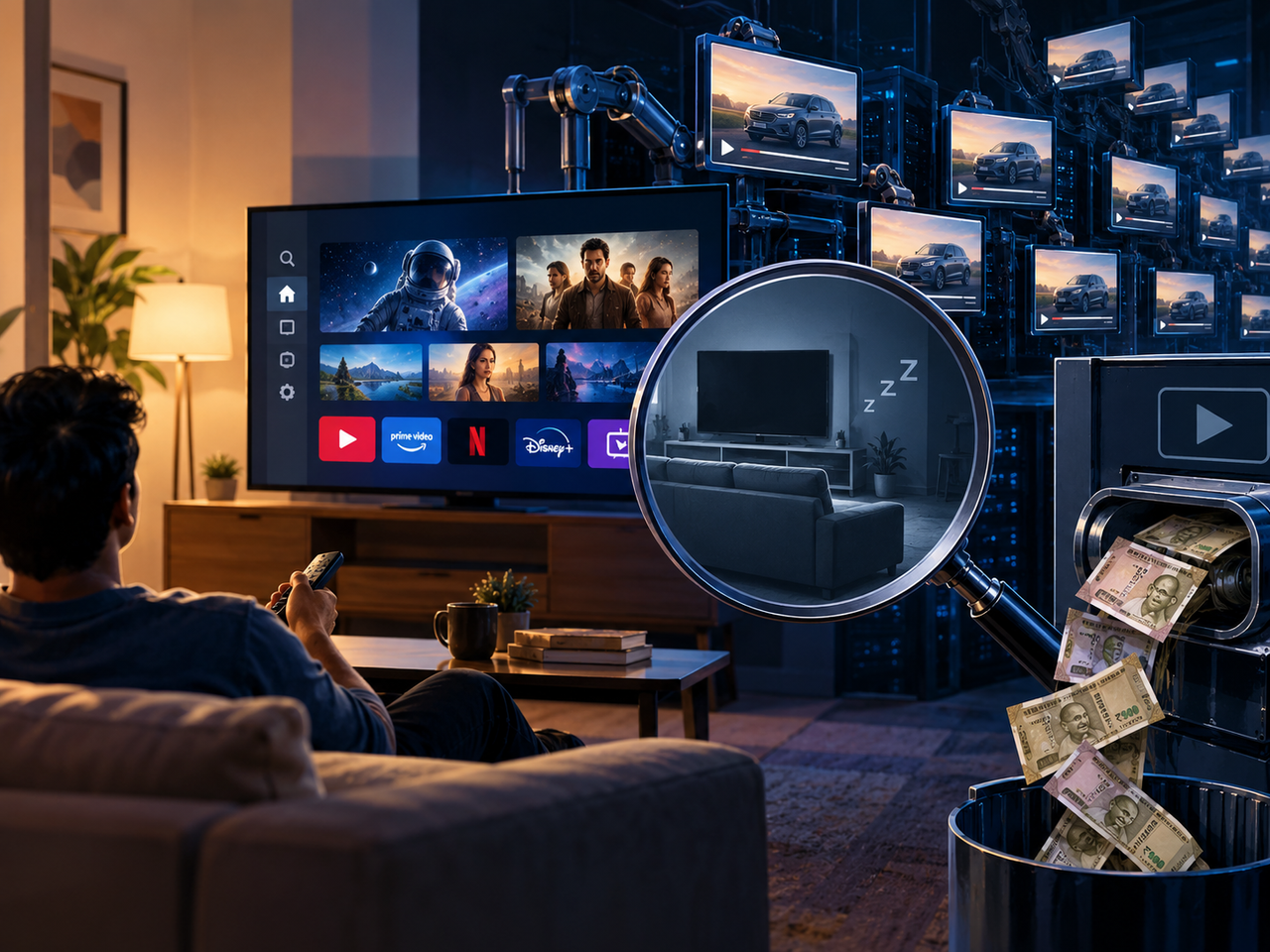

Two CTV environments accounted for 81.7% of the frequency-cap violations identified in a new analysis by ad-tech verification company mFilterIt, raising fresh questions about whether advertisers can trust the impressions they are buying on connected television.
One environment accounted for 53.35% of the violations and another 28.35%, according to the analysis.
mFilterIt says proxy-sharing capabilities embedded in certain smart-TV app SDKs can allow background activity to generate ad requests even when nobody is watching and, in some cases, when the television screen is switched off. The result can be repeated impressions from the same device, inflated reach and wasted advertising spend.
But the more interesting story is not simply about fraud.
It is about who will build the infrastructure that makes CTV advertising more trustworthy.
When an Ad Request Isn’t a Viewer
Frequency capping is meant to stop advertisers from repeatedly showing the same campaign to the same device or household.
The problem begins when the system treats an ad request as evidence of audience exposure.
A technically valid request does not necessarily mean that somebody was watching. And if the same device continues generating requests beyond its expected frequency, campaign dashboards can give advertisers a misleading picture of reach.
The 81.7% figure needs to be read carefully. It refers to frequency-cap violations identified in mFilterIt’s analysis, not 81.7% of all CTV advertising or impressions.
That distinction aside, the finding highlights a structural weakness in CTV: the industry is selling television inventory using increasingly digital methods, but measurement remains fragmented across smart-TV environments, OTT applications, publishers and advertising platforms.
For advertisers, the question is becoming less about whether an impression was served and more about whether it represented a genuine opportunity to see.
The Trust Gap Is Becoming a Business Opportunity
This is where the story becomes relevant to entrepreneurs.
CTV does not necessarily need another platform selling advertising. It needs better infrastructure underneath the transaction.
The potential startup opportunities are fairly clear:
Startup Opportunity Index
1. Independent CTV verification
Technology that validates devices, viewing environments and ad-delivery conditions independently of the inventory seller.
2. Cross-platform frequency intelligence
Systems that identify repeated exposure when consumers move between CTV, OTT, YouTube and other digital screens.
3. Pre-bid risk scoring
Technology that identifies suspicious apps, devices or traffic patterns before advertisers commit their budgets.
4. Attention and opportunity-to-see measurement
Tools that distinguish an ad request from a credible opportunity for a human viewer to see the advertisement.
5. Supply-chain transparency
Technology that tracks inventory from source to buyer and identifies where quality or transparency breaks down.
These are not necessarily five separate businesses. They could become different layers of a broader CTV measurement and verification platform.
The opportunity exists because every participant has something to lose from poor measurement: advertisers lose money, agencies lose confidence, publishers face scrutiny and platforms risk losing their premium positioning.
CTV Is Moving Into a Measurement Fight
India’s CTV market is already moving toward more unified measurement.
TAM Media Research and VTION launched CTV Ad Pulse in 2026, combining advertising monitoring with CTV audience measurement. Industry discussions have also focused on common standards for CTV and FAST measurement.
The direction is important.
As CTV becomes a larger part of media planning, advertisers will increasingly want to compare it with television, mobile and digital video on more than headline reach.
They will want to know:
Was the viewer real?
Was the device actually in a viewing environment?
Was the frequency cap enforced?
Did the campaign reach someone new?
Can the exposure be linked to an outcome?
Those questions are not just measurement problems. They are potential product categories.
The Next CTV Company May Sell Trust, Not Ads
The history of technology markets suggests that infrastructure opportunities often appear after a new channel scales.
CTV has already built the inventory.
The next opportunity may be building the verification layer around it.
For founders, the lesson is broader than ad fraud. Whenever a market has fragmented data, multiple intermediaries and competing incentives, there is room for an independent technology layer that makes transactions easier to verify.
CTV is reaching that point.
The companies that benefit may not own the content, the screen or even the advertising inventory.
They may be the companies that can prove what actually happened after the ad was served.
Editorial Note
This story is based primarily on findings shared by mFilterIt. TICE has reviewed the company’s publicly available material on CTV and OTT advertising and has contextualised the latest findings. The 81.7% figure refers specifically to frequency-cap violations identified in mFilterIt’s analysis; it does not mean that 81.7% of all CTV impressions or advertising are fraudulent.