
As India’s states compete to attract startups, investments, and innovation-driven industries, Kerala has unveiled an ambitious vision that seeks to position the state as a hub for future technologies and next-generation entrepreneurship.
In a move that underscores the growing importance of startups and artificial intelligence in economic development, Kerala has announced a dedicated Rs 50 crore fund to support Gen-Z entrepreneurs and innovators. Alongside this, the state has launched a Malayalam AI Mission aimed at ensuring that the regional language remains relevant and empowered in an increasingly AI-driven world.
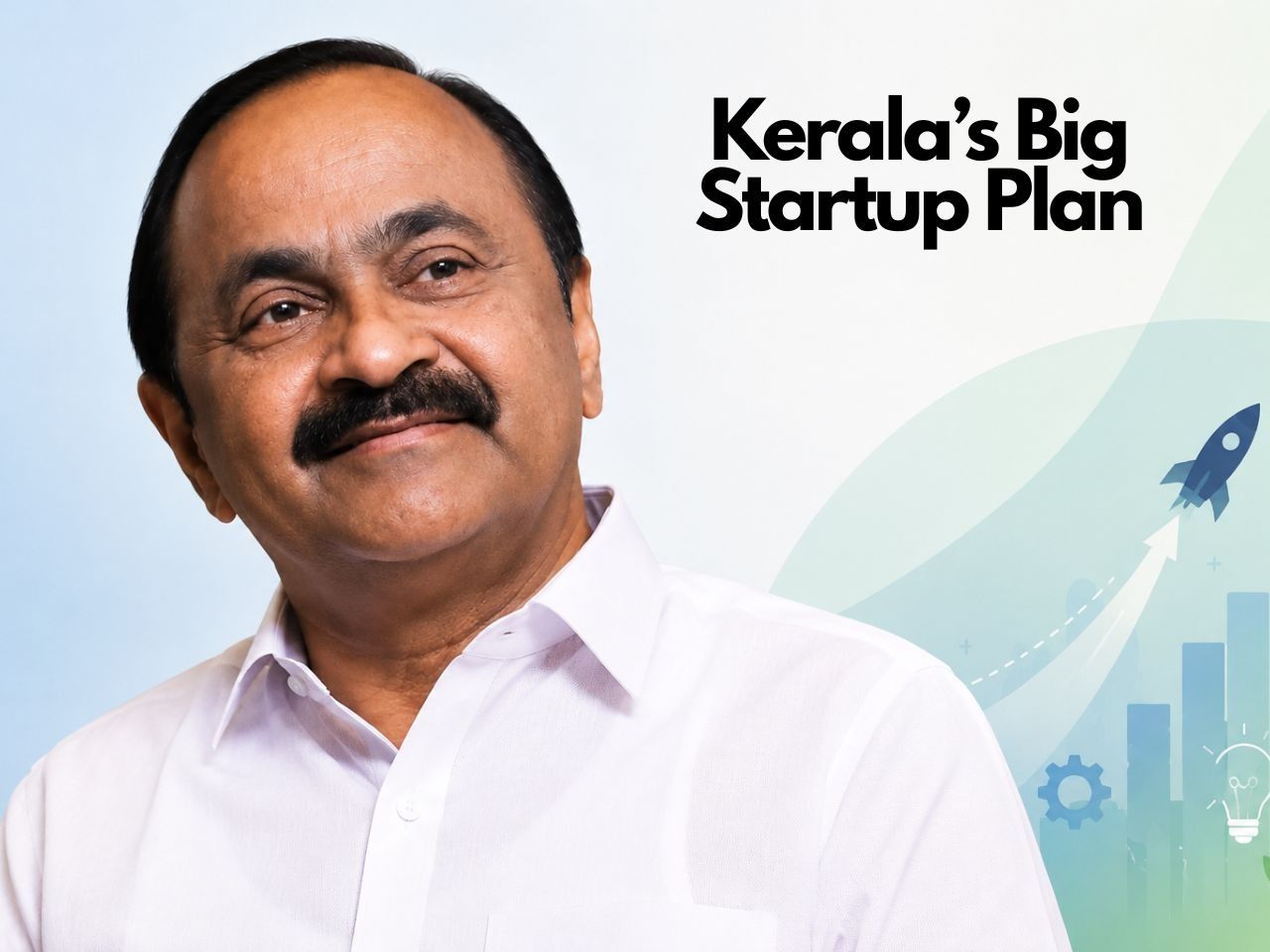
The announcements came as part of Kerala’s revised Budget for 2026-27, presented by Chief Minister VD Satheesan on June 19. While acknowledging the state’s financial challenges, Satheesan outlined a development roadmap that looks beyond immediate fiscal constraints and focuses on long-term economic transformation through technology, innovation, infrastructure, welfare, and investment.
The message from the government was clear: Kerala wants to build a “New Age Kerala”—one where young entrepreneurs, emerging technologies, and digital innovation play a central role in shaping the state’s future.
A Dedicated Startup Push for Generation Z
Startups have increasingly become engines of job creation, technological advancement, and economic growth across India. Recognising this shift, Kerala has earmarked Rs 50 crore specifically to encourage entrepreneurship among Generation Z.
The fund is designed to support young innovators, entrepreneurs, researchers, and startup founders who are building solutions in emerging and high-growth technology sectors. These include Artificial Intelligence (AI), robotics, data science, the Internet of Things (IoT), virtual reality (VR), and other frontier technologies that are expected to define the next phase of the digital economy.
The initiative seeks to deepen engagement between startups, research institutions, academic ecosystems, and innovation networks, creating an environment where young talent can transform ideas into scalable ventures.
At a time when India’s startup ecosystem is increasingly looking beyond traditional technology hubs, Kerala’s latest move signals an effort to nurture homegrown innovation and create opportunities for young founders within the state.
For a generation that has grown up in a digital-first world, the fund could provide both financial support and institutional backing to experiment, innovate, and build businesses around cutting-edge technologies.
Why Kerala is Investing in Malayalam AI
Artificial Intelligence is rapidly transforming industries, governance systems, public services, education, and communication. Yet one of the biggest challenges in the AI revolution remains language inclusion.
While global AI systems are largely dominated by English and a handful of widely spoken languages, many regional languages risk being left behind if dedicated efforts are not made to build language-specific datasets and AI models.
Kerala’s response to this challenge is the Malayalam AI Mission.
The state government has allocated Rs 10 crore to create an open Malayalam-language dataset and support the development of indigenous AI models capable of understanding and processing the language effectively.
Speaking about the initiative, Chief Minister Satheesan stressed that Malayalam must not be sidelined as AI technologies become increasingly integrated into everyday life and governance systems.
The objective is not merely language preservation. The initiative aims to strengthen Malayalam’s presence in the digital economy and ensure that future AI applications—from citizen services and education tools to healthcare platforms and business solutions—can function effectively in the local language.
As AI adoption accelerates globally, language-focused initiatives such as these could play an important role in making technology more accessible and inclusive for millions of people.
Beyond Startups: Building the Digital Infrastructure of the Future
Kerala’s technology ambitions extend beyond startup funding and AI.
The revised Budget also introduced ‘Mission Geo Keralam’, a major initiative that aims to integrate geospatial intelligence into governance and public administration.
Under the programme, the Kerala State Remote Sensing and Environment Centre (KSREC) will be strengthened and developed into the state’s primary geospatial institution. The government also plans to establish an integrated Kerala Geospatial Intelligence Platform (KGIS).
The project is expected to enhance decision-making across sectors by leveraging location-based intelligence, data analytics, and digital mapping technologies.
As governments increasingly rely on data-driven planning, geospatial intelligence has become a critical tool for urban development, environmental monitoring, infrastructure planning, disaster management, and public service delivery.
Mission Geo Keralam reflects Kerala’s broader effort to adopt advanced technologies not only for industry but also for governance.
Ambition Amid Financial Challenges
The state’s ambitious announcements come at a time when Kerala continues to face significant fiscal pressures.
According to the revised Budget, the state experienced a revenue shortfall of Rs 20,500 crore compared to earlier projections.
The Chief Minister also informed the Assembly that Kerala’s total liabilities, including those associated with the Kerala Infrastructure Investment Fund Board (KIIFB) and the Social Security Company, stood at Rs 87,012 crore.
Despite these financial constraints, the government has chosen to pursue a development strategy focused on long-term investments in technology, infrastructure, entrepreneurship, and social welfare.
The revised Budget is being positioned as a roadmap that will guide the government’s development and welfare agenda over the next five years.
A Broader Vision for Economic Growth
While startups and AI emerged as key highlights, the Budget outlined a much broader agenda designed to stimulate growth across multiple sectors.
MSME Expansion
Through the Kerala MSME Growth Scheme, the government aims to facilitate the establishment of 10,000 micro, small, and medium enterprises. The programme will provide financial assistance, revolving funds, and expert guidance to entrepreneurs.
Easier Investment Approvals
To improve investor experience, the state will establish an Invest Kerala Cell that will function as a single-window platform for approvals, land-related issues, and project facilitation.
Strengthening the Technology Ecosystem
Kozhikode Cyber Park will be revamped and developed along the lines of Infopark Kochi and Technopark Thiruvananthapuram. The objective is to attract more technology companies, generate employment opportunities, and strengthen Kerala’s IT ecosystem.
Maritime and Coastal Development
The government announced Mission Samudra, which focuses on improving connectivity between ports, railways, roads, and inland waterways.
Kerala also plans to strengthen maritime infrastructure through port development initiatives, establish a shipbuilding centre at Vizhinjam, and enhance facilities at Kollam, Beypore, and Azhikkal ports.
Healthcare Investments
The Budget proposes the Oommen Chandy Health Insurance Scheme, offering health coverage of up to Rs 25 lakh per family, backed initially by an allocation of Rs 10 crore.
In another major healthcare initiative, the government has allocated Rs 100 crore for the proposed Kerala Health and Life Science City, envisioned as a hub for healthcare innovation and life sciences.
Education and Research
To strengthen higher education and global research collaborations, Kerala plans to launch Kerala Knowledge Valley, an initiative designed to attract international universities and expand research opportunities.
Preparing for Emerging Technologies
Recognising the rapid pace of technological disruption, the government will establish a Future Readiness Think Tank that will help formulate policies around AI, quantum computing, biotechnology, and other advanced technologies.
Tourism, Culture and Creative Industries
The Budget also includes a proposal to formally recognise tourism as an industry in Kerala.
In addition, plans have been announced for the creation of a Film City in Kochi and the development of cultural centres and memorial projects across the state.
What This Means for Kerala’s Startup Ecosystem
The introduction of a dedicated Gen-Z startup fund and a Malayalam AI mission signals a strategic shift towards innovation-led economic development.
For startup founders, especially younger entrepreneurs, the new fund could provide critical early-stage support and encourage experimentation in emerging technologies.
For the broader innovation ecosystem, the Malayalam AI initiative represents an important attempt to bridge the gap between technological advancement and linguistic inclusion.
Together, these programmes reflect a larger vision—one that seeks to combine entrepreneurship, technology adoption, research, infrastructure development, and digital transformation into a cohesive growth strategy.
Whether Kerala’s latest initiatives succeed will depend on execution, ecosystem participation, and sustained investment. But the direction is clear.
As artificial intelligence reshapes industries and startups become increasingly central to economic growth, Kerala is making an early bet that its future will be built not just through traditional development, but through innovation, technology, and the ambitions of a new generation of entrepreneurs.