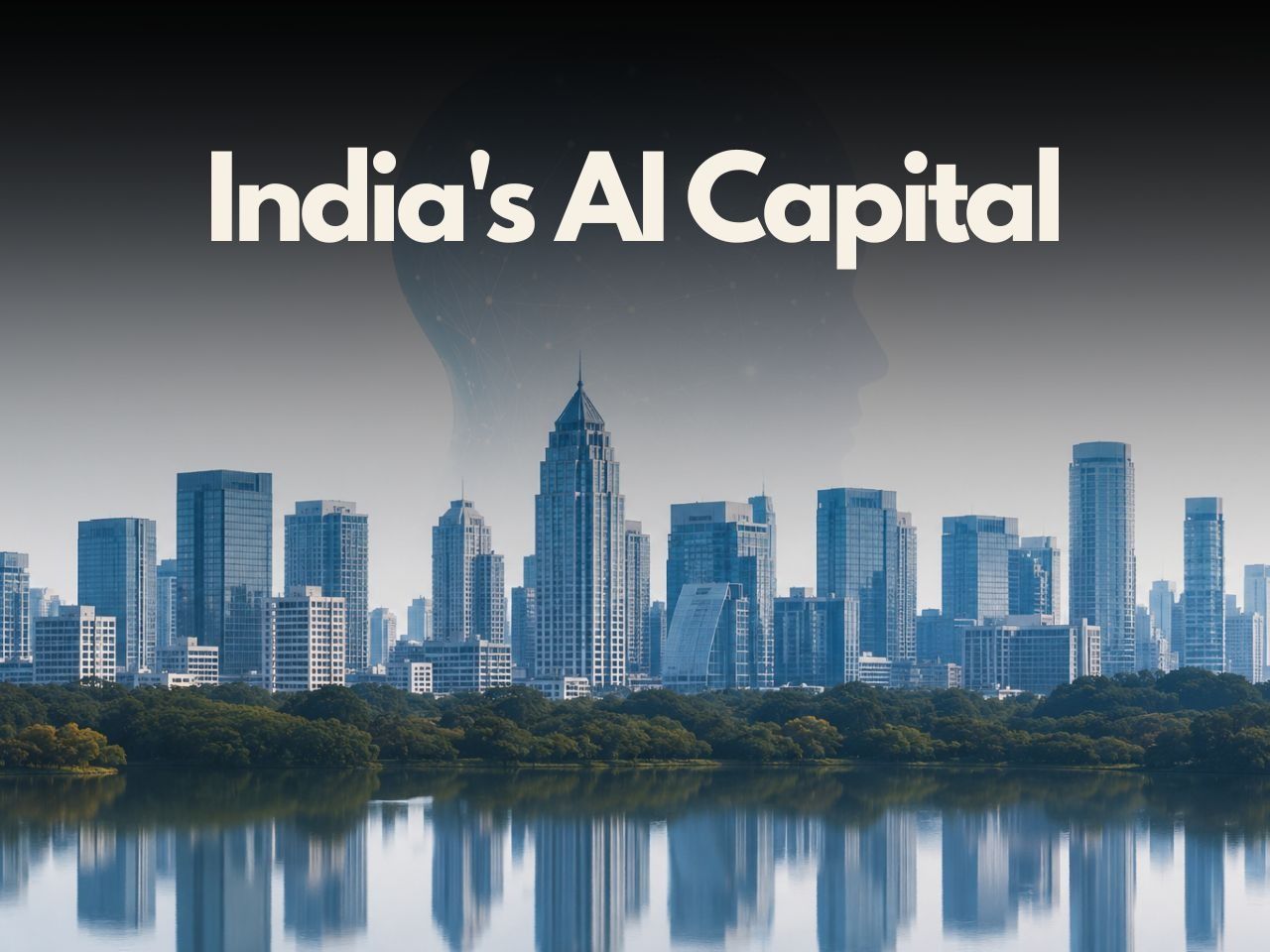

For years, Bengaluru has been known as India’s Silicon Valley. Today, as artificial intelligence reshapes the global innovation landscape, the city is rapidly carving out a new identity—one as Asia’s leading AI and deeptech powerhouse.
According to the Global Startup Ecosystem Report (GSER) 2026, unveiled at VivaTech in Paris, Bengaluru has secured the 15th position among the world’s top startup ecosystems while emerging as the second-best AI-native startup cluster in Asia, behind only Beijing.
The ranking reinforces Bengaluru’s growing influence in the global innovation economy and highlights how India’s startup capital is transitioning from being a technology outsourcing hub to becoming a centre for cutting-edge innovation, research, and next-generation entrepreneurship.
Bengaluru Holds Its Ground Among Global Startup Leaders
The latest GSER rankings place Bengaluru among an elite group of startup ecosystems that continue to drive innovation, venture capital activity, and entrepreneurial growth worldwide.
While Silicon Valley, New York City, and London retained their positions as the world’s top three startup ecosystems, Bengaluru maintained its presence among the global leaders despite intense competition from mature innovation hubs across North America, Europe, and Asia.
Although the city moved from 14th place in 2025 to 15th place in 2026, the shift is largely technical. This year’s rankings saw Toronto-Waterloo and Paris jointly occupying the 13th position, effectively pushing Bengaluru down one slot without reflecting a significant deterioration in performance.
More importantly, Bengaluru continues to remain among the Top 6 startup ecosystems in Asia, underscoring its importance not only to India but also to the broader Asian innovation landscape.
AI Emerges as Bengaluru’s New Growth Engine
One of the most significant highlights of GSER 2026 is Bengaluru’s emergence as Asia’s second-strongest AI-native ecosystem.
The AI-native cluster ranking evaluates the strength of an ecosystem’s artificial intelligence capabilities, including startup activity, talent concentration, research output, innovation infrastructure, and the ability to build AI-first companies.
Bengaluru’s second-place position behind Beijing signals India’s growing relevance in the global AI race.
The city has witnessed an explosion of AI-focused startups over the past few years, spanning sectors such as generative AI, enterprise software, healthcare, fintech, manufacturing, climate tech, and cybersecurity. Increasing investments from global technology companies, research institutions, and venture capital firms have further accelerated this momentum.
The report awarded Bengaluru a score of 8 out of 10 in the AI-native cluster category, reflecting the ecosystem’s growing maturity and readiness to capitalize on the next wave of technological disruption.
R&D Strength Gives Bengaluru a Competitive Edge
Beyond AI, Bengaluru’s strongest differentiator continues to be its research and innovation capabilities.
The ecosystem scored 9 out of 10 in the R&D Engine category, placing it among the strongest innovation centres globally.
According to B.V. Naidu, Chairman of the Karnataka Digital Economy Mission (KDEM), Bengaluru’s performance in research and development is among its most notable achievements.
“In terms of specific parameters, we have done very well in performance and R&D where we are ahead of even Silicon Valley. In terms of AI readiness also we have done very well,” Naidu reportedly said while commenting on the report.
This strong R&D foundation has enabled Bengaluru to become a breeding ground for deeptech startups working across emerging sectors including:
- Artificial Intelligence and Machine Learning
- Aerospace and Defence Technology
- Space Technology
- Quantum Computing
- Advanced Manufacturing
- Enterprise Software
The city’s extensive network of engineering institutions, research centres, technology parks, and multinational R&D facilities continues to provide a steady pipeline of innovation and technical expertise.
A $153 Billion Startup Ecosystem
The numbers behind Bengaluru’s startup ecosystem further highlight its growing global significance.
According to GSER 2026, Bengaluru’s startup ecosystem is now valued at approximately $153 billion.
The city has also significantly outperformed global averages across several critical startup indicators.
Between 2021 and 2025:
- Bengaluru startups attracted nearly $39 billion in venture capital funding
- The ecosystem generated approximately $46 billion in startup exits
- The city became home to 30 active unicorns
To put these figures into perspective, the average startup ecosystem globally attracted around $5 billion in VC funding during the same period and produced exit values of approximately $7.6 billion.
The report identifies companies such as Zepto, Meesho, and Udaan among the major startups contributing to Bengaluru’s funding strength and ecosystem value creation.
Perhaps more importantly, Bengaluru continues to remain the centre of India’s venture capital landscape.
The report notes that startups headquartered in the city have collectively raised nearly $79 billion in venture capital since 2010, accounting for roughly 46% of all VC investments made into Indian startups during this period.
These numbers demonstrate Bengaluru’s role not just as a regional innovation hub but as the primary engine powering India’s startup economy.
The Talent Paradox
Interestingly, one of the biggest surprises in the report is Bengaluru’s relatively low performance on talent-related indicators.
Despite its reputation as India’s largest technology talent pool, the city scored only 4 out of 10 in the Talent and Experience category.
This raises important questions for policymakers and ecosystem stakeholders.
The report reveals a nuanced picture. Bengaluru scored exceptionally well in terms of the availability of STEM graduates and the affordability of engineering talent. However, it received lower scores for access to high-quality technology and life sciences talent.
This suggests that while the city produces talent at scale, challenges remain in developing highly specialised expertise required for emerging sectors such as artificial intelligence, biotechnology, advanced research, and deeptech innovation.
The findings may also reflect increasing global competition for skilled professionals, talent migration, and growing demand for experienced startup operators.
Cost Advantage Remains Bengaluru’s Secret Weapon
One area where Bengaluru continues to enjoy a significant advantage is cost efficiency.
According to the report, the average annual salary of a software engineer in Bengaluru stood at approximately $19,600 in 2025, substantially lower than the global average of $54,000 and the Asian average of $27,000.
While lower salaries can be viewed as a challenge from a talent-retention perspective, they also make Bengaluru an attractive destination for startups looking to build world-class technology teams at relatively lower costs.
Combined with access to a large STEM workforce, this cost advantage continues to strengthen Bengaluru’s competitiveness in attracting startup founders, investors, and global technology companies.
Karnataka’s Policy Push Driving Growth
The report also credits Karnataka’s policy ecosystem for helping Bengaluru maintain its leadership position.
Initiatives such as the Karnataka Startup Policy 2.0, the Karnataka Digital Economy Mission (KDEM), and startup acceleration programmes including KATALYST and LEAP have played a key role in supporting entrepreneurship and innovation.
These efforts have helped create an enabling environment for startup formation, funding access, incubation, mentorship, and market development.
As governments worldwide increasingly compete to attract startups and innovation investments, Karnataka’s proactive approach is emerging as an important differentiator.
The Challenge of Market Access
Despite its strengths, Bengaluru still faces challenges that could influence its future rankings.
Market access remains one of them.
While the city received a respectable score of 7 out of 10 in overall market reach, stakeholders believe more can be done to improve startup access to domestic customers, enterprise procurement opportunities, and government contracts.
Industry leaders have repeatedly advocated for preferential procurement policies and stronger pathways for startups to access large-scale markets.
Improving local market access could become a crucial factor in helping Bengaluru climb further up global rankings.
What This Means for India’s Startup Future
The GSER 2026 rankings arrive at a time when India is positioning itself as a global innovation and AI powerhouse.
Bengaluru’s strong performance sends a positive signal to investors, entrepreneurs, and policymakers that India’s startup ecosystem is evolving beyond consumer internet businesses and entering a new phase driven by AI, deeptech, research, and frontier technologies.
The city’s recognition as Asia’s second-best AI-native cluster is particularly significant as nations race to build leadership positions in artificial intelligence.
For India, the ranking serves as validation of years of ecosystem building while also highlighting areas that require attention—especially talent development, specialised skills creation, and market access.
As global capital increasingly flows toward AI and deeptech ventures, Bengaluru appears well-positioned to strengthen its standing as not only India’s startup capital but also one of the world’s most influential innovation ecosystems.