
India’s next era of growth will not look like America’s. Nor will it follow China’s path.
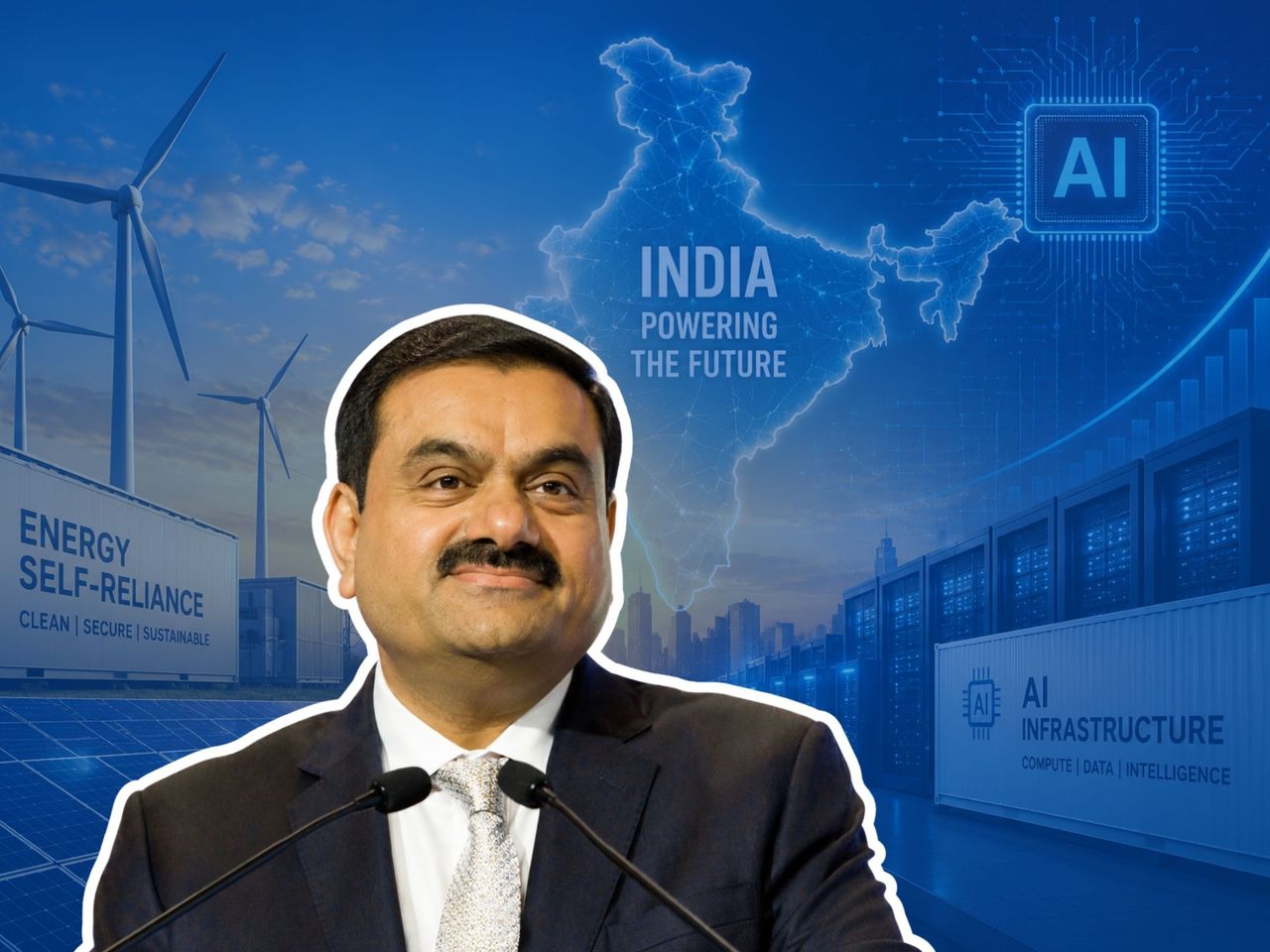
That was the central message delivered by Gautam Adani at the CII Annual Business Summit 2026 in New Delhi, where the Adani Group Chairman laid out what he believes will define India’s rise over the next two decades — massive domestic demand, energy independence, and artificial intelligence powered by strong infrastructure.
At a time when global economies are being reshaped by geopolitical conflicts, supply chain disruptions, energy insecurity and the rapid rise of AI, Adani argued that India is entering a completely different phase of development — one where infrastructure, renewable energy and digital intelligence will together determine economic leadership.
Speaking during a special plenary session at the summit, Adani said India’s scale itself makes its growth story fundamentally unique.
Unlike mature economies that often struggle to generate demand, India is experiencing the opposite challenge: demand is arriving faster than infrastructure can be built.
“Everything we build will already have demand waiting for it,” Adani said.
According to him, India’s households, cities, industries and small businesses are collectively creating one of the world’s largest long-term opportunities for infrastructure expansion, energy generation and digital transformation.
And at the centre of that transformation, he believes, will be two defining pillars — energy self-reliance and artificial intelligence.
India’s Energy Ambitions Are Entering a New Phase
Adani pointed to India’s rapidly expanding power sector as evidence of the country’s long-term economic momentum.
He noted that India has already crossed 500 gigawatts of installed power capacity as of March 2026. More significantly, he highlighted that nearly 53 per cent of this capacity was added in just the last decade — a reflection of how aggressively the country has accelerated infrastructure and energy expansion in recent years.
But according to Adani, this is only the beginning.
India, he said, is now on track to expand its total power capacity nearly four-fold to close to 2,000 gigawatts by 2047, aligning with the country’s long-term economic and industrial ambitions.
The scale of that target reflects not just population growth, but the energy demands of a rapidly digitising economy.
Factories, electric mobility, smart cities, data centres, AI infrastructure and industrial manufacturing will all require enormous amounts of reliable electricity in the coming decades.
Adani linked this directly to the changing nature of global power dynamics.
Referring to recent geopolitical tensions in West Asia and attacks on critical infrastructure, he said the world is witnessing how deeply interconnected energy security and digital security have become.
According to him, the future global order will increasingly be shaped by countries that control both energy resources and computing infrastructure.
“Nations that control energy will shape industrial growth. Nations that control compute and AI infrastructure will shape intelligence and innovation,” Adani said. “The country that controls both will shape the century ahead.”
He described this combination as the “new geometry of power”.
In Adani’s view, true self-reliance in the 21st century is no longer limited to manufacturing or industrial production alone. Instead, it means controlling both the energy powering the economy and the digital intelligence driving decision-making, automation and innovation.
AI, Compute Power and the Infrastructure Race
Artificial intelligence formed another major focus of Adani’s address.
While concerns around AI replacing jobs continue to dominate conversations globally, Adani rejected what he described as “fear-driven assumptions” emerging from Western economies.
Instead, he argued that India should approach AI as a productivity-enhancing opportunity capable of empowering businesses, improving competitiveness and creating new forms of employment.
According to Adani, India’s AI strategy should not revolve around fear of disruption, but around building capabilities that strengthen the country’s economic foundation.
He also highlighted an increasingly important reality often overlooked in conversations around artificial intelligence — AI cannot scale without massive physical infrastructure.
“There can be no AI without compute, no compute without data centres, and no data centres without power,” he said.
The statement underscored a growing global trend where energy infrastructure and AI infrastructure are becoming deeply interconnected.
As companies worldwide race to build advanced AI systems, demand for data centres, semiconductor ecosystems, computing power and electricity is rising dramatically. For India, this creates both an opportunity and a challenge.
The opportunity lies in becoming a major global hub for renewable energy-powered digital infrastructure.
The challenge lies in building that infrastructure at the scale and speed required for the future economy.
Adani also suggested that countries overly dependent on foreign energy sources or external computing ecosystems may struggle to achieve true technological sovereignty in the years ahead.
Drawing comparisons with the United States and China, he noted that despite their vastly different political systems, both nations have aggressively prioritised strategic control over energy resources, semiconductors, computing power and digital ecosystems.
According to him, no nation can claim to be fully self-reliant if it depends heavily on external sources for either energy or intelligence infrastructure.
Renewable Energy and India’s Digital Future
Highlighting the Adani Group’s own clean energy expansion, Adani said the conglomerate has already commissioned nearly 35 per cent of its massive 30-gigawatt renewable energy project at Khavda.
He described the Khavda project as the world’s largest single-site renewable energy plant.
The project has become one of the most closely watched symbols of India’s clean energy ambitions, particularly as the country positions itself as a major global player in renewable infrastructure and green industrial development.
Adani also revealed that the group’s total commitment toward energy transition has now reached 100 billion dollars.
The investment, he said, spans renewable energy, green infrastructure and next-generation industrial ecosystems aimed at supporting India’s long-term economic transformation.
For India’s startup ecosystem, the message carries broader implications as well.
The rise of AI infrastructure, clean energy systems, semiconductor ecosystems and large-scale digital infrastructure is expected to create significant opportunities across sectors including:
- climate-tech,
- energy storage,
- EV infrastructure,
- AI startups,
- semiconductor manufacturing,
- industrial automation,
- and deep-tech innovation.
As India builds the physical infrastructure required for the digital economy, startups operating in these sectors may find themselves at the centre of one of the country’s largest long-term economic shifts.
Adani’s broader message at the summit was clear: India’s future leadership will depend not just on software innovation or digital adoption, but on building the hard infrastructure capable of supporting the next generation of economic growth.
For him, the future belongs to countries that can combine renewable energy, digital infrastructure and artificial intelligence into a single integrated growth model.
And India, he suggested, now has the opportunity to build that model at an unprecedented scale.