
There was a time when India’s startup story was largely defined by food delivery apps, fintech platforms, and e-commerce disruptors. That story is now evolving—quietly but powerfully—into something far more strategic.
In laboratories, research parks, and early-stage innovation hubs across the country, a new generation of founders is building technologies that don’t just solve consumer problems—but shape national capabilities.
And this shift is about to get a global spotlight.
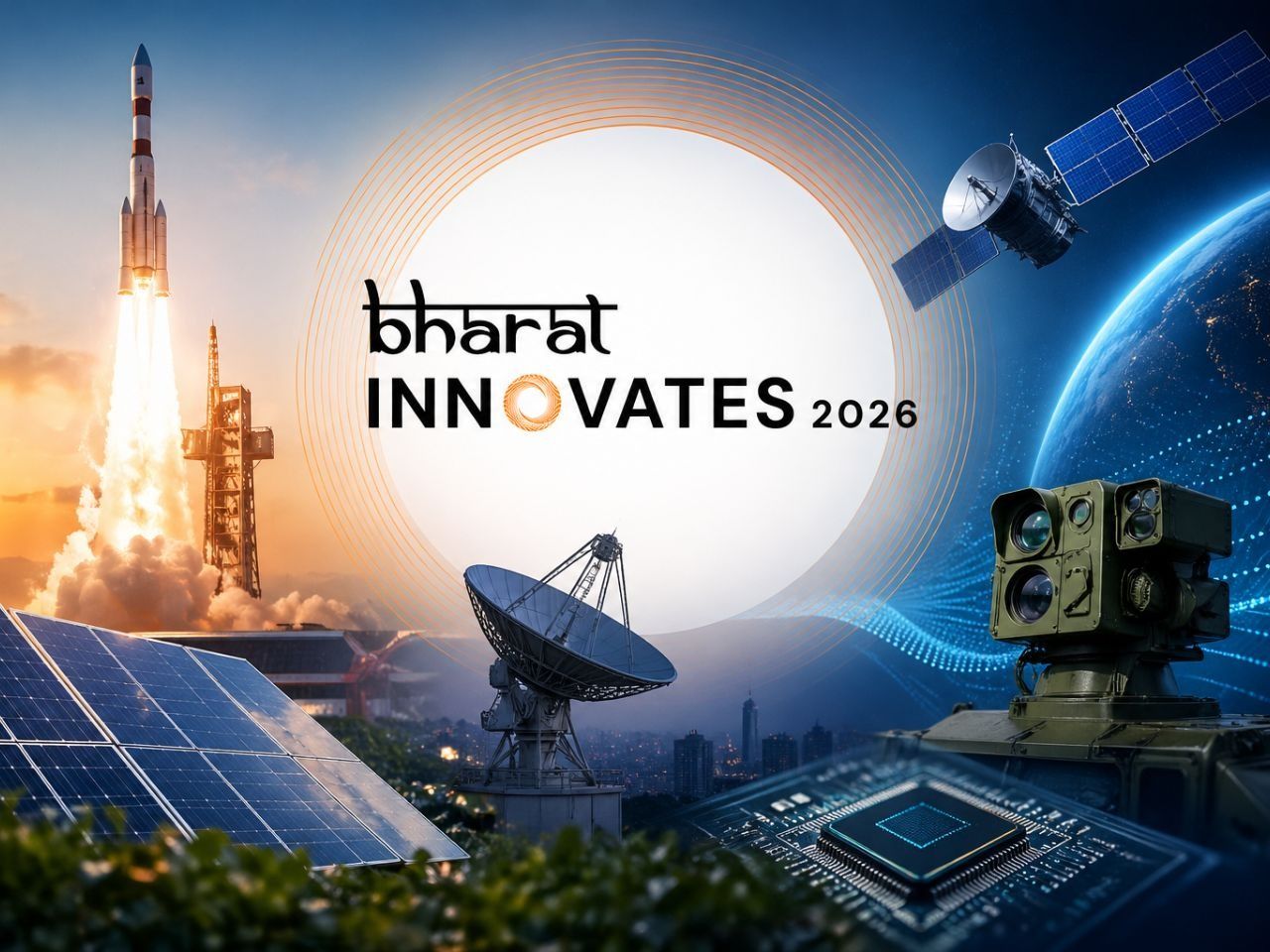
From June 14 to 16, 2026, in the coastal city of Nice, France, India will present a carefully selected cohort of deep-tech startups at Bharat Innovates 2026, an initiative led by the Ministry of Education. But this isn’t just another startup showcase—it’s a signal of intent.
India is stepping onto the world stage not just as a market, but as a builder of critical technologies.
A New Face of India’s Startup Ecosystem
What makes Bharat Innovates 2026 particularly significant is the nature of startups it is choosing to highlight.
These are not rapid-scale, burn-heavy ventures chasing user growth. Instead, they are deeply rooted in science, engineering, and long-term innovation—working across sectors like space, defence, advanced materials, and next-generation communications.
These domains are no longer niche. They sit at the intersection of national security, economic resilience, and global technological leadership.
The startups selected for the program are building dual-use technologies—solutions that can serve both civilian and strategic purposes. From satellite systems and launch platforms to surveillance technologies and defence applications, these innovations are designed with scale, adaptability, and sovereignty in mind.
In many ways, this marks a transition: from “startup India” to “strategic tech India.”
Reinventing Solar Energy, One Nano-Layer at a Time
At the heart of this showcase is innovation that tackles real-world inefficiencies with scientific precision.
Take Trinano Technologies Private Limited, for instance.
The company is working at the intersection of nanotechnology and renewable energy—two areas that are critical for India’s sustainability goals. Its breakthrough lies in advanced nano-coating solutions for solar panels.
These coatings are engineered to:
- Improve light absorption
- Reduce reflective losses
- Enable self-cleaning surfaces
The impact is both practical and transformative. Solar panels treated with this technology can operate more efficiently, require less maintenance, and significantly reduce water usage—a crucial advantage in a country where dust accumulation and water scarcity are persistent challenges.
It’s a reminder that innovation doesn’t always have to be visible to be powerful. Sometimes, it’s a microscopic layer that drives macroscopic change.
Building the Backbone of Future Connectivity
If energy is one pillar of the future, communication is another.
Enter REIO Systems Private Limited, a Chennai-based deep-tech startup founded in 2023. Backed by strong academic roots from institutions like the Indian Institute of Technology Madras, the company is developing advanced wireless communication platforms using software-defined radio (SDR) technology.
Their systems are designed for:
- High-speed data processing
- Low latency communication
- Wideband signal capabilities
This makes them highly relevant across sectors—from defence operations to telecom infrastructure, and even emerging 6G networks.
What sets REIO Systems apart is its approach: combining advanced radio frequency (RF) and mixed-signal engineering with software-driven flexibility. The result is communication infrastructure that is not only powerful but also scalable and cost-effective.
As the world moves toward hyper-connected systems, startups like REIO are ensuring that India is not just a participant—but a contributor to the underlying architecture.
The Strategic Importance of What Lies Beneath
Beyond visible technologies, Bharat Innovates 2026 also shines a light on something less talked about—but equally critical: materials.
Advanced materials, rare-earth elements, and critical minerals are the building blocks of modern technology. They power everything from electric vehicles and renewable energy systems to electronics and defence equipment.
Startups working in these domains will present innovations that strengthen supply chains, reduce dependency, and support the creation of a sustainable and digitally advanced ecosystem.
It’s a subtle but crucial layer of the deep-tech narrative—one that often determines who leads and who follows in the global technology race.
More Than a Showcase—A Strategic Push
At its core, Bharat Innovates 2026 is not just about visibility. It’s about positioning.
By taking these startups to an international platform, the initiative aims to:
- Open doors to global markets
- Enable cross-border partnerships
- Attract strategic investments
- Accelerate the commercialization of deep-tech innovations
For startups operating in research-heavy sectors, access to the right ecosystem can be the difference between a promising prototype and a globally deployed solution.
India’s Deep-Tech Moment Has Arrived
The Indian startup ecosystem is no longer just evolving—it is maturing.
Bharat Innovates 2026 reflects a clear shift from consumer-driven disruption to research-led innovation with long-term impact. It signals that India is ready to play a bigger role in shaping the technologies that will define the future.
And perhaps most importantly, it shows that the next wave of Indian startups won’t just build for convenience—they will build for capability.
From nanoscale coatings to next-gen communication systems, from clean energy to defence applications—the message is clear:
India is not just innovating.
It is engineering its place in the world.