
In India’s fast-evolving startup ecosystem, innovation is no longer confined to boardrooms, accelerators, or college campuses. It is beginning much earlier—inside school classrooms, where young students are not just learning science, but actively building solutions to real-world problems.
At the center of this shift is the Atal Innovation Mission (AIM) under NITI Aayog, which has rolled out the ATL Calendar 2026, titled “Rise of the Innovation Champions.” More than a calendar, it is a structured, year-long innovation journey designed to shape how students think, build, and solve.
This is not about theory. It is about doing.
ATL Calendar That Thinks Like a Startup Journey
Unlike conventional academic schedules, the ATL Calendar is designed around the lifecycle of innovation itself. Each month introduces a real-world theme, while simultaneously guiding students through the stages of design thinking—from empathy to execution.
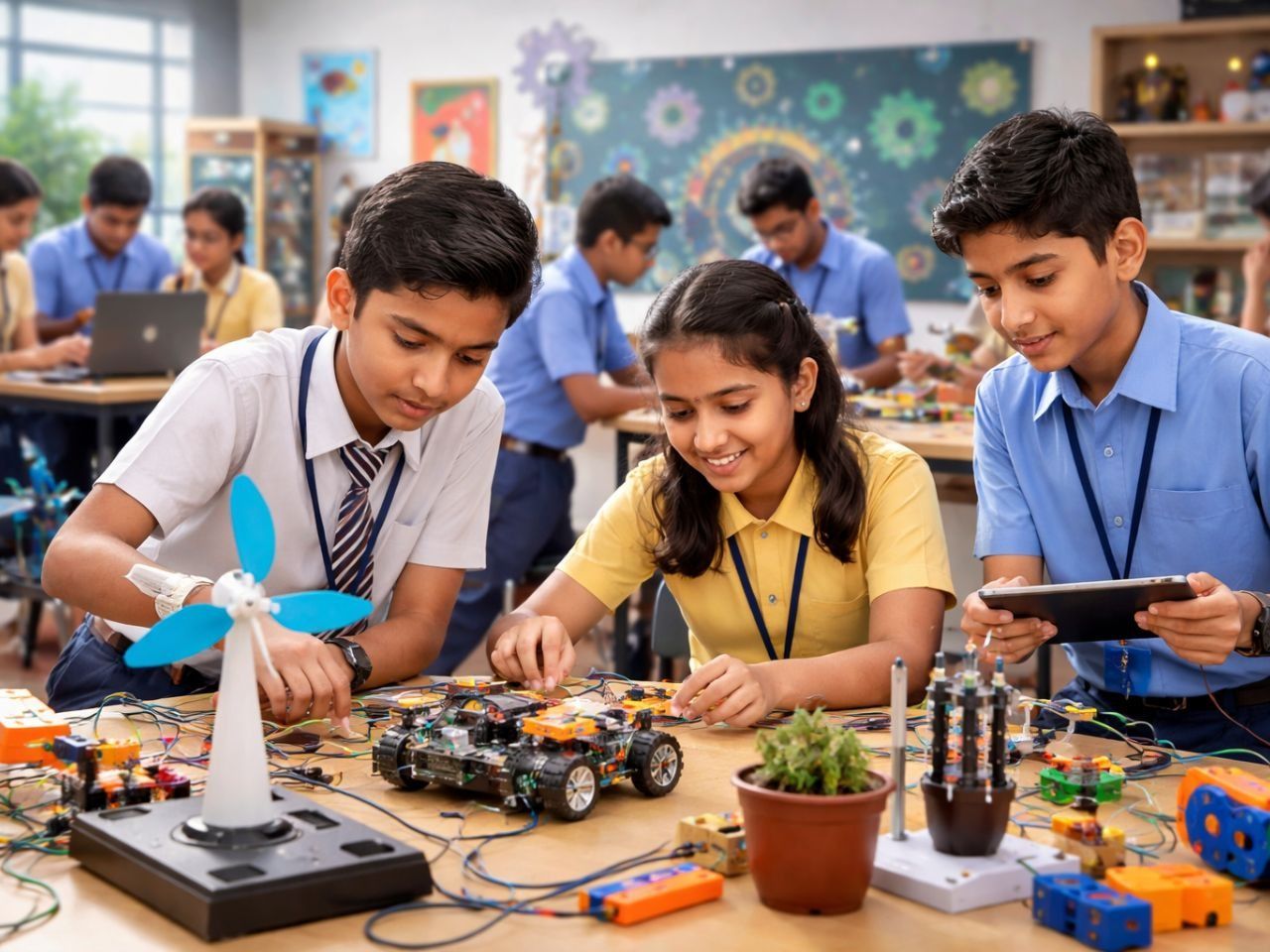
The journey begins in April, where students explore energy awareness. From understanding household energy usage to building mini wind turbines, they are introduced to the first step of innovation: empathising with users.
By May, the focus sharpens on sustainability. Students work on practical solutions like foldable reusable shopping carriers and solar passive heat comparison boxes, while learning to define problems clearly—a crucial step often overlooked even in startups.
From Curiosity to Creation
/tice-news-prod/media/post_attachments/static-rsc-4/UC9ZU6ijqzql0pn5y--YiMASDsDLlyl0cqoAzy4kfKLtC4GcnAM1Snrq00_sPfpU6pQ-S5eZJ2bZOUtxtKJE-hR7Lnm_FAoAKm3x7BE-M-TPo3uWe66r-zRate5_-7wuwPR1QD9ypx3U1T8OGdIL---IhW8x4K3WDb8UgMW_cMs-466100.jpeg?purpose=inline)
/tice-news-prod/media/post_attachments/static-rsc-4/zyn6mTFAQGGOlDZxDsW32rvMfdK3ImOhO3TxmL4_lzLNCtTTyg-fbTF2HzzmpkrNPjINYnfQN9XO3QmyQiMuUeNHLWTzpBYRalIY8nq2D9Q7ap-LnxeXISh6pyP4noOMJ8o62_eQ49ljDkqTAeBbvKd4V9R8tiFDxISzKNizGyA-122235.jpeg?purpose=inline)
/tice-news-prod/media/post_attachments/static-rsc-4/UHJAZAk7llsHP-l9Y_ixnPjkoYk5lOS-DbYdVUgVJDLOandcFHMg25tWMNcuKpiPeeVBfNZmAS-cQFcetagkL-6hcyw2zzv8LmgIFjSDuA2ilA0iTLPeDdoMctWuCORDzZgIqV3wVxP2IJiffnqesHzg1WQgnfA4b8LdqPO6klJvcb9fEmT-cNQewicHw9vJ-271371.jpeg?purpose=inline)
By July, the shift becomes tangible. Students start building working models such as smart water leakage alarms and water quality indicators. This marks the beginning of prototyping, coinciding with key ecosystem moments like ATL Community Day, the School Innovation Marathon, and World Population Day—events that expose students to collaboration and real-world validation.
In August, prototyping becomes more advanced. Students take on challenges like solar water heating systems and passive cooling mechanisms, strengthening their understanding of engineering, sustainability, and automation.
Building Like Founders: Pitching, Implementation, and Impact
September introduces students to the idea of a circular economy. Here, they build smart compost monitoring systems and waste sorting mechanisms—solutions that directly address India’s growing waste management challenges. More importantly, they learn how to pitch their ideas, a skill that defines startup success as much as the product itself.
In October, the focus shifts to sustainable mobility. Students work on bicycle energy generators and smart pedestrian alert systems, moving into the implementation phase—where ideas begin to resemble real-world applications.
Expanding Horizons: Agri-Tech to Smart Cities
/tice-news-prod/media/post_attachments/static-rsc-4/3oa0qJA2iO52DFlxf21-DtChJHcI0gaxiGWQhH1iFVhsmrC13zPfhfjbyOZDT7lOU_bSukRRTaieybfTcYdEUvyRRfNuSw7cgHKUprlYCHf5xG9zAkPaJ5xp23TCIlZD1-8-SiV8Gh3YK5adK2BAL_o5CCxKjnLyZbomkVXL7ak-377074.jpeg?purpose=inline)
/tice-news-prod/media/post_attachments/static-rsc-4/QUYUK9AYqb9_gXoNw-FE-ReNDCjCJkXZyHVxsjYg6wbLwTjsCOp_LgqRJVDj7Ccja7IZi0whvQ05A3A-41q511K5et8sO_DKypgukMHsrQ8KDgD-xHp47_ToN5zfbcdqIlE8Ch8OYBtSIcUZ_c4UQ3dstHCtb90SdeYRKde3kU4-554179.jpeg?purpose=inline)
/tice-news-prod/media/post_attachments/static-rsc-4/wZGOR6FmeLhiipg1JeUcN0_gvjWmzzfHJjcFHAc4tgswrSNqcDLgGMUB0QKbxDEVWcwlNaf5TegkPjxGoUNBSx1eV9w6BvAWECEdmdpwnZAV9Ox-vNAuVVX8lTbA5lR_OWMQFW_6x8NKMb62_ynYwaPMnOHi9RssmQGlN_y2kdk-234055.jpeg?purpose=inline)
In November, students explore Agri-tech, building IoT-enabled soil moisture monitoring systems and smart greenhouse models—bringing technology into agriculture, one of India’s most critical sectors.
December turns attention toward smart cities. Students design smart traffic management systems and energy-efficient street lighting solutions, while also focusing on community outreach—taking their ideas beyond the classroom.
From Innovation to Integration
The final stretch of the calendar is where everything comes together.
In January, students work on biodiversity-focused solutions, integrating AI and IoT to build systems for habitat monitoring and biodiversity detection—while also learning how to scale impactful ideas.
By February, the focus shifts to infrastructure and systems thinking. Students develop smart water systems and infrastructure dashboards, understanding how different systems interact in the real world.
Finally, in March, the journey culminates with net-zero innovation. Students build energy monitoring systems, carbon tracking solutions, and fully integrated smart building models—bringing together everything they have learned over the year.
More Than a Curriculum—An Ecosystem
What makes the ATL Calendar truly powerful is not just its structure, but the ecosystem built around it.
Throughout the year, students engage with flagship initiatives such as ATL Community Day, School Innovation Marathon, Tinkerpreneur, Mega Tinkering Day, Parents Day, Tinkerfest, and multiple theme-based hackathons.
These platforms transform innovation from a classroom activity into a shared, collaborative movement—where students experiment, fail, improve, and celebrate together.
Rewriting How India Learns Innovation
The ATL Calendar 2026 reflects a deeper shift in India’s education and startup narrative.
It moves learning away from memorisation and toward creation. It encourages students not just to understand the world, but to actively improve it. And most importantly, it builds confidence—showing young innovators that their ideas can have real impact.
In doing so, the Atal Innovation Mission is not just nurturing students. It is quietly building the foundation of India’s next wave of founders, problem-solvers, and change-makers.
Because in this new model of learning, innovation is not the end goal.
It is the starting point.